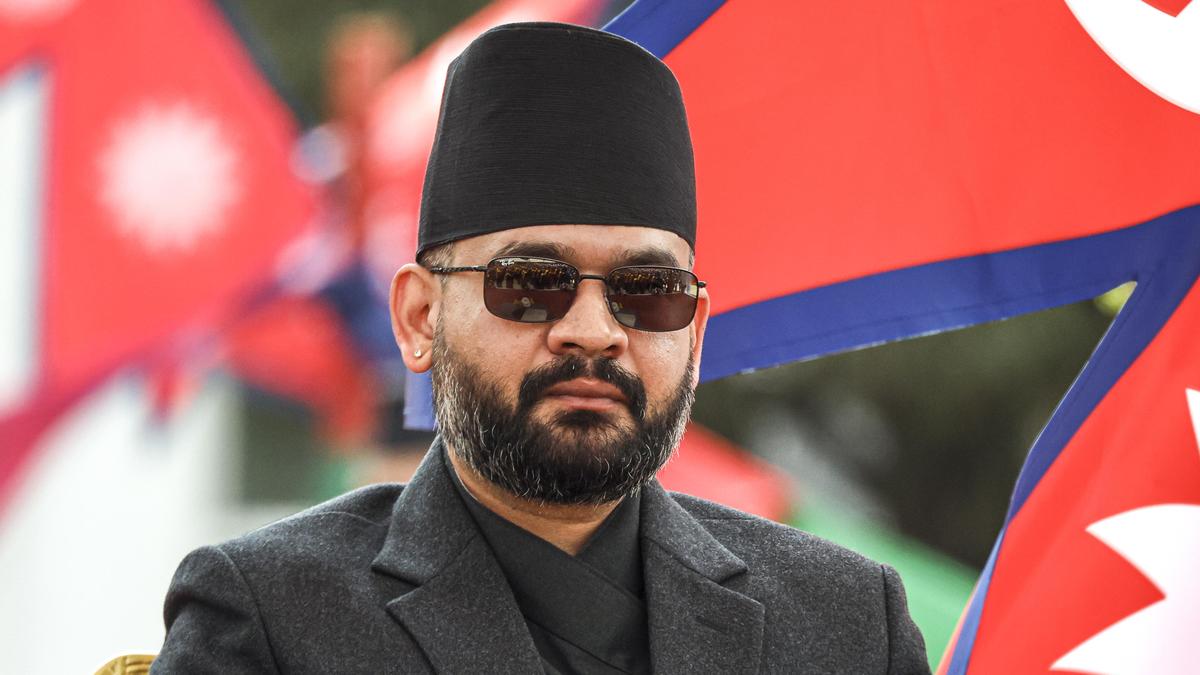
Nepal Prime Minister Balendra Shah sparked a political storm on Sunday, May 31, 2026, after saying in Parliament that Nepal has also encroached upon Indian territory in several places, a remark believed to be the first public admission of its kind by a Nepali head of government. Shah made the comment while answering a lawmaker’s question about the long-disputed Kalapani region, which Nepal and India both claim as their own. His statement immediately drew loud objections from opposition lawmakers, who accused him of speaking without factual basis and demanded that the remark be withdrawn from the parliamentary record.
Leaders from the Nepali Congress and the Nepal Communist Party said the Prime Minister’s words could undermine national integrity and damage Nepal’s position on the border dispute. Nepali Congress Chief Whip Basana Thapa asked Shah to identify exactly where Nepal had encroached on Indian territory, calling the statement serious and objectionable. Ramesh Malla of the Nepal Communist Party said the Prime Minister appeared to treat a sensitive border matter too casually, warning that such comments from the country’s top leader could have major consequences.
/https://i.s3.glbimg.com/v1/AUTH_59edd422c0c84a879bd37670ae4f538a/internal_photos/bs/2026/Y/u/3qWqesRBq8DoesTQ9WTg/globo-canal-4-20260531-2000-frame-300955.jpeg "Spielberg launches new alien film: “We are not alone”")

The controversy came during Shah’s first address to Parliament since taking office on March 27, after elections held earlier in the month. His appearance followed weeks of criticism over his reluctance to speak in Parliament and his absence from earlier sessions. Shah had skipped the first meeting of the newly elected Parliament on April 2, walked out midway during President Ram Chandra Poudel’s presentation of the government’s policies and programmes on May 11, and refused to respond to questions the next day. On Sunday, however, he unexpectedly raised his hand and asked to answer lawmakers.
While discussing the border issue, Shah said the dispute over Lipulekh, Limpiyadhura and Kalapani should be settled through dialogue. He also said Nepal had encroached upon Indian land, a remark that quickly became the focus of the debate. The disputed area on Nepal’s northwestern frontier has long strained ties between the two countries, and tensions resurfaced when India announced the Kailash Manasarovar Yatra route through Lipulekh. Nepal responded by sending diplomatic notes to India and China. India, meanwhile, maintains that Lipulekh is part of its territory and has long been used as a trade and pilgrimage route.
Nepal reaffirmed its claim in 2020, under then Prime Minister K.P. Sharma Oli, when it amended the constitution to include Lipulekh, Limpiyadhura and Kalapani in its official map. That move followed India’s release of a new political map in 2019 showing the region within Indian borders.
After the uproar, Nepal’s Foreign Ministry issued a clarification saying Shah was referring mainly to encroachment in the Dasgaja, or no-man’s land, and to cross-border occupation in river-border areas where fixed boundary principles have created overlap in land use. The ministry said technical studies show that in some places land currently occupied by Nepal may actually lie on the Indian side. It said the government remains committed to resolving border issues through diplomatic dialogue based on historical treaties, agreements and maps.