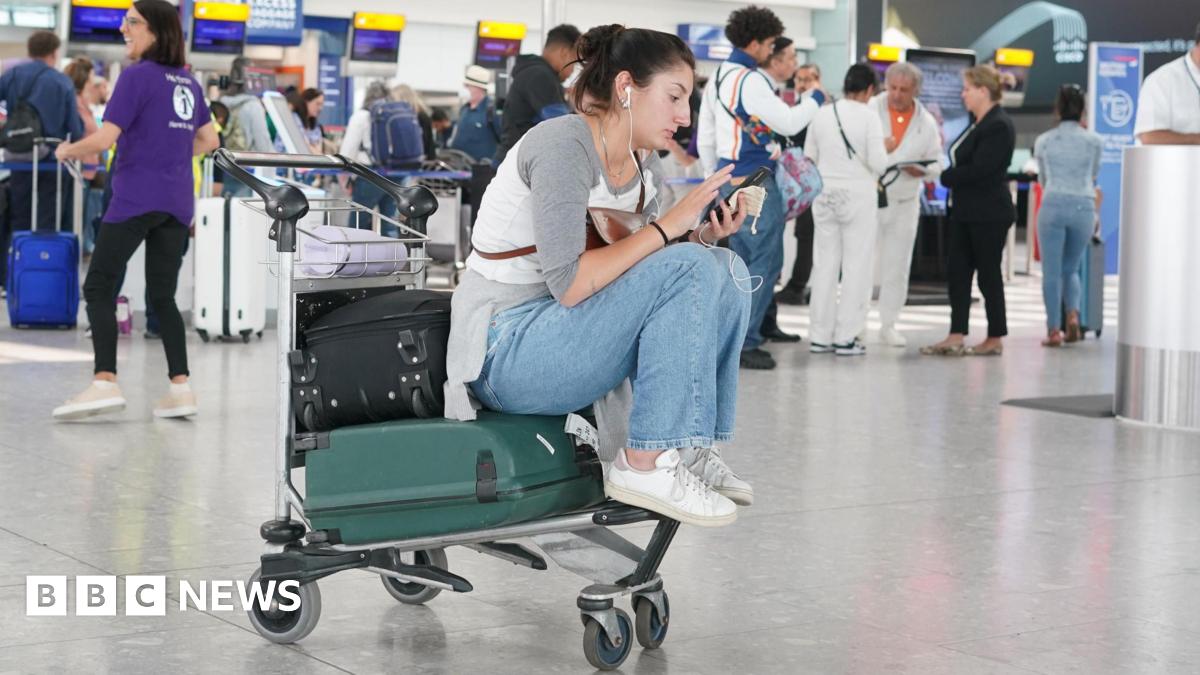
Wizz Air has warned passengers to prepare for longer airport waits as the European Union’s new Entry/Exit System, or EES, begins affecting travel across parts of Europe. According to the airline’s representative Moynihan, the impact has been uneven, with some airports seeing smooth processing while others have experienced significant delays at familiar holiday destinations including Spain, Portugal and France.
Moynihan said the situation is “fragmented across Europe,” meaning the experience can vary widely depending on the airport, the time of day and how busy the border area is. On a recent trip to Mallorca during the half-term holiday period, she reported no queues at all. In that case, she said extra staff were available and there were a large number of EES kiosks in place to help speed up registration.


Despite that example, Wizz Air is advising passengers not to assume every journey will be equally straightforward. Moynihan said travellers should expect the possibility of queues on arrival and should prepare accordingly by bringing practical items such as a portable charger and water, especially if delays occur after landing.
She also highlighted a second pressure point: the return journey. Because EES data must be verified again when passengers leave the destination, additional passport checks can create delays before flights back to the UK. Moynihan said this has already led some travellers to face longer waiting times than they expected.
As a result, Wizz Air has adjusted its standard advice. While passengers are normally told to arrive at the airport two hours before departure, the airline is now recommending three hours in these circumstances. For those making connecting flights, Moynihan urged leaving “a number of hours” between flights to reduce the risk of missing onward travel if border queues build up.
She added that border officials are sometimes suspending EES checks when queues become too long, in order to ease congestion and keep passenger flow moving. That suggests authorities are trying to balance the introduction of the new system with the practical realities of busy travel periods.
The European Commission has stressed that EES is not the only factor that can cause airport delays. It has said that registering passenger information usually takes around one minute, implying that the system itself should not create major disruption when operating normally. However, the early rollout appears to be producing mixed results, particularly at high-traffic airports and during peak holiday periods.
For travellers, the message is clear: while some airports may process passengers quickly, others may not. Those flying to or through Europe should allow extra time, plan for possible border delays and avoid tight connections where possible.