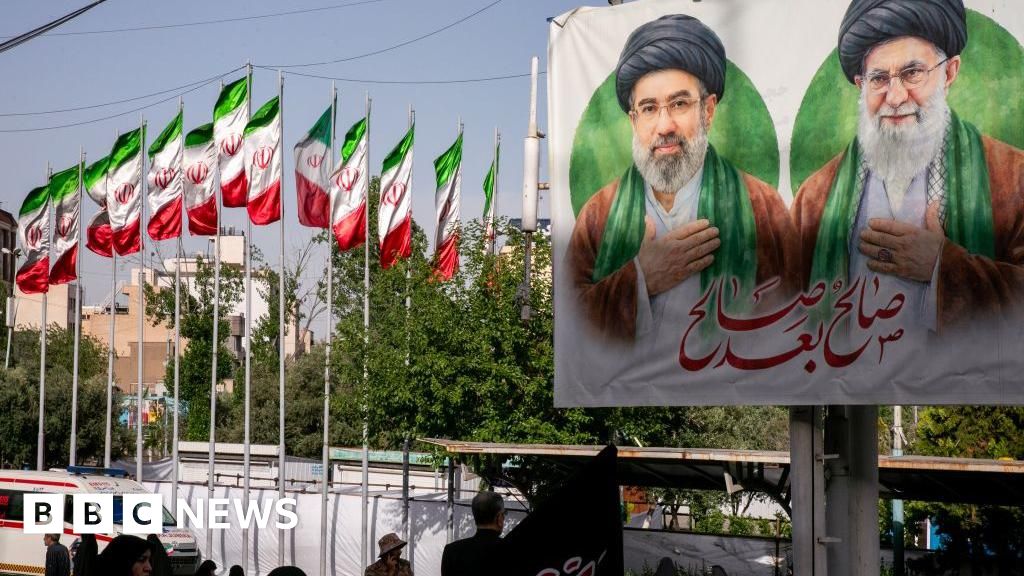
CBS News, the BBC’s US partner, reported that US intelligence believes Iran’s Supreme Leader Mojtaba Khamenei is being kept in an undisclosed location following an Israeli strike on the first day of the war. The strike reportedly killed his father and predecessor, leaving Khamenei injured and limiting his ability to move freely or communicate easily with advisers and envoys. According to the report, this has complicated internal coordination and made it harder for Iranian officials to maintain contact with him.
The intelligence assessment suggests that Khamenei’s isolation has slowed the pace of talks with the United States, adding another obstacle to already strained diplomatic efforts. With communication channels disrupted, Iranian negotiators may be unable to obtain timely direction on key decisions, reducing the speed at which they can respond to US proposals or adjust their positions. The report indicates that the situation has created uncertainty inside Iran’s leadership structure at a time when external pressure and military conflict are both shaping the country’s options.

The CBS News report comes amid continuing tensions in the region and raises questions about how Iran’s governing apparatus is functioning under wartime conditions. If top leadership is inaccessible or difficult to reach, decision-making could become more centralized around a limited number of trusted figures, while lower-level officials wait for instructions. That kind of bottleneck could affect diplomacy, military coordination, and domestic governance.
The reported injury to Khamenei on the first day of the war appears to have had lasting consequences beyond the immediate physical impact. Being hidden away in a secure and undisclosed place may protect him from further threat, but it also appears to have reduced his visibility and accessibility to both internal and external interlocutors. For the US and its partners, that may make negotiations less predictable and more dependent on indirect messages or intermediaries.
The report highlights the broader challenge of conducting diplomacy during active conflict, especially when one side’s top decision-maker may be cut off from normal lines of communication. It also underscores how military actions can reshape political dynamics far beyond the battlefield, influencing the tempo and substance of talks between adversaries.
US intelligence’s belief that Khamenei is hard to reach suggests that the war is affecting not just military targets but also the mechanics of state authority. As long as communication remains difficult, progress in negotiations is likely to remain slow, and any potential agreement may face additional delays. The report does not say when Khamenei may reemerge or whether his communications with envoys will improve soon, leaving the situation uncertain as the conflict continues.



/https://i.s3.glbimg.com/v1/AUTH_b0f0e84207c948ab8b8777be5a6a4395/internal_photos/bs/2025/M/a/wQHccARBeWwjFA7xW0dg/quem-5-.png "Faustão é internado em São Paulo e passa por avaliação médica; saiba detalhes")