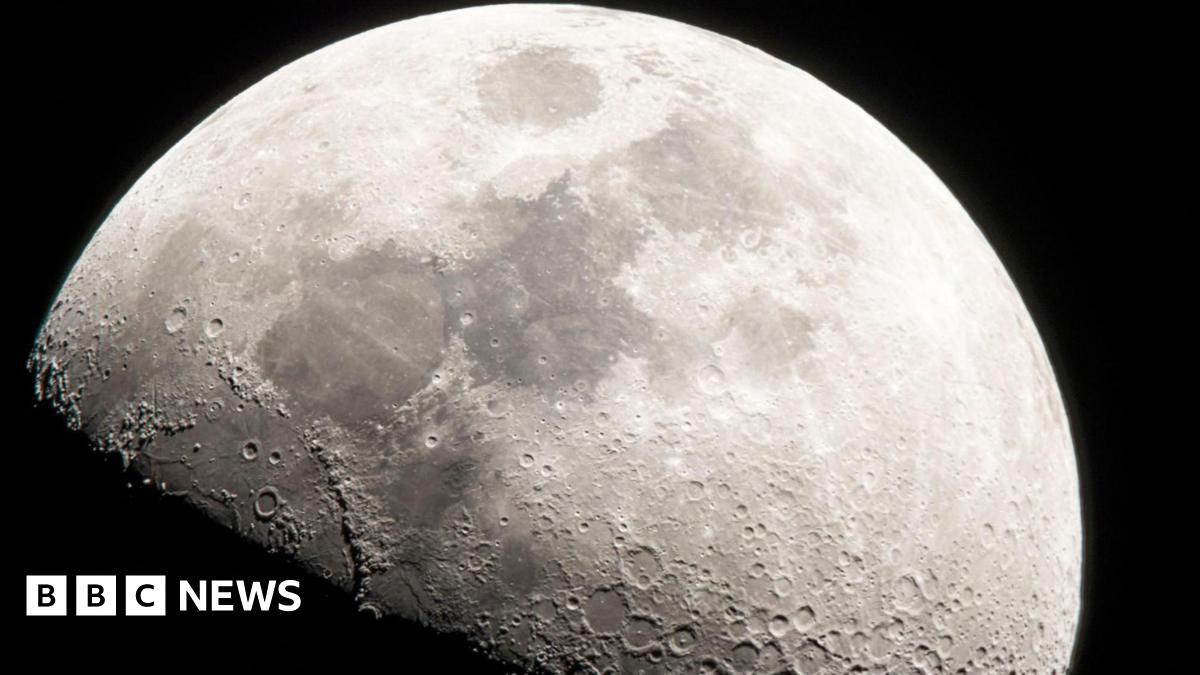
China is pressing ahead with its plan to land humans on the Moon by 2030, while the United States is accelerating its own lunar ambitions amid growing pressure to avoid falling behind. On Monday, China launched its Shenzhou-23 spacecraft, sending astronauts to the Tiangong space station as part of its broader space programme. In March, NASA announced a $20 billion plan to build a permanent Moon base at the lunar south pole by 2032, powered by both nuclear and solar energy.
NASA administrator Jared Isaacman said on Tuesday that the latest announcements show the US will “never give up the Moon again,” reflecting a renewed push to secure a long-term presence on the lunar surface. The proposed base is intended to support scientific research, help unlock valuable resources, and serve as a stepping stone for future missions to Mars.


Despite the scale of NASA’s plans, many experts remain skeptical about the timetable. The agency has already achieved a major milestone with Artemis II, which sent four astronauts around the Moon in April. But scientists say the US still faces significant technical and logistical challenges, especially in developing a reliable spacecraft capable of landing humans on the Moon. Dr Simeon Barber, a lunar scientist at Open University, said it would not surprise him if China reaches the Moon first, pointing to NASA’s setbacks in its lander program.
NASA’s Ignition Moon Base programme is designed in three phases. Before sending astronauts, the agency plans to deploy robotic landers and hopping drones to survey and map the Moon’s difficult terrain. It also intends to send delivery vehicles that can transport astronauts across the lunar surface and carry communications and scientific equipment.
On Tuesday, NASA said companies including Blue Origin, Intuitive Machines and Astrobotic have been awarded contracts to build these machines. The moves highlight the intensifying international race to establish a lasting human presence on the Moon, with China and the US now racing toward overlapping deadlines and ambitious goals.