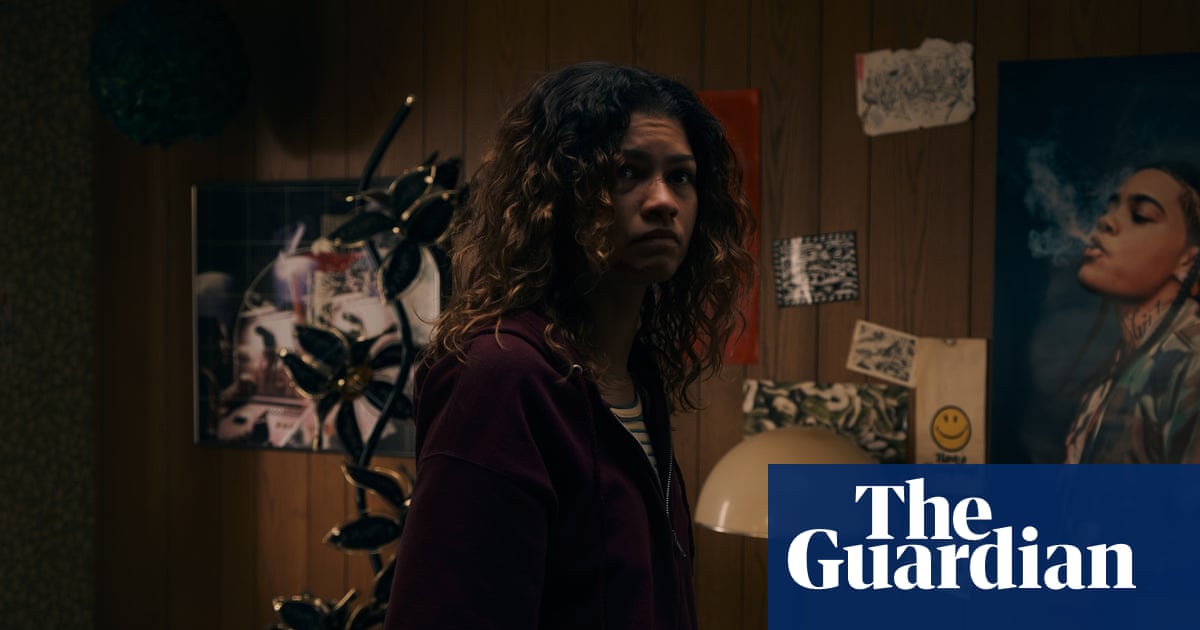
The season finale of Euphoria arrives after a final season built on extreme shocks, but instead of offering clarity, the 88-minute episode deepens the show’s confusion. Set five years after the characters graduated high school, the HBO drama has spent its latest episodes pushing transgressive, attention-grabbing imagery, from Cassie’s OnlyFans reinvention to Nate’s brutal mutilation and Jules being trapped in plastic by a sugar daddy. The finale continues that escalation, but it also shifts abruptly into a more solemn, biblical register, ending with the line, “May God bless us all.” That tonal turn suggests a series struggling to decide what it wants to be: a moral warning, a stylized thriller, or a critique of modern culture.
The episode opens with violence and death, beginning with Laurie, the drug boss whose quiet menace has long defined her presence, taking her own life as law enforcement closes in. Her death lands as a grim irony, given that she has built a life profiting from addiction and control. The story then reaches its most consequential moment when Rue, played by Zendaya, dies of a fentanyl overdose. Her death comes 45 minutes into the finale, removing the show’s central character and narrator and forcing the final act to shift to Ali, Rue’s sponsor and mentor.

That choice underlines one of the season’s biggest problems: it no longer feels anchored in the relationships that once gave the series emotional weight. Jules is largely sidelined, Cassie is pushed to the margins despite her central role in the season’s online-sexualized storyline, and Maddy receives little meaningful attention. Instead, the finale turns toward a turf war between drug bosses Laurie and Alamo, then spends much of its remaining runtime in Alamo’s strip club, where Ali appears in military uniform to avenge Rue. The result is visually striking but narratively scattered, as though the show is stitching together a gangster film, a morality play, and a social-media nightmare without fully committing to any of them.
Still, the finale’s most compelling ideas are not its shootouts or melodrama, but its portrait of a culture shaped by exploitation, algorithmic extremity, and the pressure to monetize identity. Ali’s monologue about the many institutions complicit in Rue’s overdose broadens the story beyond individual failure, suggesting a system in which governments, companies, cartels, and consumers all share responsibility. That idea echoes the season’s depiction of Cassie and Maddy’s engagement-bait stunts and the performative economy of OnlyFans, where attention, sex, and profit collapse into one another.
In that sense, Euphoria’s finale may be less interested in moral judgment than in exposing the hypocrisy of a new, algorithm-driven American Dream. Its world is one in which people must either hunt or be hunted, exploit or be exploited. The season’s strongest moments come when it recognizes that reality. Its weakest come when it buries that insight beneath spectacle.