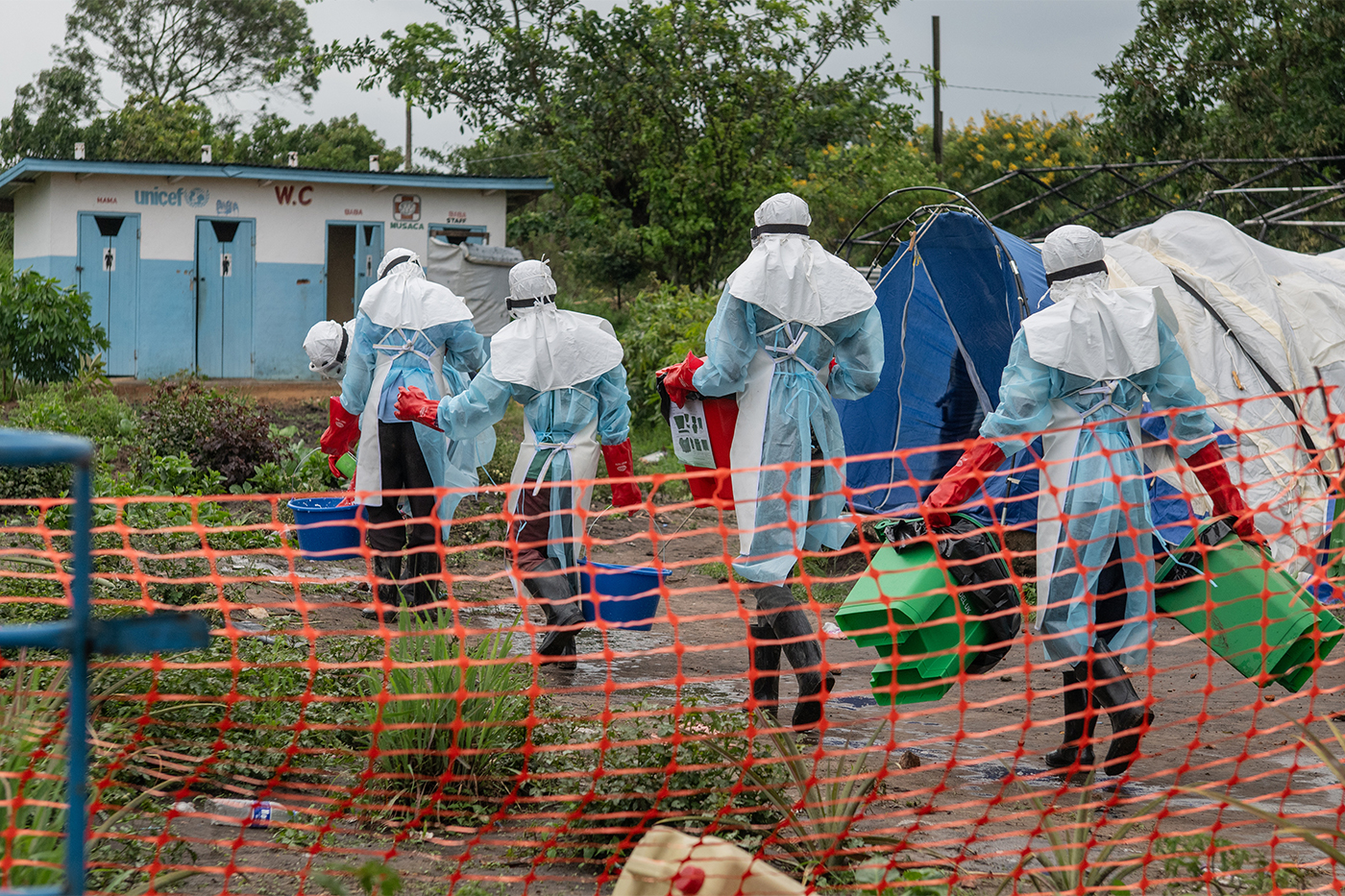
Northeastern University researchers are contributing to the international response to the Ebola outbreak in Central Africa by supplying intelligence, data analysis, artificial intelligence tools and predictive modeling to public health agencies. Rather than working directly in the field, the researchers say their role is to help responders make better decisions with timely information about how the outbreak may spread and where resources should be directed.
According to data collected by the World Health Organization on Wednesday, May 27, there were 906 suspected Ebola cases and 223 suspected deaths tied to the outbreak. Researchers caution that those figures may not reflect the true pace of transmission, since reported cases can rise simply because surveillance systems are improving and detecting more infections. Alessandro Vespignani, director of Northeastern’s Network Science Institute and coordinator of the EPISTORM center, said daily increases in cases do not necessarily equal the epidemic’s real growth rate.


The outbreak is linked to the rare Bundibugyo strain of Ebola, which has been confirmed in deaths in Ituri Province in the Democratic Republic of the Congo and in Kampala, Uganda. The World Health Organization declared an outbreak of the virus on May 15 and, two days later, declared it a public health emergency of international concern. Researchers note that because there are no approved vaccines or therapeutics for this strain, understanding its behavior is especially important.
Scientists at Northeastern are combining computational models, AI and public health data to answer key questions: which countries are most at risk, how the disease may move across borders, how screening and travel restrictions should be targeted, and whether current control measures are slowing transmission. Jessica Davis, a research assistant professor and core faculty member at the Network Science Institute, said the biggest challenge is that many cases remain only suspected, making it difficult to map the outbreak accurately.
Samuel Scarpino, director of AI + life sciences at Northeastern’s Institute for Experiential AI, said successful modeling depends on gathering and cleaning large amounts of information, including population structure, connectivity, case counts, refugee camp locations and healthcare capacity. He said much of that data exists publicly, but it is often messy and disorganized.
Researchers are also analyzing population maps and flight data to help determine whether Ebola could spread beyond the DRC and to support contact tracing. But they say data quality remains uneven across the region, with different countries using different reporting standards and travel restrictions. That makes it harder to judge where the outbreak began, how many true active cases exist and how quickly it is moving.
The team is also working against misinformation. Davis described the outbreak as being accompanied by an “infodemic” of rumors and conspiracy theories that can spread alongside the virus itself. Even so, Northeastern researchers say their role in emergency response remains important, and they continue to work with public health officials in the United States, international agencies and teams on the ground.