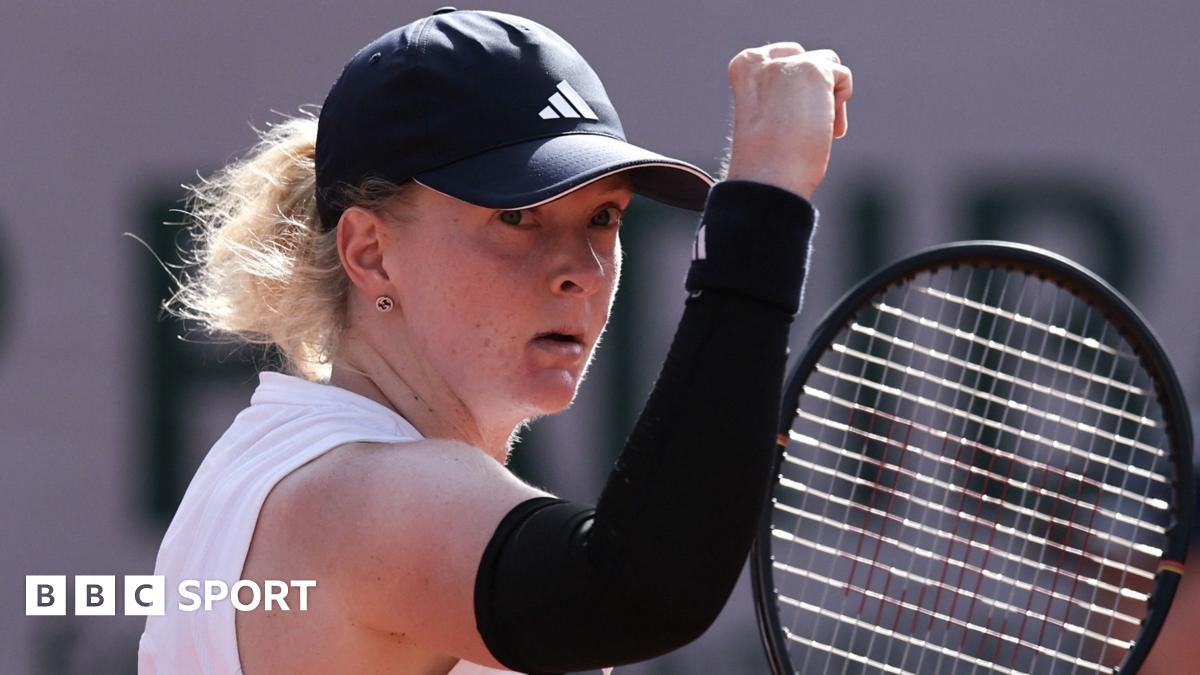
Jones had gone six Grand Slam first-round matches without a victory before this breakthrough, and this was also her first main-draw appearance at Roland Garros. The British player has a strong natural fit for clay courts, having grown up on the surface after moving from Bradford to Barcelona at the age of 10. That background has helped her achieve her best results on clay, even though her 2026 season has been badly interrupted by injury and illness.
Her year began with a torn muscle in her hip, which forced her to retire from her opening match at the Australian Open in January. Just as she was nearing a full return to fitness, she suffered another setback in the gym. Jones said the accident left her with a head wound and that she later developed headaches and dizziness, symptoms that are consistent with concussion. She described the experience as physically frightening, but said she was fortunate the injuries were not more serious.


According to Jones, hospital staff told her she was lucky not to need surgery and to have avoided a brain bleed after the incident. The 25-year-old said the emotional impact of the disruptions was as significant as the physical recovery. She described the year as a frustrating cycle of progress and setbacks, saying it had felt like taking two steps forward and two steps back.
Jones also spoke about how difficult it has been to cope with a lack of momentum, especially given her personality and work ethic. She said feeling unproductive is particularly hard for her, and the stop-start nature of the season has made it difficult to build confidence and consistency. Despite those challenges, her appearance at Roland Garros marked an important moment in a difficult campaign, especially after a long wait for a Grand Slam breakthrough.
Her clay-court upbringing remains a defining part of her career. While many British players develop on grass or hard courts, Jones’s early years in Barcelona gave her a different foundation and made clay the surface where she has historically been most effective. That experience has shaped her game and helped distinguish her from her peers in British tennis.
The combination of her clay-court pedigree and her recent injury struggles made the match at Roland Garros especially significant. After a season repeatedly interrupted by physical problems, Jones was able to compete in the main draw in Paris for the first time and end a long run of first-round disappointment at the majors.