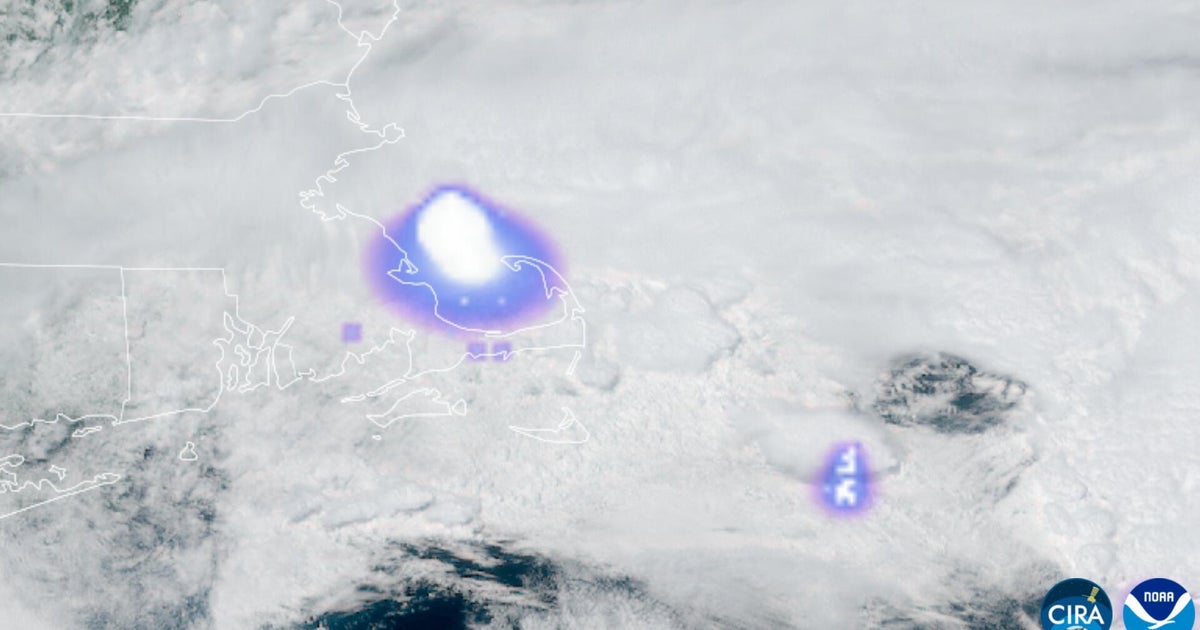
A loud meteor explosion off the coast of Massachusetts startled residents across New England on Saturday afternoon, producing a boom that was heard from the Boston area to parts of Rhode Island. According to WBZ-TV chief meteorologist Eric Fisher, the event was reported at about 2:11 p.m. Eastern Time, when people described a sudden blast that rattled windows, shook some homes, and frightened pets.
NASA said the meteor broke apart in the atmosphere with an estimated energy release equal to about 300 tons of TNT. Preliminary observations and reports suggest the fireball was seen by dozens of people across several Northeast states around 2 p.m., with sightings submitted to the American Meteor Society helping scientists track the object’s path. Satellite lightning data from NOAA also showed a signature consistent with a meteor at the same time as the boom, and maps indicated the object likely entered the atmosphere over the South Shore near Boston.


NASA said the meteor appears to have fragmented at an altitude of roughly 40 miles over northeast Massachusetts and southeast New Hampshire. The breakup and the rapid movement through the atmosphere created the shock waves responsible for the loud sound heard on the ground. Scientists say this type of sonic boom can happen when a larger space object survives long enough to travel deep into the atmosphere before breaking apart.
Meteors typically travel at extremely high speeds, often between 25,000 and 160,000 miles per hour. Most are tiny and burn up high in the sky, but larger objects can produce bright fireballs and booming pressure waves that carry for many miles. Experts explain that the sound is caused by air compression as the object moves faster than sound, similar to a supersonic jet. In some cases, the object itself also breaks apart under intense atmospheric pressure, adding to the noise.
Astronomy educator Shauna Edson of the Smithsonian National Air and Space Museum said eyewitness reports and video footage can provide scientists with key details about the meteor, including its brightness, speed, angle of entry, and how long it remained visible. Those clues help researchers understand what kind of object it was, especially if no fragments are recovered. Edson noted that if the meteor fell into the ocean, as many do, it would be unlikely that any pieces could be found.
The event comes amid a series of notable fireballs reported across North America in 2026, including explosions over Ohio and Texas earlier this year. Scientists say there is no evidence of any impact threat to Earth. While meteor strikes on people are extraordinarily rare, experts say this latest incident is a reminder of how often space debris enters Earth’s atmosphere and how dramatically it can be noticed from the ground.