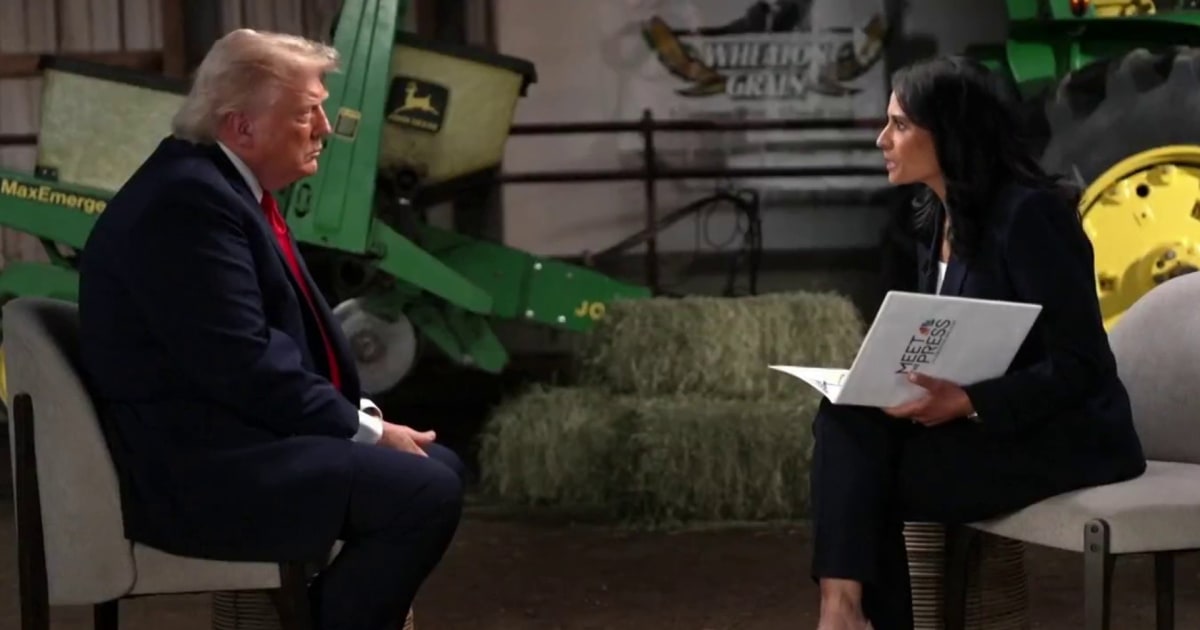
In an exclusive interview with Meet the Press on June 7, 2026, President Trump discussed the economy, the ongoing conflict with Iran, and his views on the leadership of the Federal Reserve. Trump said the war with Iran “is not an endless war,” as the conflict reached 100 days, signaling that he sees the fighting as a prolonged but still manageable crisis rather than one without a clear end. He also said Iran has not reached a deal because the country is “strong” and “proud,” suggesting that negotiations remain difficult and that both sides are still locked in a tense standoff.
On economic policy, Trump expressed strong support for Kevin Warsh, whom he described as “fantastic” in connection with his role as Federal Reserve chair. Trump said, “I want him to do whatever he wants” when it comes to setting interest rates, indicating that he does not plan to pressure Warsh or interfere heavily in monetary policy decisions. He added that he does not want to have “a big influence” on him, portraying Warsh as an independent economic decision-maker.

The interview also came amid broader scrutiny of Trump’s agenda and the administration’s handling of major policy disputes. Questions about Iran, the Fed, and domestic governance all underscored the central themes of Trump’s second-term political strategy: projecting strength abroad while emphasizing economic confidence at home. His comments on interest rates were notable because the Federal Reserve’s decisions can have major implications for inflation, borrowing costs, and the overall direction of the U.S. economy.
The exchange on Iran reflected continuing uncertainty over whether diplomacy can prevent further escalation. Trump’s remarks suggested he remains open to a deal, but he framed the impasse as rooted in Iranian resolve rather than in a lack of willingness from Washington. At the same time, by calling the conflict “not an endless war,” he appeared to acknowledge public concern over prolonged military involvement and the political risks of an open-ended confrontation.
Trump’s praise for Warsh also highlighted a message of restraint toward the central bank, at least in public rhetoric. By emphasizing that he wants Warsh to act independently, Trump appeared to distance himself from the perception that the White House will dictate interest-rate policy. That position may be aimed at reassuring markets and voters who are watching inflation, growth, and borrowing conditions closely.
The interview touched on a moment in which foreign policy, monetary policy, and presidential leadership intersected. Trump presented himself as engaged but not overbearing, committed to avoiding escalation in Iran while supporting an economic team he says can act with autonomy. Together, his remarks offered a snapshot of the administration’s priorities as it navigates a high-stakes period marked by war, negotiations, and questions about the future direction of U.S. economic policy.