Colombia’s Outgoing President Gustavo Petro Accuses Trump of Interfering in the Country’s Election

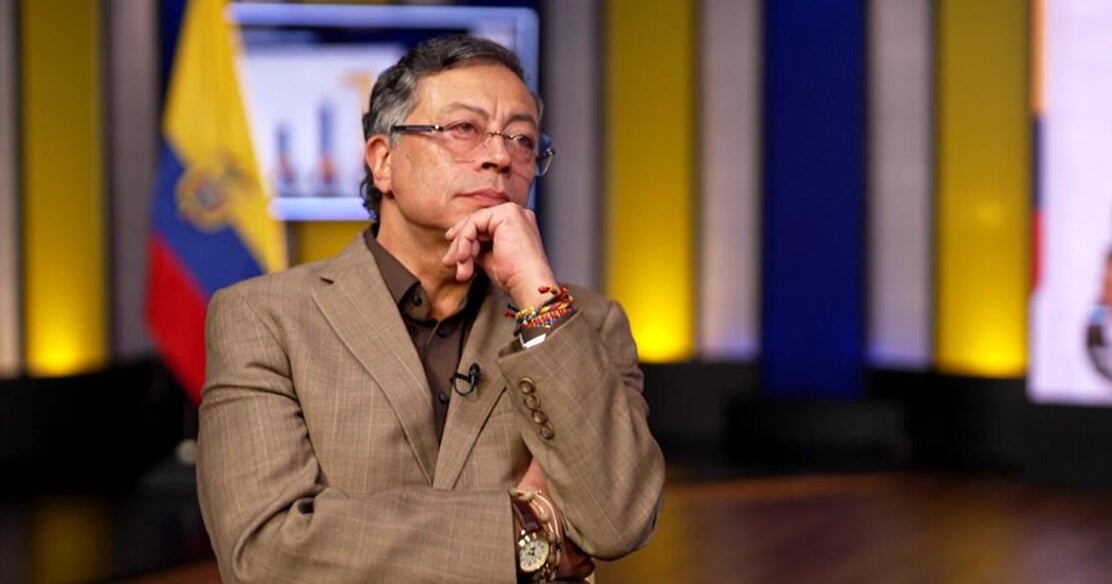
Colombia is heading into a runoff election in less than two weeks, with voters choosing between far-right candidate Abelardo de la Espriella, who received President Trump’s endorsement after leading the first round, and leftist senator Iván Cepeda, who aims to continue the legacy of President Gustavo Petro. De la Espriella finished first in Sunday’s vote with about 43.7% of the vote, while Cepeda followed closely with 40.9%, setting up a sharply polarized contest over security, drug policy and Colombia’s relationship with the United States.
Petro used an interview with CBS News to defend his administration’s approach to coca cultivation and reject Trump’s backing of de la Espriella as foreign interference. He said Washington has turned away from anti-drug cooperation for ideological reasons and accused the U.S. government of siding with forces linked to narco-paramilitarism. Petro also argued that tensions with the White House stem from his progressive politics and disagreements on issues such as Gaza. The Colombian president, who has faced U.S. sanctions, a visa withdrawal and signals of possible criminal scrutiny from the Trump administration, said he still hopes to keep working relations with Washington.
The Trump administration has taken a hard line toward Petro’s government. Secretary of State Marco Rubio recently described the current Colombian leadership as “problematic” and said the U.S. would ensure a free and fair election. Petro warned that if the right returns to power, Colombia could face a new wave of political violence. He said hatred has long produced deaths in Colombia and argued that inflammatory rhetoric against progressives could fuel instability.
On security, Petro acknowledged that criminal organizations have grown stronger during his presidency, but said the overall homicide rate has remained relatively stable. He argued that the nature of violence has changed, with contract killings increasing even as other forms of crime decline. Human rights groups, however, have said organized crime groups have expanded their membership, territorial reach and violent power under his administration.
The most contentious issue remains coca eradication. Under Petro, forced eradication dropped sharply from 130,000 hectares in 2022, the last year of President Iván Duque, to roughly 9,000 hectares. Petro said forced eradication does not work and claims resources are often stolen. Instead, his government has focused on voluntary crop substitution and dialogue with rural communities. He said he stopped using force against peasant farmers and chose negotiation over bombing, displacement and imprisonment.
Critics dispute the effectiveness of that strategy. Analyst Daniel Mejía said Colombia has delayed publication of the U.N. coca census data and that available figures show coca cultivation rose by at least 9,000 hectares in 2024 to around 262,000 hectares. Mejía also said government spending on crop substitution and alternative development has been weak, with budget execution in some years falling to single digits.
The runoff may be decided by voters who supported third-place conservative Paloma Valencia, whose 1.6 million votes are now up for grabs. Valencia has backed de la Espriella. If elected, de la Espriella says he would restore aerial fumigation of coca fields, a tactic banned in Colombia since 2015, and adopt tougher anti-cartel measures inspired by El Salvador. The election is emerging as a referendum on Petro’s legacy, U.S.-Colombia ties and the country’s battle against drugs and violence.