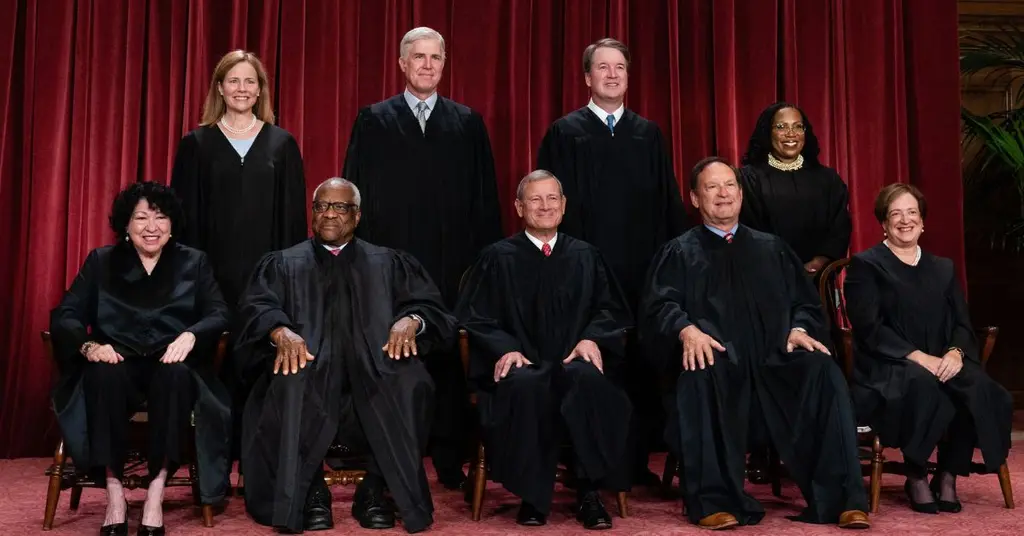
The U.S. Supreme Court has upheld the Federal Communications Commission’s power to fine AT&T and Verizon over alleged customer data privacy violations, preserving an important federal enforcement tool in an 8-1 decision that divided the Court’s conservative justices.
The case involved about $100 million in FCC penalties tied to allegations that the telecom companies improperly allowed access to customers’ real-time location data without proper consent. Regulators said AT&T and Verizon worked with data aggregators such as LocationSmart and Zumigo, which then shared location information with outside clients. The FCC argued that this created serious risks of unauthorized tracking and showed that the companies failed to maintain adequate safeguards for sensitive consumer data.

In its ruling, the Supreme Court said the FCC may issue forfeiture orders, but companies can still challenge those fines in court before paying them. Chief Justice John Roberts, writing for the majority, said the FCC’s orders did not immediately create a legal obligation to pay because the government still had to prove its case in court. He said the orders “did not create an obligation to pay,” meaning the penalties were not automatically final without judicial review.
Justice Clarence Thomas filed the lone dissent. He argued that the companies were being punished even though they believed they were following binding government instructions. Thomas said the Court was penalizing AT&T and Verizon for complying with what they understood to be mandatory federal directives and then defending that position in litigation that ultimately prompted the government to change course years later.
FCC Chair Brendan Carr welcomed the decision, saying the agency will continue to enforce the Communications Act and FCC rules. He said the ruling confirms that the FCC can hold companies accountable when they violate federal communications laws and consumer protection standards.
The case attracted broad attention because it tested the limits of federal regulatory power at a time when the Supreme Court has often narrowed the reach of administrative agencies. Industry groups had warned that if the Court weakened the FCC’s enforcement process, the effect could extend beyond telecom privacy cases and influence other areas such as environmental regulation, financial oversight, and consumer protection.
Instead, the Court sided with the government’s position that companies may refuse to pay FCC penalties at first and force the Justice Department to seek enforcement in federal court. In that setting, the claims are reviewed from the beginning, giving businesses a chance to contest the government’s case before any payment is required.
The decision reinforces the FCC’s ability to police privacy violations involving customer data while also preserving a path for companies to challenge agency fines in court. It marks a significant win for federal regulators and a notable moment in the ongoing debate over how much power administrative agencies should have to enforce the law.