Trump wants his MMA arena to become a Washington landmark, despite the Eiffel Tower comparison

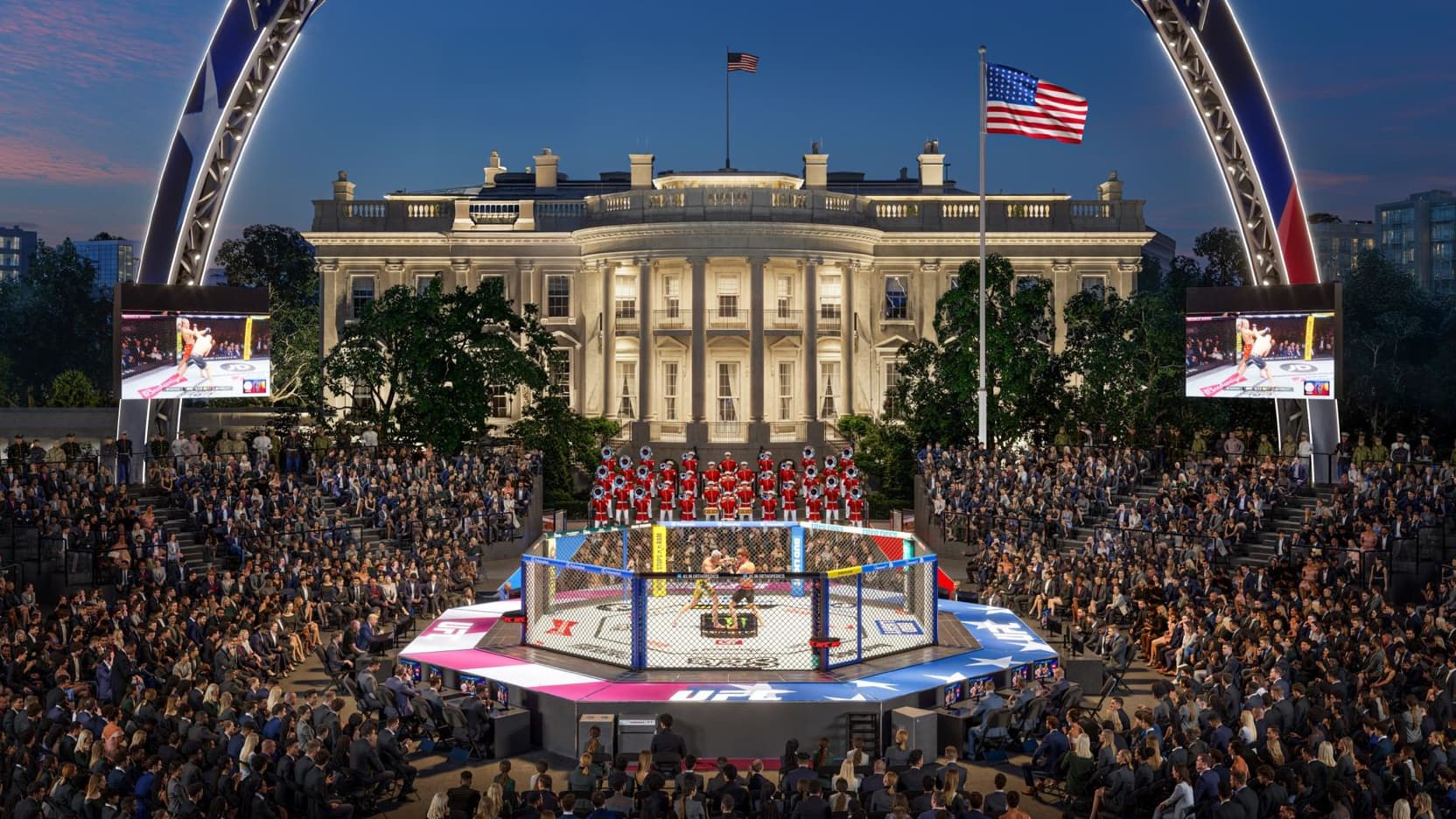
Donald Trump is reshaping the symbolism of Washington, D.C., with a series of grand architectural and institutional projects that critics say reflect imperial ambition more than republican restraint. As he approaches his 80th birthday and the United States prepares for its 250th anniversary on July 4, Trump is pushing ahead with plans that include a temporary mixed martial arts arena near the White House, a massive ballroom replacing the West Wing, and a monumental triumphal arch intended to outsize Paris’s Arc de Triomphe.
Satellite imagery analyzed by ABC indicates that construction for the ballroom is already extensive. The planned structure would cover about 8,000 square meters and host up to 1,000 guests, dwarfing the White House itself in scale. Trump has also floated the idea that the MMA arena, designed to seat 75,000 to 100,000 spectators in a park south of the White House, may not be dismantled after the celebration if it proves popular. The UFC has promoted the event with cinematic teasers that cast fighters as modern gladiators and present the spectacle as a global event.
Trump has openly tied these projects to his personal legacy. When asked who the triumphal arch is for, he reportedly answered: “for me.” The proposed arch would stand 76 meters high, making it taller than Paris’s Arc de Triomphe and the tallest of its kind in the world. Before approving the design, Trump restructured the Commission of Fine Arts after dismissing its previous members, and the new panel endorsed the project despite significant public opposition.
The president has also used executive power to promote his vision of classical American architecture. He signed an order titled “Making Federal Architecture Beautiful Again,” invoking the example of George Washington and Thomas Jefferson, who favored classical styles inspired by Athens and Rome for important buildings in the capital. Trump argues that this tradition should guide modern federal design and has intervened personally in multiple construction and renovation projects in Washington.
Yet the article contrasts Trump’s monumental style with the original republican ideals of the nation’s founders. In 1791, George Washington rejected an initial proposal by French architect Pierre-Charles L’Enfant for a vastly oversized White House, preferring the more restrained design by Irish architect James Hoban. Washington wanted the presidential residence to symbolize an elected citizen, not a monarch, and to avoid the appearance of Versailles-like excess. The current wave of Trump-backed projects appears to reverse that philosophy.
Beyond architecture, Trump’s branding effort extends to other symbols of state power. His face could appear on a proposed $250 bill, a move that would be unprecedented for a living person in more than 150 years. His name is also set to be used for a new class of large warships and for Palm Beach airport, which is expected to be renamed Donald Trump Airport on July 9. Together, these initiatives show a president seeking to inscribe his identity into the nation’s landscape, institutions, and historical memory.