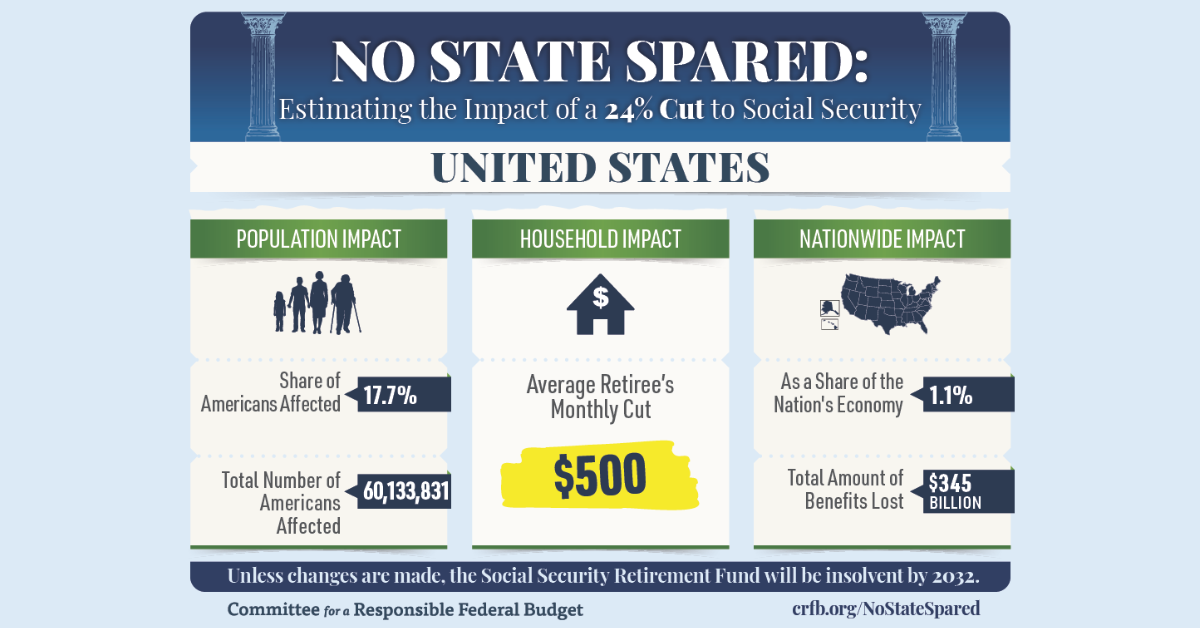
Social Security’s projected insolvency would affect every state in the country, but the scale and timing of the impact would vary widely depending on each state’s demographics, benefit reliance, and labor-market conditions. As the program moves closer to the point where its trust funds could be depleted, the consequences would not be limited to federal budget accounts in Washington. They would be felt by retirees, workers with disabilities, survivors, families, state economies, and local businesses across all 50 states.
The program is a central source of income for older Americans and for millions of people who depend on disability and survivor benefits. If Congress does not act to strengthen the system before the trust funds are exhausted, Social Security would still be able to pay benefits from incoming payroll taxes, but those revenues would cover only part of scheduled payments. That means beneficiaries in every state could face automatic cuts unless lawmakers change the law. The impact would be especially severe for households that rely heavily on Social Security as their primary or only source of income.

States with older populations would likely feel the effects more sharply because a larger share of residents depends on monthly benefits. States with lower average incomes could also be hit hard because Social Security often represents a bigger portion of total retirement income for middle- and lower-income households. In those states, a cut in benefits would not just reduce spending power for seniors; it would also ripple through pharmacies, grocery stores, landlords, healthcare providers, and other local businesses that rely on beneficiary spending.
The fiscal effects would not be evenly distributed either. States with more retired residents, more disability beneficiaries, or more households that depend on survivor benefits would see a larger share of residents exposed to benefit reductions. At the same time, states with faster-growing workforces may still experience significant consequences because Social Security shortfalls would affect current workers’ expectations about future retirement security and could weaken consumer confidence more broadly.
Beyond household budgets, insolvency could increase pressure on state and local governments. If Social Security benefits were reduced, some retirees might need greater support from Medicaid, housing assistance, nutrition programs, and other safety-net services funded in part by states. Reduced income among older adults could also soften local tax collections and slow economic activity in communities where seniors make up a large share of consumers.
The broader lesson is that Social Security’s solvency is a national issue with local consequences in every state. No state would be fully insulated from the impact of benefit cuts, and many would face meaningful economic strain if Congress allows the program to run short of funds. The size of the effect would depend on how quickly policymakers act, how they choose to finance reforms, and how exposed each state’s population is to Social Security income. The sooner a solution is enacted, the more gradual and manageable the transition can be for retirees, workers, and state economies nationwide.