From Fields to Stadiums: The Billion-Dollar Grass Industry Takes Center Stage at the World Cup

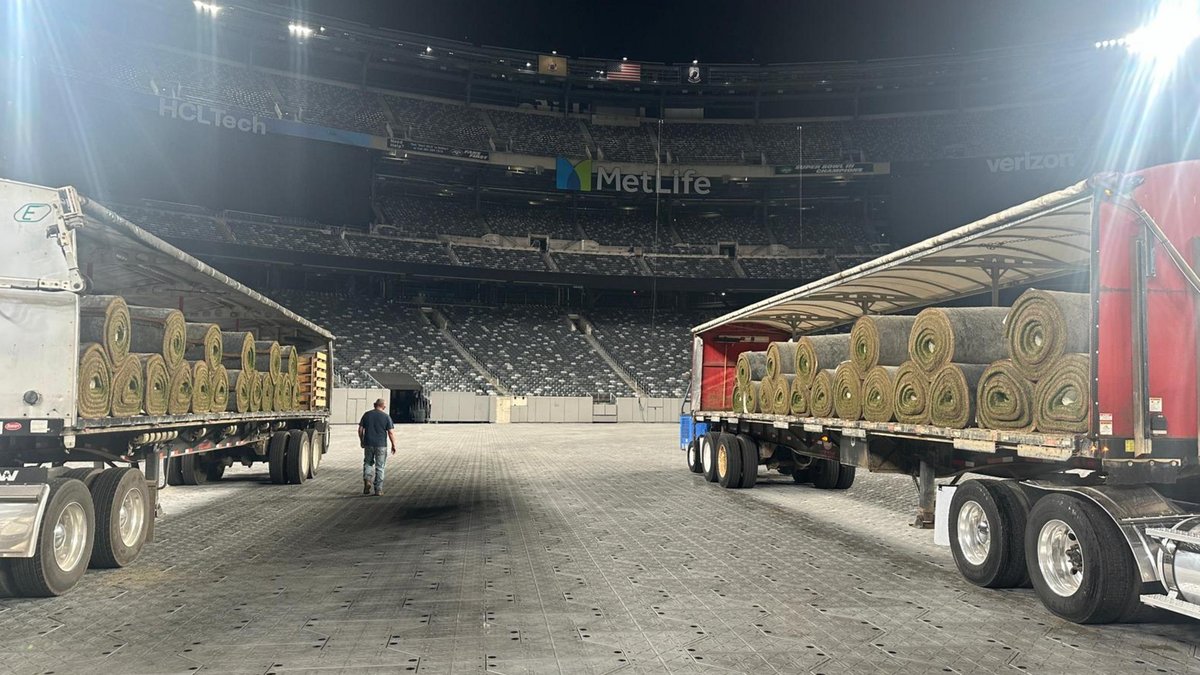
As the 2026 FIFA World Cup approaches in the United States, Canada, and Mexico, one of the most important elements on the field will not be the players or the ball, but the grass itself. Behind stadium turf is a highly specialized production chain that combines agricultural science, technology, and large-scale cultivation. In Brazil, the turfgrass industry is estimated to move about 40 billion reais a year, including cultivation, sales, and installation, showing that grass is much more than a decorative surface: it is a significant part of agribusiness and sports infrastructure.
Although often associated with football pitches, turf production in Brazil serves a much broader market. It supplies residential gardens, condominiums, landscaping projects, parks, erosion control along highways, and engineering works. According to the Brazilian association Grama Legal, the country has about 45,000 hectares dedicated to turfgrass production. Of that total, only 6% is aimed at the sports segment, despite the visibility and higher value linked to stadium fields.

The industry’s biggest market is not sports, but construction and environmental uses. Still, stadiums and training centers play a crucial role in innovation. They are often the first places where new grass varieties, management techniques, and technologies are tested before spreading to other sectors. Specialists say this influence has helped modernize the market over time and raised the technical standard of turf production across Brazil.
Agronomist Maristela Kuhn, who works with sports fields and advises clubs such as Grêmio, Internacional, Palmeiras, and Cruzeiro, says the grass varieties selected for the 2026 World Cup are already shaping demand in Brazil. She notes that many of the tools and practices used today were introduced after earlier tournaments. Supplementary lighting, for example, became more common in Brazil after the 2014 World Cup. Now, new varieties chosen for 2026 are beginning to arrive in the country and are expected to influence production and maintenance methods.
Professor Leandro José Grava de Godoy, from São Paulo State University (Unesp), says the sector has become more professional. In his view, stadium turf is no longer treated as a simple landscaping feature, but as an essential part of both athlete performance and player safety. The quality of the surface can affect ball movement, game speed, and the risk of injury, making turf management a key part of modern sports planning.
Producing turf involves careful soil correction, irrigation, frequent fertilization, weed control, and repeated mowing. In many cases, the production cycle takes about one year from planting to harvest. Once ready, the grass is cut into rolls or slabs, transported, and installed at the final site. For sports fields, production can be even more advanced, often using sand-based layers and root systems designed to withstand transportation, heavy use, and the intense demands of stadium play.
With 45,000 hectares in production, 51% of it concentrated in Brazil’s Southeast and 18% in the South, turfgrass has become a major agricultural business with a direct link to elite sports. As World Cup stadiums prepare to host the world, the grass beneath the game is also stepping into the spotlight.