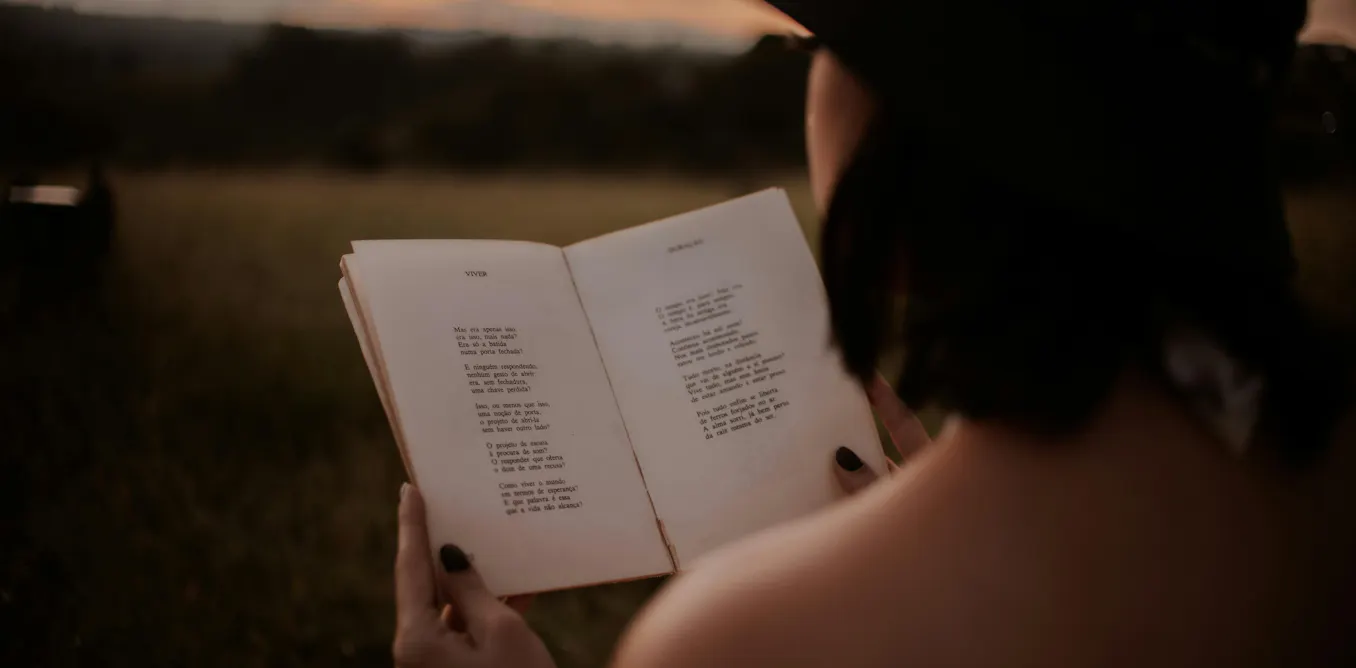
Jeff Bezos’ defense of major layoffs at The Washington Post last week drew ridicule for his comparison of business pressure to poetry. He argued that if readers will not pay for a product, it is not good enough, likening it to “poetry without rhyming” and suggesting that rhyme provides a useful constraint. Critics mocked the analogy, but the deeper point is about discipline: Bezos seemed to mean that external pressure, whether rhyme in poetry or profitability in journalism, can prevent work from becoming too loose, too easy, or too self-satisfied.
The idea that poetry must rhyme is historically inaccurate. Rhyme is one of the most familiar features of English verse, but poetry has never depended on it alone. In Old English, including works such as Beowulf, verse was organized by stress patterns, caesura, and alliteration rather than end rhyme. Rhyme became more prominent later, especially under French influence after the Norman Conquest, and because it is memorable and easy to hear, it often came to stand in for poetry itself. But rhyme is only one possible source of pattern, music, and order.

Many major writers rejected the idea that rhyme is essential. John Milton wrote Paradise Lost without rhyme and defended the choice, arguing that rhyme was not a necessary ornament of good verse. He saw it as a possible distraction, something that could encourage surface polish before thought was fully developed. Shakespeare, too, demonstrated that powerful poetry can thrive without rhyme: much of his drama is written in blank verse, where rhythm and syntax carry the emotional force. In Romeo and Juliet, the famous balcony scene is memorable not because it rhymes, but because of the movement of the line and the intensity of the language.
Modern poetry further shows that rhyme is optional, not foundational. Free verse does not depend on regular rhyme or fixed meter, yet that does not make it unstructured. Instead, it replaces visible pattern with subtler forms of discipline: rhythm, repetition, line breaks, syntax, and the movement of thought. T.S. Eliot argued that there is no true freedom in art, meaning that removing rhyme does not remove form, only changes how form is perceived.
At its best, rhyme creates surprise rather than simple closure. It can be playful, witty, or unsettling. Lord Byron used rhyme for comic effect, turning endings into little bursts of intelligence. Emily Dickinson used near rhyme to create tension and haunting precision rather than neat resolution. Even popular lyric and rap traditions show how rhyme can expand beyond simple matching sounds, as in Eminem’s famous play on “orange,” where likeness is stretched across syllables and unexpected sound connections.
The larger lesson is that rhyme, like profit, is visible and measurable, but neither is proof of quality. A poem can rhyme and still be bad; a newspaper can make money and still be shallow. Bezos’ mistake was to treat what is easiest to hear or count as evidence of what matters most. Rhyme can be brilliant, but it can also be mechanical. Its presence alone does not guarantee value.