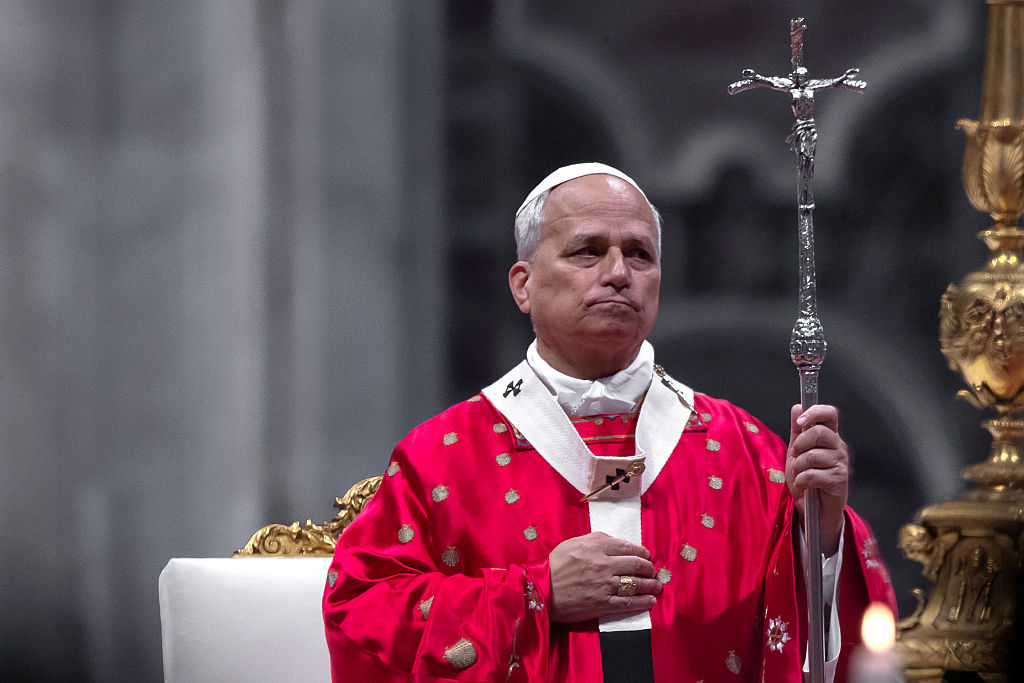
Pope Leo XIV has issued a formal apology for the Catholic Church’s historic role in legitimizing slavery during the colonial era, marking what Vatican observers describe as the first explicit acknowledgment by a pope of the institution’s responsibility for supporting the enslavement of non-Christians through official church authority. The apology appeared in the pope’s first encyclical, Magnifica Humanitas (“Magnificent Humanity”), released by the Vatican on Monday.
In the text, Leo expressed sorrow for the suffering and humiliation endured by enslaved people and asked forgiveness “in the name of the Church.” He described slavery as “a wound in Christian memory,” framing the statement as a direct reckoning with a long and painful history of religiously sanctioned oppression. Previous popes had apologized for the actions of individual Christians involved in the trans-Atlantic slave trade, but this statement went further by addressing the Church’s institutional and papal role in legitimizing slavery.

The apology has been welcomed by many Black Catholics and historians as a long-awaited act of accountability. Shannen Dee Williams, a historian at the University of Dayton and author of Subversive Habits, said Black Catholics have waited for the Vatican to speak honestly about the Church’s role in the trans-Atlantic slave trade, chattel slavery, and the broader legacy of anti-Black racism. Her response reflects a wider view that the Catholic Church’s ties to slavery were not incidental, but deeply connected to systems of white supremacy that shaped the modern world.
The encyclical also links the Church’s historical reckoning to present-day concerns about exploitation in the digital age. Leo warned that rapid technological development, especially artificial intelligence, could create new forms of oppression if left unchecked. He pointed to exploitative labor practices, the extraction of rare minerals, and the concentration of power among technology companies as examples of what he called “digital slavery.” By connecting colonial-era slavery to modern economic and technological systems, the pope broadened the apology into a wider critique of human exploitation.
The statement has been seen as especially significant because it moves beyond symbolic regret and addresses the Church’s structural responsibility. It acknowledges that the Vatican’s past was not only shaped by the actions of individual believers, but also by official religious decisions that helped justify slavery over centuries. For many observers, that distinction makes the apology historically unprecedented.
Supporters say the moment could help open a deeper conversation about the Catholic Church’s legacy of racism and its relationship to Black and brown communities around the world. At the same time, the apology raises questions about how institutions confront historical harm and whether such acknowledgments can lead to meaningful repair.
For Black Catholics, scholars, and advocates for racial justice, the Vatican’s statement represents both a breakthrough and a challenge: a recognition of centuries of suffering, and a call to confront the enduring systems of inequality linked to that past.