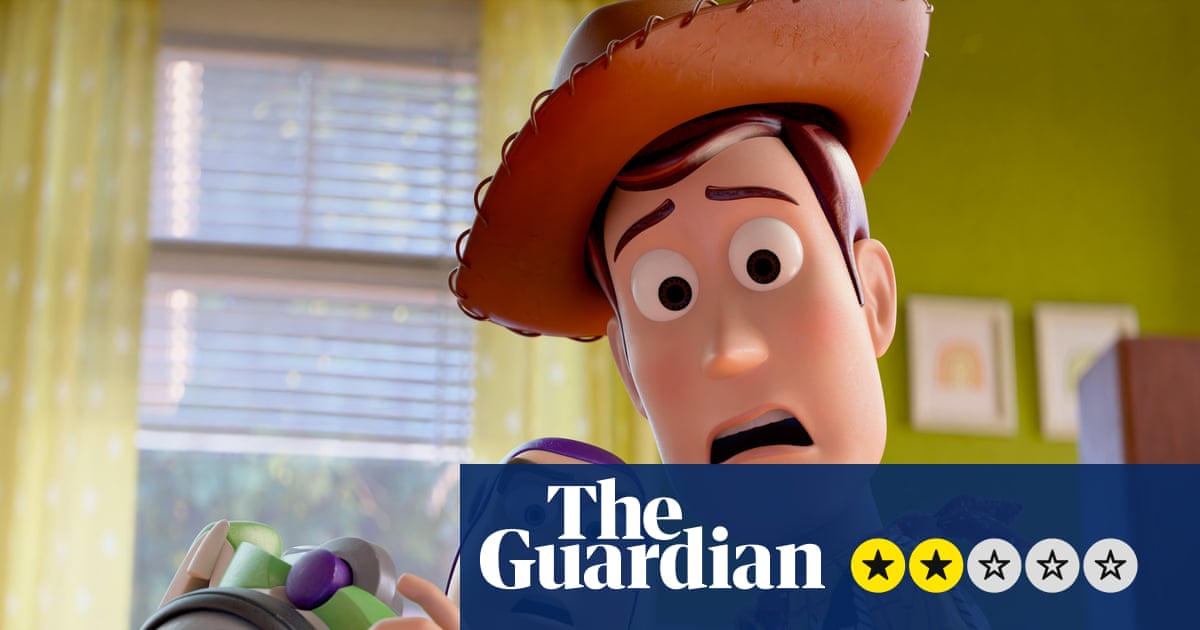
Toy Story 5 arrives as a polished, technically impressive continuation of Pixar’s long-running franchise, but the story is described as emotionally hollow and creatively drained. While the film looks glossy and effortless, the underlying sense of danger, invention and heart that defined earlier Toy Story films is said to be missing. The review argues that the movie weakens one of the franchise’s most important themes, mortality, and fails to fully commit to its central warning about how addictive technology can replace imaginative play.
The story returns to the familiar hidden lives of toys when children are not watching. Jessie remains with Bonnie, along with Buzz Lightyear and other toys, while Woody lives separately in a more rustic, untamed environment with Bo Peep. The review notes that Woody and Buzz are now older and marked by human-like changes, such as Woody’s bald patch and paunch, while Buzz and Jessie remain unchanged. Bonnie is portrayed as lonely and isolated, the only child around who still truly plays with toys instead of being absorbed by digital devices.


A creepy tablet called Lilypad enters Bonnie’s world and initially seems to offer connection and excitement, but the film’s treatment of the device is criticized for softening its own message. Instead of remaining a clearly sinister force, Lilypad is ultimately framed as capable of noble sacrifice for the sake of children’s wellbeing. The review suggests this undercuts the sharper social critique the film appears to be building.
Jessie becomes involved in a complicated subplot that leads her to meet Blaze, a horse-loving child who could become a strong new friend for Bonnie. The film also introduces a group of outdated, battery-powered tech toys, including Smarty Pants, who add comic relief and appear to suggest that not all technology is harmful. However, the reviewer sees these ideas as unevenly handled and part of a narrative overloaded with contrivance.
The review places particular emphasis on the emotional legacy of Toy Story 2, especially Jessie’s song “When She Loved Me,” which remains one of the most powerful moments in the series. That emotional high point is echoed in Toy Story 5 through a new Taylor Swift song and a similar plot thread about being loved and forgotten, but the review argues that the new version lacks the same depth and conviction.
Overall, the film is presented as evidence that the Toy Story franchise, after more than 30 years, may be running on brand recognition rather than fresh inspiration. The review concludes that Toy Story 5 is a sign of creative exhaustion, offering spectacle and familiarity without the poignancy, originality or emotional force that once made the series a landmark of Pixar’s golden age. The film is set for release on 18 June in Australia and 19 June in the UK and US.