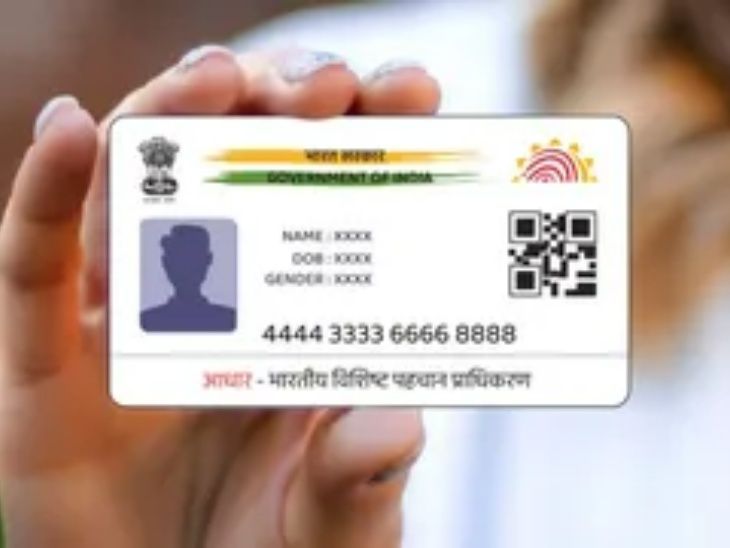
The Supreme Court on Tuesday sought responses from the Centre and state governments on a petition alleging that Aadhaar cards are being wrongly used as proof of citizenship, domicile, address and date of birth, even though the law does not treat them as such. The petition has asked the court to direct authorities to restrict Aadhaar’s use strictly to identity verification.
A bench headed by Chief Justice Surya Kant and Justice V. Mohana issued notices to the Centre, all states and Union Territories on the plea filed by advocate Ashwini Kumar Upadhyay. The petition also seeks directions to the Election Commission to ensure that Aadhaar is accepted only as proof of identity and not as proof of citizenship, residence, address or birth date.


The petitioner argues that Section 9 of the Aadhaar Act clearly states that Aadhaar is not proof of citizenship or domicile. It also cites a UIDAI notification dated August 22, 2023, which says Aadhaar is only proof of identity and not of citizenship, address or date of birth. According to the plea, the widespread use of Aadhaar in place of other documents has led to misuse in several official and administrative processes.
The petition says Aadhaar is often being used for school admissions, property purchases, birth certificates, ration cards and driving licences, where age, residence or citizenship are sometimes verified through Aadhaar-based documentation. It claims this has made it easier for infiltrators and illegal immigrants to obtain other documents, even when they may not have valid supporting records.
The plea also raises concerns about voter registration verification. It alleges that the document checks under Form 6 are inadequate and could allow people without the necessary valid documents to be added to electoral rolls. The petition calls for major reforms in the verification framework used in the electoral process and suggests creating a high-level monitoring committee. The proposed committee would include a retired Supreme Court judge as well as cyber security and forensic experts.
The issue comes against the backdrop of the Supreme Court’s landmark judgment on September 26, 2018, when it upheld the Aadhaar Act by a 4:1 majority while striking down some provisions. In that ruling, the court said Aadhaar linking with bank accounts and mobile SIMs was not mandatory, and that Aadhaar was not compulsory for school admissions. At the same time, it held that Aadhaar remains valid for government subsidies and welfare schemes.
The Aadhaar Act, formally known as the Aadhaar (Targeted Delivery of Financial and Other Subsidies, Benefits and Services) Act, 2016, provides the legal framework for issuing Aadhaar numbers, regulating their use, protecting data and governing UIDAI’s functioning. The law came into force on March 26, 2016, and clearly says Aadhaar is not proof of citizenship. It only indicates that a person is a resident of India.
The petition has revived debate over the scope of Aadhaar in public administration, identity verification and election-related processes.