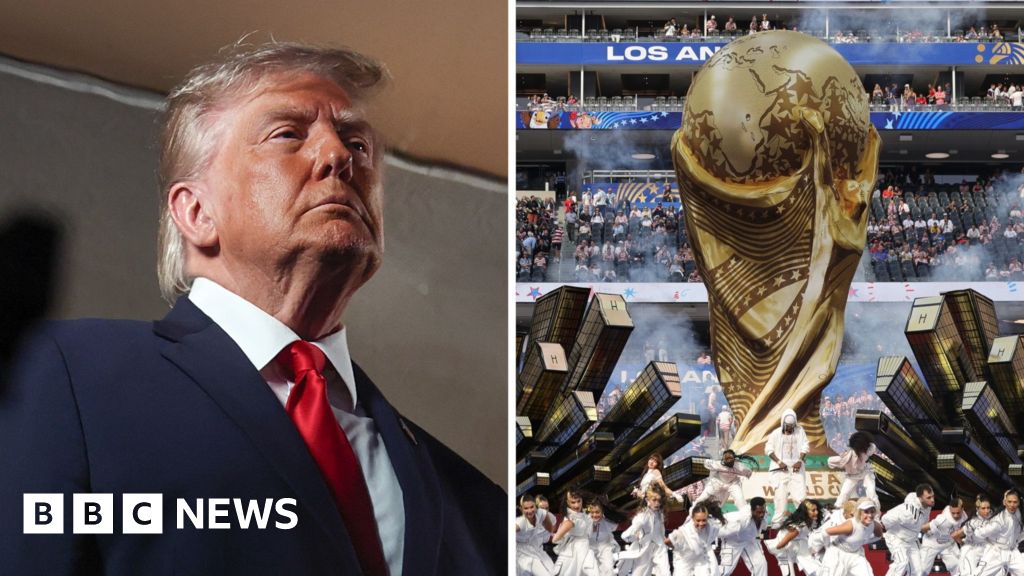
US President Donald Trump became the first American president to miss a United States opening match at a FIFA World Cup, marking an unusual moment in the tournament’s political and ceremonial backdrop. The decision stood out because the presence of heads of state at major international sporting events is often treated as a sign of support, prestige, and diplomatic visibility. Trump’s absence drew attention not only because of his role as president of the United States, but also because the World Cup is a global event closely associated with national pride and international attention.
Trump was not alone in skipping an opening match. Mexico’s President Claudia Sheinbaum also did not attend her country’s opener at Azteca Stadium on Thursday, while Canada’s Prime Minister Mark Carney likewise stayed away from Canada’s opener in Toronto on Friday. The lack of attendance by top political leaders in all three host countries made the opening phase of the tournament notable, as it contrasted with the expectation that such events often feature prominent public figures in the stands.

The BBC’s Carl Nasman examined the significance of Trump’s decision and the broader context surrounding it. His analysis pointed to how presidential attendance at sporting events can carry symbolic weight, especially when the competition is hosted on home soil or involves teams representing the nation directly. In this case, Trump’s absence created a historical first for a sitting American president at a U.S. World Cup opener.
World Cup openers are often used as moments of national celebration, showcasing the host country’s football culture, stadium atmosphere, and international standing. When a president or prime minister attends, the appearance can reinforce that image and underline the importance of the tournament as more than just a sports event. When leaders do not attend, the absence itself can become part of the story, prompting discussion about scheduling, political priorities, security concerns, or personal preference.
Trump’s decision is likely to be remembered because of the novelty attached to it. Being the first U.S. president to skip a home World Cup opener places the moment in a historical frame that goes beyond a single match. It also highlights how major sporting events can intersect with politics, protocol, and public perception. Even when leaders are not present, their choices can shape the narrative surrounding a tournament.
The absence of the leaders of the three North American host nations also added an unexpected layer to the early World Cup conversation. Instead of being defined solely by the football on the field, the opening matches became a point of discussion about the role of political leaders at global sporting spectacles and what their presence, or lack of it, signals to domestic and international audiences.