Antwerp has long been one of fashion’s most improbable power centers. In 1986, the Antwerp Six — Martin Margiela, Ann Demeulemeester, Dirk Bikkembergs, Dirk Van Saene, Dries Van Noten, Marina Yee, and Walter Van Beirendonck — drove from Belgium to London to show their work with little recognition and no platform. Their anti-glamour attitude, independence, and willingness to break rules helped reshape fashion’s creative landscape. Decades later, Belgian-trained designers remain deeply influential across major luxury houses, from Chanel and Prada to Saint Laurent, Margiela, Diesel, and Marni.
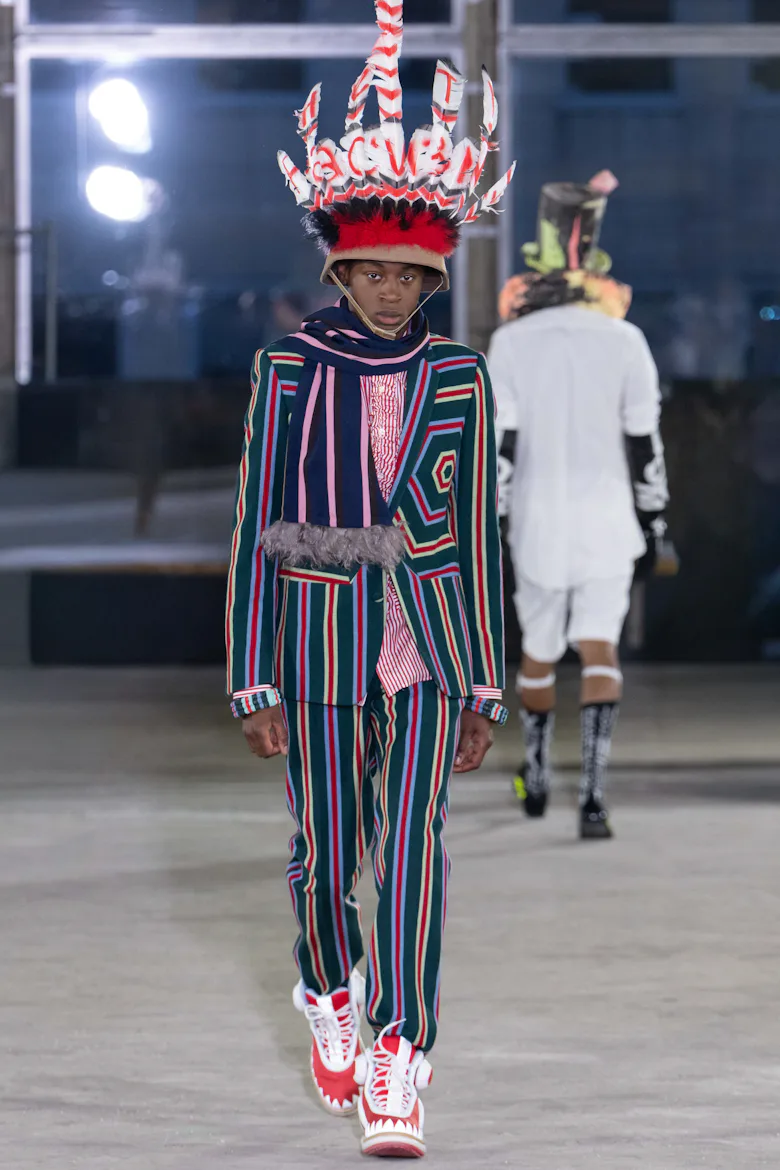
That legacy was at the center of the first Antwerp Fashion Festival, which brought together established names, young graduates, and rising designers across the city. The event highlighted Antwerp’s continuing role as a laboratory for experimental, garment-driven design rooted in craft, individuality, and a refusal to follow convention. Walter Van Beirendonck marked 40 years in fashion with a collection shown inside an abandoned bank under construction, while Dries Van Noten’s new creative director, Julian Klausner, reflected on the responsibility of leading a historic house while still pushing it forward.
Across the festival, designers described Antwerp as a place where creativity grows from the city’s size, its multilingual and politically complex identity, and its lack of heavy fashion heritage. That absence of tradition, they said, creates freedom. Klausner called Belgium fertile ground for originality, while Royal Academy of Fine Arts Antwerp fashion director Brandon Wen emphasized the school’s focus on strong garment details and imaginative construction. Other participants echoed the same themes: authenticity, optimism, color, craft, and slow growth over fast expansion.
For many of the younger designers, the future of fashion is less about scale and more about survival through creativity, direct connection to clients, and smaller, more sustainable systems. Bernadette and Charlotte de Geyter of Bernadette stressed timelessness and slow growth. Florentina Leitner pointed to the pressures on wholesale and the need for stronger direct-to-consumer models. Pommie Dierick, Carla Lázaro Bonet, and Anna Lackner all spoke about the return of craftsmanship, the value of imperfection, and the importance of freedom in design. Julie Kegels, a 2026 LVMH Prize finalist, said AI and corporate sameness may even push fashion back toward human touch and handmade detail.
Walter Van Beirendonck, looking back on four decades, described fashion as a rollercoaster of survival and success, but insisted that creativity remains the industry’s soul. The festival’s broader message was clear: Antwerp still produces designers who are radical, thoughtful, and unafraid of risk. In a fashion system increasingly shaped by corporate pressure and constant change, the city continues to offer a different model — one built on imagination, independence, and enduring belief in the power of making clothes with a point of view.