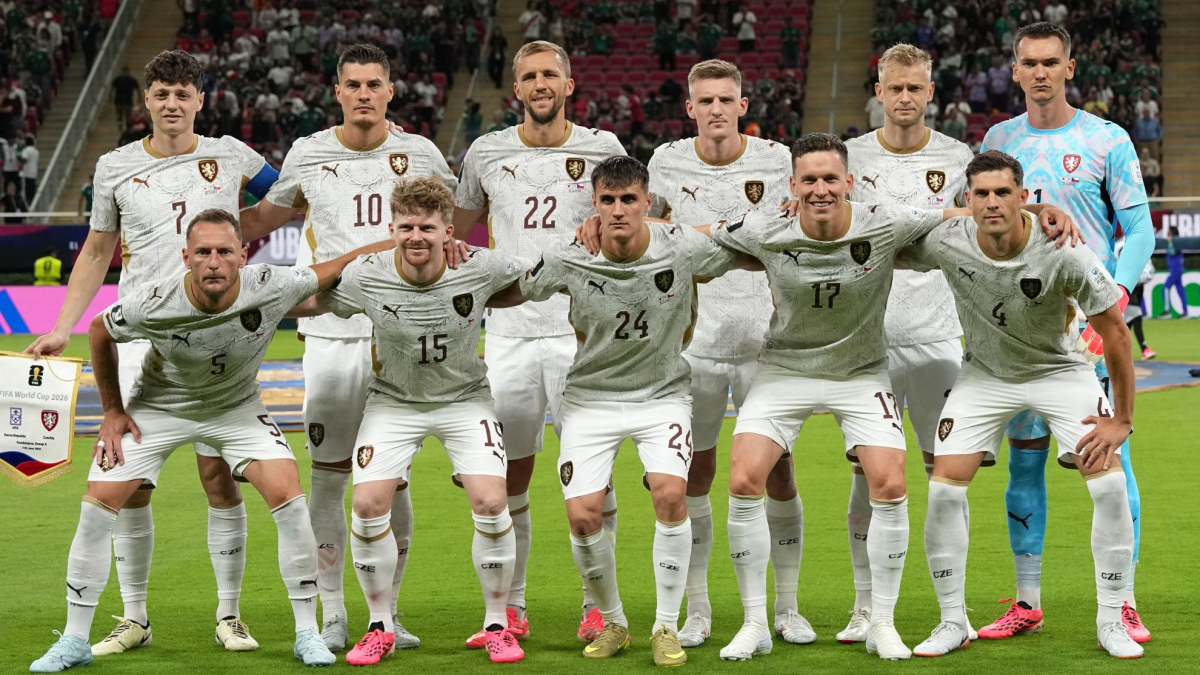
The 2026 World Cup has not only drawn attention for the action on the pitch, but also for a naming question that has surprised many viewers: why the team long known as the Czech Republic is now widely referred to as Czechia. The answer is that this is not a new development. The short-form name Czechia was officially adopted in 2016, giving the country two valid English names for different contexts. “Czech Republic” remains common in formal, diplomatic and institutional use, while “Czechia” is intended for everyday language, media references and sporting events.
The country itself emerged as an independent state on January 1, 1993, after the peaceful split of Czechoslovakia in the so-called Velvet Divorce. Since then, Czech leaders have encouraged a shorter and more practical international name that would fit better in global communication, branding, tourism and sports. The preference for Czechia was meant to mirror the way many other nations are identified by shorter names in common use.


That shift has become especially visible in football. FIFA and UEFA now use Czechia in official team listings, graphics, broadcasts and digital platforms, helping normalize the name for global audiences. The 2026 World Cup has accelerated that visibility, with the short-form name appearing on scoreboards and television coverage throughout the tournament. For many fans, this has created the impression that the country has just changed its name, even though the process began a decade ago.
The move toward Czechia is also tied to national identity and international branding. Officials argued for years that “Czech Republic” was too long for practical use in sports jerseys, tournament graphics and promotional materials. The shorter version is easier to translate, easier to display and easier to remember, while still preserving the country’s historical and political identity.
Czechia’s football journey to the 2026 World Cup was hard-earned. After a difficult European qualifying campaign, the team reached Group A, where it was scheduled to face South Korea on June 11, South Africa on June 18 and Mexico on June 24. The final group-stage match against Mexico is expected to be decisive in determining who advances to the Round of 16.
The country’s name has evolved over centuries. The region was once widely known as Bohemia before becoming part of Czechoslovakia after World War I in 1918. Today, Czechia represents the modern, official short name of the nation on the international stage. During the 2026 World Cup, that name has gained its strongest global exposure yet, confirming its place in the sporting world and in everyday use.


/https://i.s3.glbimg.com/v1/AUTH_59edd422c0c84a879bd37670ae4f538a/internal_photos/bs/2026/i/p/EcPc9lSkqrcO4zKLp6Mw/alexandre-borges.jpg "Alexandre Borges Enfrenta Desafio e Se Aproxima dos Pais em Santos")