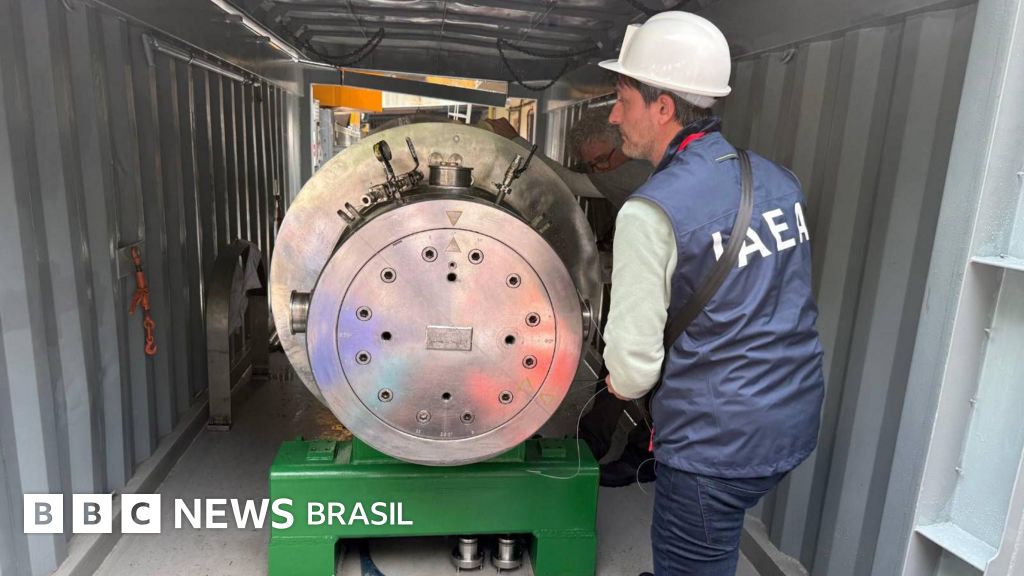
In a discreet multinational operation in late April, a Venezuelan military convoy transported about 13 kilograms of highly enriched uranium from the Venezuelan Institute for Scientific Research, on the outskirts of Caracas, to the port of Puerto Cabello, where it was loaded onto a British cargo vessel and later shipped to the United States. The operation involved Venezuela, the United States, the United Kingdom, and the International Atomic Energy Agency (IAEA), which said the mission was carefully planned and carried out under strict security measures because highly enriched uranium can pose a proliferation and security risk if it falls into the wrong hands.
The uranium had originally been used as fuel for the RV-1, the first nuclear reactor in Latin America, installed in the early 1960s at the Venezuelan institute under the United States’ “Atoms for Peace” program. The reactor began operating in 1960 and was used for research until 1991. Venezuelan authorities say it was fully shut down in 1997, after part of the fuel was removed and the remaining material stayed under secure custody until the recent transfer.


The history of the material dates back to President Dwight Eisenhower’s 1953 speech to the United Nations, in which he warned about the dangers of nuclear proliferation while calling for atomic energy to be used for peaceful purposes such as medicine and agriculture. That address helped inspire both the creation of the IAEA and a wider U.S. policy of sharing nuclear technology and materials with selected countries for civilian uses, provided they did not pursue weapons development. Venezuela obtained the RV-1 reactor from a U.S. company in 1956, and during its years of operation it used nuclear fuel supplied by the United States and the United Kingdom.
According to British officials, Venezuela requested the removal of the remaining nuclear fuel in 2017, and the United Kingdom joined planning for the operation the following year at the request of the IAEA. The transfer was ultimately carried out in early April after years of preparation. Venezuelan Foreign Minister Yván Gil said a U.S. military operation to capture President Nicolás Maduro on January 3 had increased the risk level and confirmed the urgency of removing the uranium. He said the operation had brought U.S. forces close to the Ivic site and created additional security concerns.
The British government said the transport was handled by Nuclear Transport Solutions, using the cargo ship Pacific Egret, while the U.S. National Nuclear Security Administration and the IAEA supervised technical safeguards and training. Satellite imagery indicated that the ship temporarily stopped transmitting its location before arriving in Puerto Cabello and later returned to the United States. The IAEA said the removal was part of a broader international effort to reduce global stocks of highly enriched uranium and convert research reactors to low-enriched uranium, which is less suitable for weapons use. The agency said more than 100 research reactors and isotope production facilities worldwide have already been converted or shut down, enabling the recovery of roughly 7,000 kilograms of highly enriched uranium, plus the 13 kilograms removed from Venezuela.