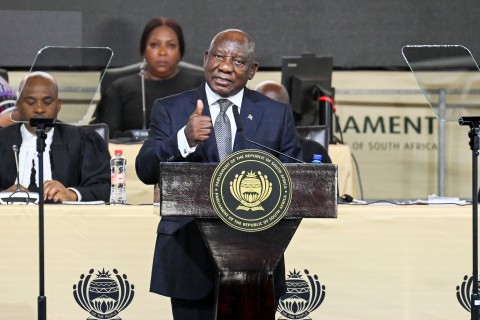
President Cyril Ramaphosa is expected to use his address from the Union Buildings in Pretoria to outline the government’s response to illegal migration and the growing public unrest linked to undocumented migrants. The speech comes as demonstrations continue to spread across the country, putting pressure on authorities to respond to concerns raised by protesters and communities.
The main focus of the address is likely to be the government’s management approach to illegal migration, an issue that has become increasingly prominent in recent weeks. Public frustration has intensified as protests have gained momentum in several areas, with demonstrators calling for stronger action against undocumented migrants. The unrest has added urgency to the debate, making migration policy a central political and social issue.

Protesters have set a deadline of June 30, insisting that undocumented migrants should leave the country by that date. The demand has been accompanied by threats of a nationwide shutdown if their calls are not met. The warnings have drawn attention across South Africa, raising concerns about possible disruption and further escalation if tensions continue.
However, the government has rejected the idea that a nationwide shutdown will take place. Officials have dismissed the threat, saying it will not happen. This response reflects the state’s broader effort to downplay the possibility of large-scale disruption while maintaining that public order will be protected.
The unfolding situation highlights the deepening debate over migration, border control, and enforcement. For many protesters, the issue has become tied to concerns about jobs, services, and security. For the government, the challenge is to address those concerns without encouraging unlawful action or fueling division.
Ramaphosa’s remarks are therefore expected to carry significant weight, as they may set the tone for how government plans to handle both the policy and security dimensions of the crisis. His address could be closely watched by citizens, political leaders, and communities affected by the protests.
The developments also underline the sensitivity of migration-related tensions in the country. As demonstrations continue, pressure is building on authorities to show both firmness and restraint. The government will likely seek to balance enforcement of the law with efforts to calm public anger and prevent further unrest.
With the June 30 deadline approaching, the next few weeks may prove critical. Whether the protests lose momentum or intensify will depend in part on how the government responds and whether protesters proceed with their threatened shutdown plans. For now, officials are signaling that they do not expect such a shutdown to materialize, even as the demonstrations continue to spread nationwide.