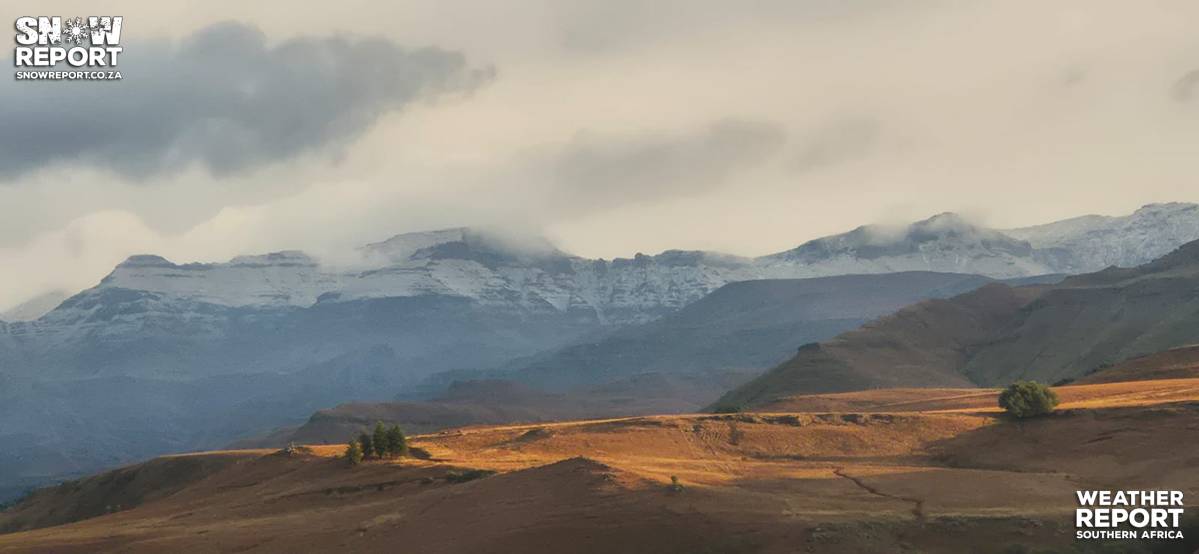
Snow has fallen in Lesotho, matching the forecast, and more snowfall is expected in the coming period. Snow was also visible on the Drakensberg peaks this morning from Underberg and Bushmans Nek in KwaZulu-Natal, indicating that winter weather conditions are affecting parts of southern Africa. The report notes that disruptive snowfall remains possible this week, with further details available in the weather forecast linked by the publisher.
The snowfall observation comes as colder conditions spread across the region, with Lesotho among the areas already seeing snow. The visible snow on higher peaks in the Drakensberg range suggests that mountain areas are experiencing the most immediate impact, while surrounding locations in KwaZulu-Natal are also seeing wintry signs. The article indicates that more snow may fall in both Lesotho and South Africa, reinforcing the possibility of continued unsettled weather over the next few days.
Readers are invited to view additional photographs further down the page, showing the snowfall and mountain conditions. The publisher also asks the public to share photos and videos, including the location and time they were taken, through WhatsApp. This suggests that the snow event is being documented in real time by both the news team and the public.
The article further directs users to follow the publisher’s channels for updates. It also states that standard users may share the content using the site’s sharing buttons, but downloading or taking screenshots for reposting is not permitted. Other media outlets and channels are instructed to request permission before using the forecast material, maps, images, or user-submitted photos and videos.
Overall, the report highlights an early June snowfall event in Lesotho and parts of South Africa, with mountain areas in the Drakensberg range already showing snow cover. With more snow expected and the possibility of disruptive conditions later in the week, the weather pattern appears set to remain important for residents, travelers, and communities in higher-altitude areas.