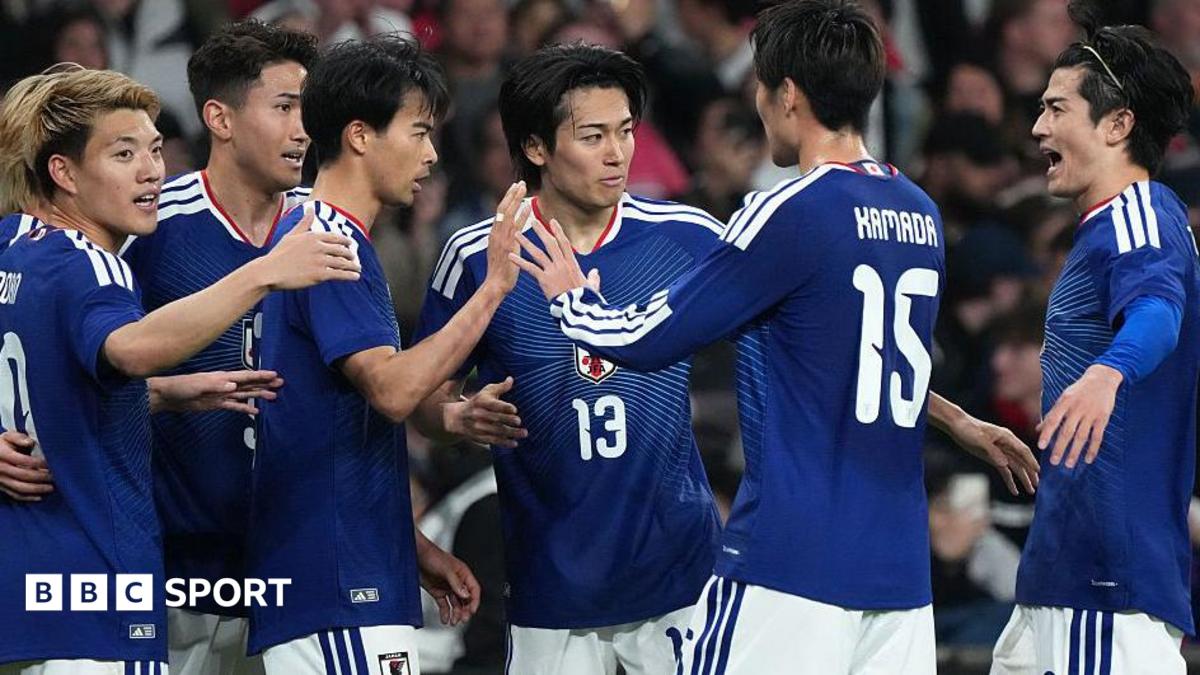
Japan’s ambition to become a genuine world football power is no longer based on hope alone. Former captain Maya Yoshida says the national team has set a high standard, while coach Hajime Moriyasu has publicly targeted World Cup glory and believes Japan now has the squad, mindset, and depth to challenge the best teams in the world.
Moriyasu said earlier this year that his goal was to lead Japan to become “one of the best of the best.” He pointed to the team’s steady improvement through international duty and insisted his job is to bring the best out of the players, even while dealing with injuries. He also stressed that Japan has shown it can still perform at a high level regardless of who is selected.


That confidence is supported by the quality of Japan’s current squad, which includes players such as Crystal Palace midfielder Daichi Kamada and Leeds United’s Ao Tanaka. Under Moriyasu, Japan became the first non-host nation to qualify for this summer’s World Cup finals after an almost perfect qualifying campaign, underlining the team’s consistency and strength in Asia.
Moriyasu noted that 19 of the 26 players in Qatar were making their World Cup debuts, and said that experience has helped form the core of the current group. He explained that this generation has aimed high from the beginning, keeping a clear focus on winning the World Cup while continuing to improve step by step. That mentality, he suggested, is a major reason for Japan’s rise.
Japan’s progress has not been limited to Asian competition. Since being eliminated at the 2022 World Cup in Qatar, they have recorded notable victories over England, Germany, and Brazil, showing they can compete with some of football’s elite nations. Those results have strengthened the belief that Japan can now challenge the game’s traditional powers.
Yoshida said the growing number of Japanese players competing regularly in Europe, especially in top leagues, has been a major factor in this development. He explained that when he began his career at VVV Venlo in the Netherlands, Japanese footballers had far less recognition abroad. Today, he said, the reputation of Japanese players is much higher, and many are now gaining weekly experience against World Cup-level opponents.
According to Yoshida, that exposure has made a huge difference in raising the national team’s overall level. He also credited earlier trailblazers such as Shunsuke Nakamura, Hidetoshi Nakata, and Shinji Ono for opening the door for future generations. Their success helped create the pathway that has allowed Japanese football to expand further and build a broader base of talent.
Together, the comments from Moriyasu and Yoshida reflect a clear shift in Japanese football: from a team aiming to compete respectably on the world stage to one that now believes lifting the World Cup is a realistic long-term ambition.