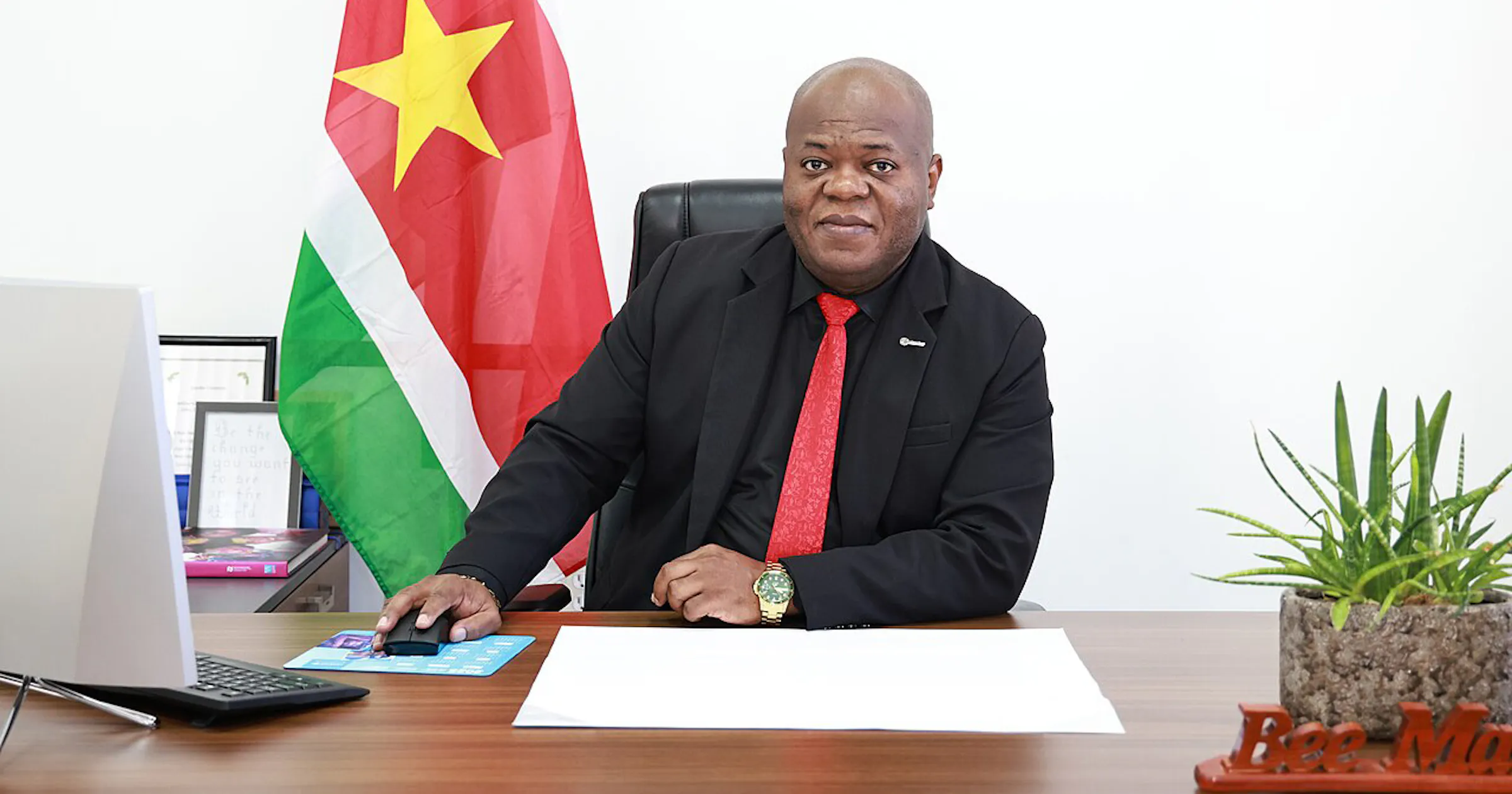
The Surinamese government is facing major legal and administrative obstacles in its effort to deal with so-called “ghost civil servants” or public employees who remain on the payroll despite doing little or no work. Minister of Home Affairs Marinus Bee said the problem is not only the presence of such workers, but also the government’s own failure to follow proper procedures when trying to block salaries or dismiss staff. As a result, the state often loses court cases, not because its actions are always unjustified, but because of procedural mistakes made during the process.
Bee said the Personnel Act will be thoroughly revised because the current system is too vulnerable to legal challenges. According to him, the government has repeatedly been defeated in court due to sloppiness and procedural errors. This has made it difficult to carry out reforms aimed at reducing waste and improving efficiency in the public sector. In some cases, workers continue receiving salaries simply because the required legal steps were not completed correctly.

To address the issue, the ministry has already set up several committees to review public employment legislation and modernize the rules. The goal is to bring the law in line with current conditions and ensure that future procedures are legally solid. Bee stressed that this will not be a quick fix. He said the government must first conduct a serious analysis of the size and structure of the civil service, including scientific research to determine how many employees are actually needed for the state to function effectively.
The minister said policy decisions should be based on facts and data rather than assumptions. He argued that the government should not rely on guesswork when deciding how many people are needed across ministries and agencies. Bee also noted that the problems in personnel management did not begin recently, but have developed over many years through exceptions, political decisions, and administrative weaknesses that have made the system increasingly complicated.
The planned reform of the Personnel Act is part of a broader effort to modernize government operations in Suriname. Bee said shorter procedures, clearer rules, and a stronger legal framework are necessary so that future actions against irregular payroll cases do not keep failing in court. Although he did not give a deadline for the reforms, he made clear that the government sees the matter as a priority. The findings of the study and the legal review are expected to guide further decisions about the size and future structure of the civil service.