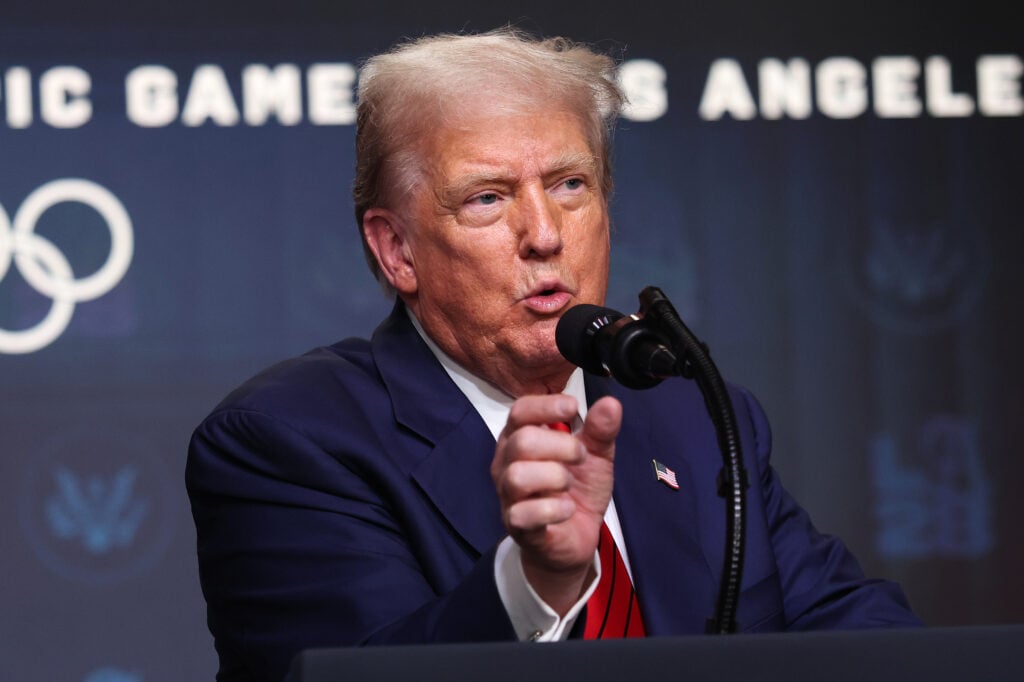
President Donald Trump’s White House is facing internal divisions over how to regulate artificial intelligence, after Trump reversed course on an executive order that would have imposed new rules on the fast-growing technology. Trump said he rejected parts of the measure because he did not want to undermine U.S. competitiveness, stressing that America is leading China and other countries in AI development.
The dispute has exposed a broader split among Trump advisers. Defense Secretary Pete Hegseth and undersecretary Emil Michael are described as favoring stronger oversight, arguing that AI could be used by foreign rivals and should be tightly monitored to prevent misuse. A senior White House official said they view AI as a strategic risk and want to ensure it does not fall into China’s hands.

On the other side, former AI czar David Sacks is portrayed as supportive of a more open approach, seeing AI as a technology that can help American industries stay ahead globally. In the middle are officials such as chief of staff Susie Wiles and Treasury Secretary Scott Bessent, who reportedly support a framework in which AI companies would voluntarily give the U.S. government an early look at new models before wider release.
Although the executive order was pulled back, the issue is not considered settled. Administration officials are expected to revisit the plan and try to reach a compromise that balances innovation, national security, and oversight. The debate reflects a larger policy challenge facing the government as artificial intelligence becomes more deeply embedded in business, defense, and everyday life.
Beyond the political fight, AI is expected to keep expanding across major industries. Businesses are increasingly using predictive analytics to improve supply chains and logistics, while AI-powered chatbots are becoming more advanced in customer service. Marketers are also expected to rely more heavily on AI to create personalized product recommendations and tailored shopping experiences. Future uses could include virtual shopping environments built around individual preferences, potentially changing how consumers interact with retail brands.
At the same time, the piece raises concerns about the government’s growing use of AI in surveillance and intelligence work. Experts warn that federal agencies may already be using advanced systems to monitor social media activity, travel patterns, financial behavior, and people’s locations. With billions of dollars flowing into government AI contracts, critics say the technology is giving authorities unprecedented visibility into private lives.
The article also points to smartphones as a major privacy risk, describing them as powerful tracking devices that can expose personal information to the government and other observers. Cybersecurity expert Matt Burk warned that people should understand the risks of living in a highly connected world and take steps to protect themselves.
Overall, the story highlights a widening national debate over AI: whether it should be restricted for security reasons, embraced for economic growth, or both. The outcome of that debate could shape how the United States competes with China, how businesses adopt new technology, and how much surveillance power government agencies ultimately gain.