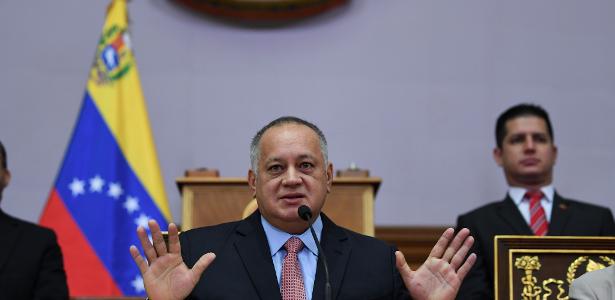
Venezuelan Interior Minister Diosdado Cabello rejected any suggestion that negotiations are underway with opposition figure María Corina Machado, saying there is “nothing on the agenda” with her. Speaking at a press conference for the ruling United Socialist Party of Venezuela, Cabello said there had been no meeting anywhere in the world between Machado and anyone resembling an intermediary or official linked to such talks.
Cabello’s remarks came after Machado, the Nobel Peace Prize winner and a leading opposition voice, called for U.S. support to advance a political negotiation aimed at restoring democracy in Venezuela. In a statement signed by Machado and issued from Panama, she said any transition-oriented talks would require specific conditions to be met first. Among them, she cited the full release of political prisoners, the safe return of exiles, and the dismantling of what she described as the regime’s repressive apparatus.

The opposition leader’s appeal underscores continued efforts by anti-government figures to build international backing for a democratic transition, even as the Maduro government dismisses the legitimacy of such demands. Machado has argued that a serious negotiation cannot take place without concrete guarantees and structural changes, framing the release of detainees and the return of exiled opponents as essential steps toward a credible political process.
Cabello, a senior figure in the Maduro government, flatly rejected the premise that the opposition has leverage to impose conditions on the state. “What conditions?” he asked, insisting that they do not have the power to dictate terms in the country. His comments reflect the government’s long-standing position that dialogue with its adversaries must occur on its own terms and without external pressure.
The exchange also comes against the backdrop of renewed attention to Venezuela’s political future following the fall of Maduro, according to the context referenced in the statement. The Trump administration proposed a three-phase plan for the country, centered on stabilizing Venezuela, rebuilding the economy, and holding elections. That framework suggests that any transition would likely depend on a combination of security, economic reconstruction, and electoral reforms.
Together, the statements highlight the deep divide between Venezuela’s ruling authorities and the opposition over how a political transition should be managed. While Machado is pressing for international involvement and preconditions tied to human rights and democratic guarantees, Cabello is signaling that the government is not prepared to negotiate on those terms. The disagreement illustrates how far apart the two sides remain, even as outside actors continue to discuss possible pathways for Venezuela’s future.


/extras/conteudos/Another-State-of-Play.png "State of Play: Time, Where to Watch, Games and Everything You Need to Know")