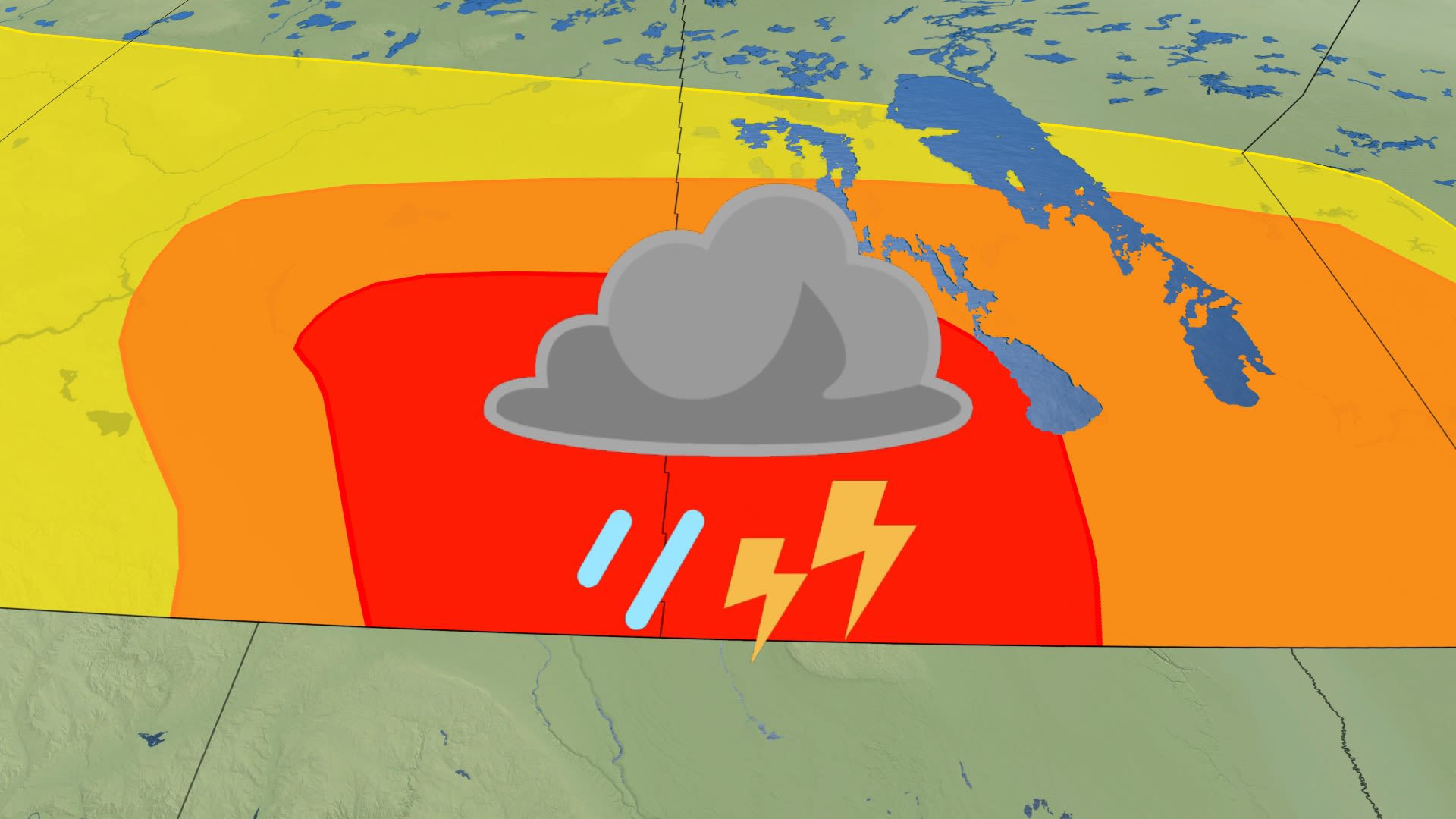
Severe thunderstorms are expected to hit parts of western Canada on Tuesday, bringing the threat of very large hail, damaging winds, heavy rain, and possible tornadoes. The most dangerous conditions are forecast for southern Manitoba, where supercell thunderstorms may develop in the afternoon and intensify into the evening. Hailstones could grow as large as tennis balls, and wind gusts may exceed 100 km/h in the strongest storms.
The weather setup is being driven by a low-pressure trough over the Rockies combined with a powerful jet stream extending into Manitoba. This combination is creating a highly unstable atmosphere, which is favorable for explosive thunderstorm development. The first storms are expected to form late in the day in southern Saskatchewan and southern Manitoba before moving eastward later in the evening. The most intense storm activity is likely after dinnertime, when wind shear increases and storms become more organized and dangerous.

Meteorologists say the area stretching from Brandon to Winnipeg has the highest risk of one or two tornadoes forming within these supercells. More than one million Canadians are expected to be on alert as the storms move through the region. Manitoba typically sees about eight tornadoes each year, which is fewer than neighboring Alberta, but Tuesday’s setup could produce a significant severe weather event.
Although the worst conditions are expected in Manitoba, the storm system will not end there. It is forecast to continue moving east on Wednesday, bringing thunderstorms and unsettled weather to much of Ontario. Heavy rain and strong winds may affect additional communities as the system progresses.
The combination of large hail, destructive gusts, torrential rainfall, and tornado potential makes this a serious weather threat for multiple provinces. Residents in the affected regions are being urged to monitor alerts closely and prepare for rapidly changing conditions as the storm system develops and tracks eastward over the next 24 hours.