El Niño is a recurring climate pattern that affects weather around the world. It is part of the larger El Niño-Southern Oscillation, or ENSO, which has three phases: El Niño, the warm phase; La Niña, the cool phase; and a neutral phase. In 2026, the northern hemisphere’s spring occurred during a neutral phase, following a relatively mild La Niña. Forecast models suggest that by mid-2026 the planet is very likely to move into El Niño conditions, and some projections indicate the event could strengthen sharply toward the end of the year.
The term El Niño was first used by Peruvian fishermen in the 19th century to describe an unusual warm current that arrived near Christmas. The warming replaced the cold waters normally found off the coasts of Ecuador, Peru and northern Chile. Those cooler waters are sustained by the Humboldt Current and by upwelling from deeper ocean layers. When El Niño appears, that balance changes, sea temperatures rise, and fish stocks such as anchoveta can decline sharply because they depend on cold, nutrient-rich waters.

Scientists later discovered that El Niño is not only an ocean event but also part of a coupled ocean-atmosphere system. In the 1920s, British scientist Gilbert Walker identified a pressure link between the South American Pacific and northern Australia and Indonesia, a pattern he called the Southern Oscillation. In the 1960s, meteorologist Jacob Bjerknes connected the warming in the tropical Pacific with changes in atmospheric pressure and trade winds, explaining how weakened winds allow warm water to spread eastward toward South America. This combined system became known as ENSO.
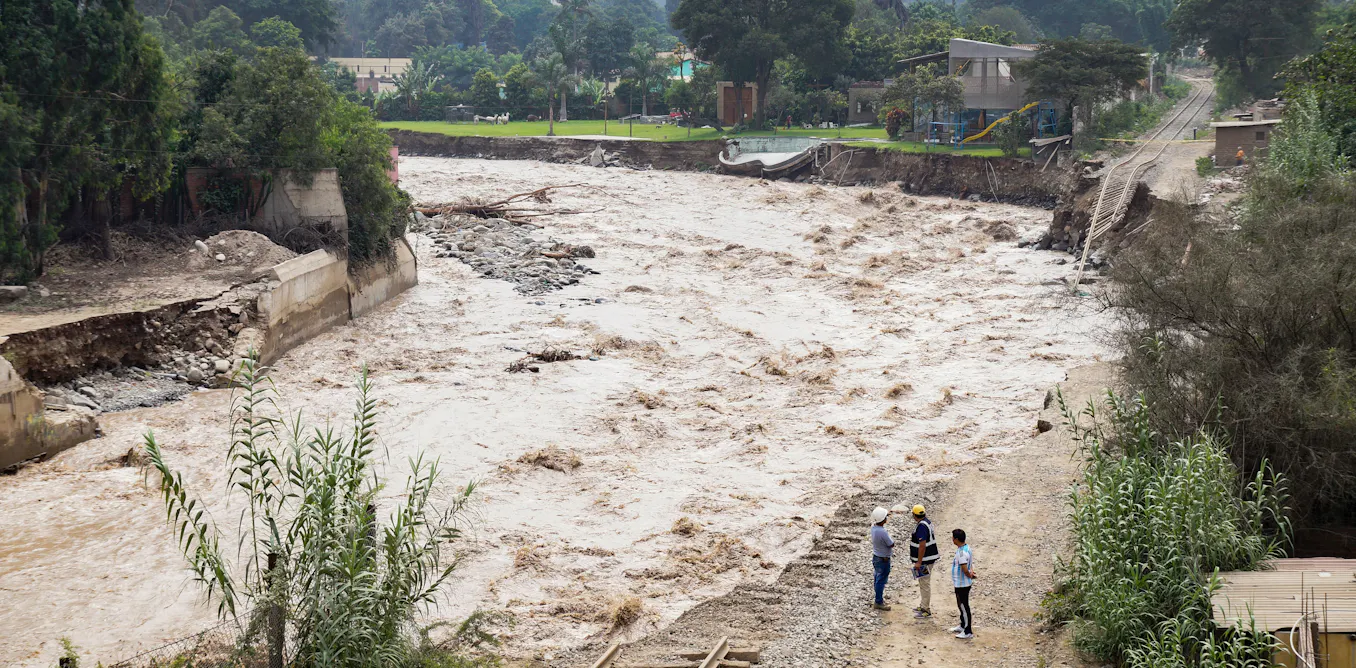
El Niño can produce dramatic weather shifts far from the Pacific. It often brings heavy rainfall to Peru and northern Chile, including areas that are usually very dry, while causing drought in other parts of the world. Historical events show how powerful it can be. The 1957–58 El Niño brought severe rains to Peru and drought to India and Southeast Asia. The 1982–83 event was the most intense of the 20th century and led to floods across the American Pacific and southern United States, along with drought in northeastern Brazil and Indonesia. The 1997–98 El Niño also caused major flooding, especially in California, and became widely known because of its impact on the United States.
A future strong or “super-El Niño” would likely raise global average temperatures above what would otherwise be expected from current warming trends. It could increase the risk of intense rain in parts of the Andes, East Africa, the southern United States and Argentina’s Atlantic coast region, while worsening drought in Southeast Asia, Australia and northeastern Brazil. The Mediterranean region is less directly influenced by ENSO, but a strong El Niño may still contribute to warmer conditions and a higher chance of extreme rainfall.
What began as a local observation by fishermen is now understood as a major global climate driver with the power to reshape weather, agriculture, water supplies and ecosystems across multiple continents.





:strip_icc()/i.s3.glbimg.com/v1/AUTH_63b422c2caee4269b8b34177e8876b93/internal_photos/bs/2026/c/r/IfK7fxSECfebotMPYamQ/bitcoin-despenca.png "Bitcoin Falls to ,000 as ETF Outflows Pressure Crypto Market")