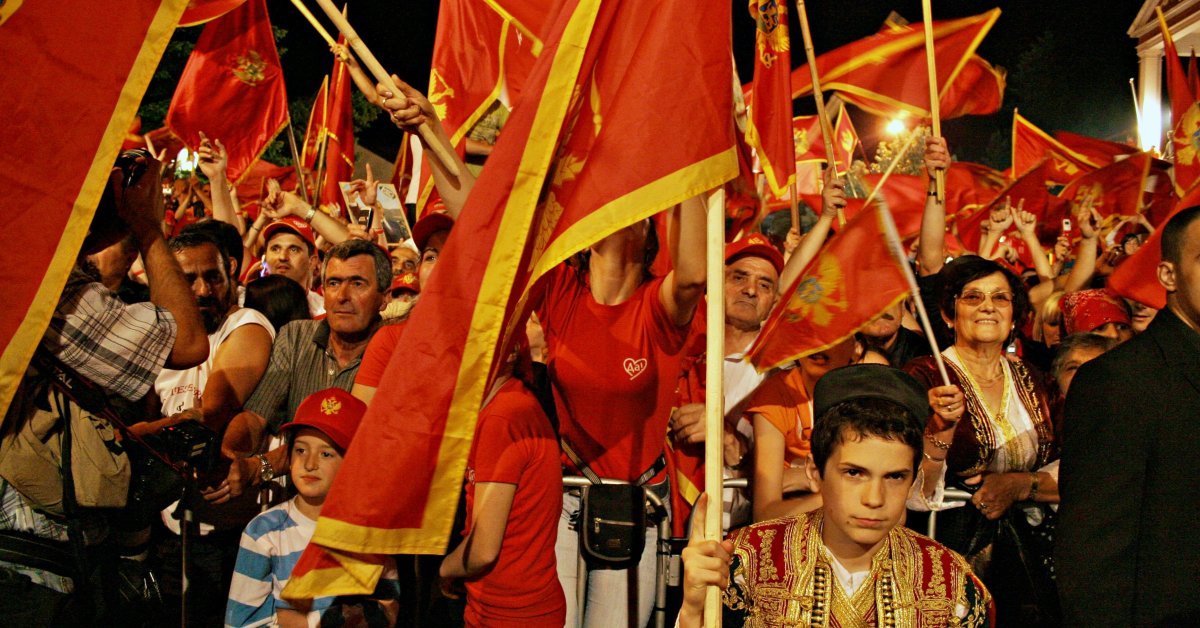
A film titled “Referendum – The Story of a Fictional Freedom,” produced by an organization close to Serbia’s ruling authorities, has triggered controversy in Montenegro after presenting Montenegrins as an “artificial” nation and questioning the country’s sovereignty. The production has been condemned in Podgorica, where officials say it promotes hate speech and appears intended to destabilize the political situation.
The film’s message has drawn sharp criticism because it touches on one of the most sensitive issues in the region: identity, statehood and the legacy of Montenegro’s independence. By portraying Montenegrins as a made-up nation, the film challenges a core element of the country’s modern political and national narrative. That has been seen by Montenegrin authorities and critics as more than a provocative opinion, but as an attack on the legitimacy of the state itself.

According to the reaction from Podgorica, the content is being treated as harmful and inflammatory. Officials and commentators argue that it revives old nationalist disputes and could deepen tensions between communities. The concern is not only about the film’s portrayal of Montenegrin identity, but also about its possible political purpose at a time when relations in the region remain fragile.
Montenegro’s response reflects broader anxieties about foreign influence and internal polarization. The country has long faced disputes over language, religion, national identity and the meaning of the 2006 referendum that restored its independence. Any attempt to cast doubt on that outcome is likely to be viewed as a direct challenge to the state’s sovereignty and stability.
The controversy also highlights the continuing impact of media and cultural productions in the Western Balkans, where films, documentaries and public statements can quickly become part of a wider political confrontation. In this case, the film is seen by its opponents as using historical and identity-based arguments to undermine the legitimacy of Montenegro as an independent nation.
Critics in Montenegro say the production crosses the line from expression into incitement. They argue that describing an entire people as artificial is discriminatory and dangerous, particularly in a region with a history of conflict driven by ethnic and national divisions. For them, the issue is not merely artistic interpretation, but the spread of messaging that can fuel hostility and mistrust.
The dispute comes amid ongoing sensitivity over how the past is interpreted in the former Yugoslav space. Questions of national identity remain politically charged, and narratives that deny or minimize the existence of a people are often met with strong public backlash. In that context, the film has become a symbol of the wider struggle over memory, legitimacy and political influence.
As the controversy develops, Montenegrin officials are signaling that they see the matter as serious. Their denouncement suggests that they regard the film not just as offensive, but as part of a broader attempt to weaken confidence in the state. The reaction underscores how quickly issues of culture and identity can escalate into disputes over sovereignty and national security in the Balkans.



/origin-imgresizer.eurosport.com/2026/05/31/image-df16b808-9cbb-41f2-91f1-ea8c1aecc00d-85-2560-1440.jpeg "Roland-Garros: Diane Parry on the Brink of Tennis’ Elite After Fearless Breakthrough")
