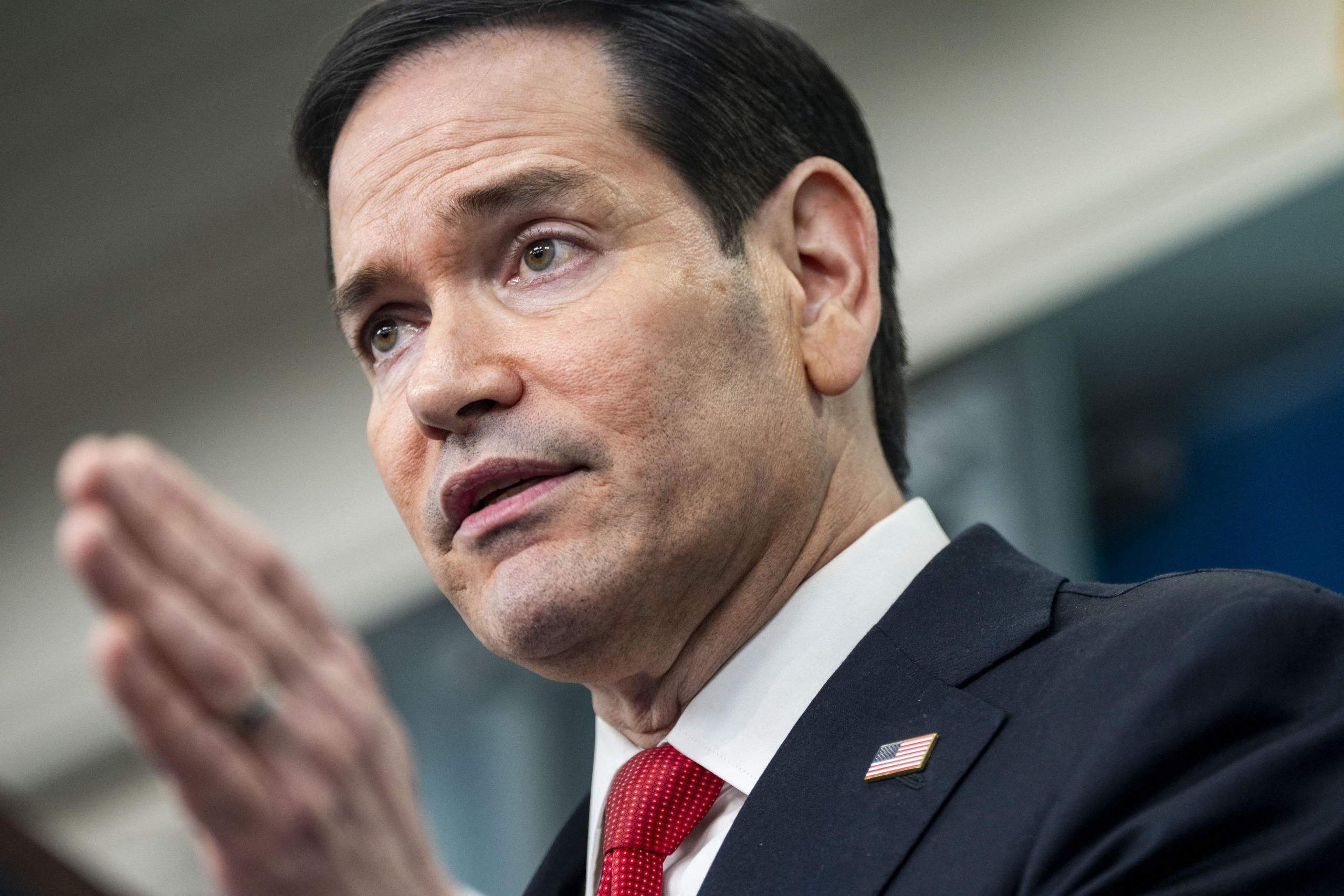
Secretary of State Marco Rubio’s testimony before Congress on Tuesday, June 2, was disrupted by an anti-war protester who interrupted the hearing with accusations that the Trump administration was enabling genocide in Gaza and Lebanon. The protester, identified in reports as appearing to be linked to the activist group Code Pink, shouted from the audience that the administration was “serving Israel” and called for an end to U.S. support for Israel. Capitol security officers removed him from the chamber while he continued yelling, and Rubio briefly paused before resuming his remarks.
The hearing, which focused on the State Department’s budget request, was further interrupted by additional demonstrations connected to Code Pink. Video shared by Medea Benjamin, a cofounder of the group, showed protesters confronting Rubio in a hallway outside the hearing room. One demonstrator accused him of having “the blood of Palestinians and Iranians and Lebanese people” on his hands, while another shouted that the Trump administration was “literally killing people.” Separate footage showed a protester being handcuffed by law enforcement as others chanted, “Rubio lies, people with AIDS die.”

The protests reflected growing anger among anti-war activists over U.S. policy in the Middle East, especially Washington’s support for Israel during the ongoing conflict in Gaza and the broader regional tensions involving Lebanon and Iran. Code Pink describes itself as a women-led grassroots organization opposed to U.S. wars and militarism, and has been a persistent critic of American backing for Israel.
Rubio’s testimony also featured a sharp exchange with Sen. Cory Booker over the Trump administration’s approach to Iran. Booker argued that the administration’s handling of the crisis had weakened the United States’ negotiating position and contributed to instability. Rubio rejected that criticism, saying there was “no begging” for a deal and suggesting that Iran was under severe economic pressure. He pointed to hyperinflation, a devalued currency, and difficulties paying government workers as evidence that Iran was in a “very serious situation.”
Booker countered that the conflict was still affecting Americans through higher costs and fuel prices, and he accused the administration of worsening the situation by abandoning prior diplomatic efforts. Rubio responded that Iranian leaders would likely agree to a deal quickly if not for resistance from the country’s supreme leader and the Islamic Revolutionary Guard Corps.
The hearing underscored the intensity of political divisions over U.S. foreign policy, with both activists and lawmakers challenging Rubio on America’s role in the Middle East. What began as a routine budget hearing turned into a contentious public clash over war, diplomacy, and U.S. support for Israel, highlighting the broader national debate surrounding Gaza, Lebanon, and Iran.