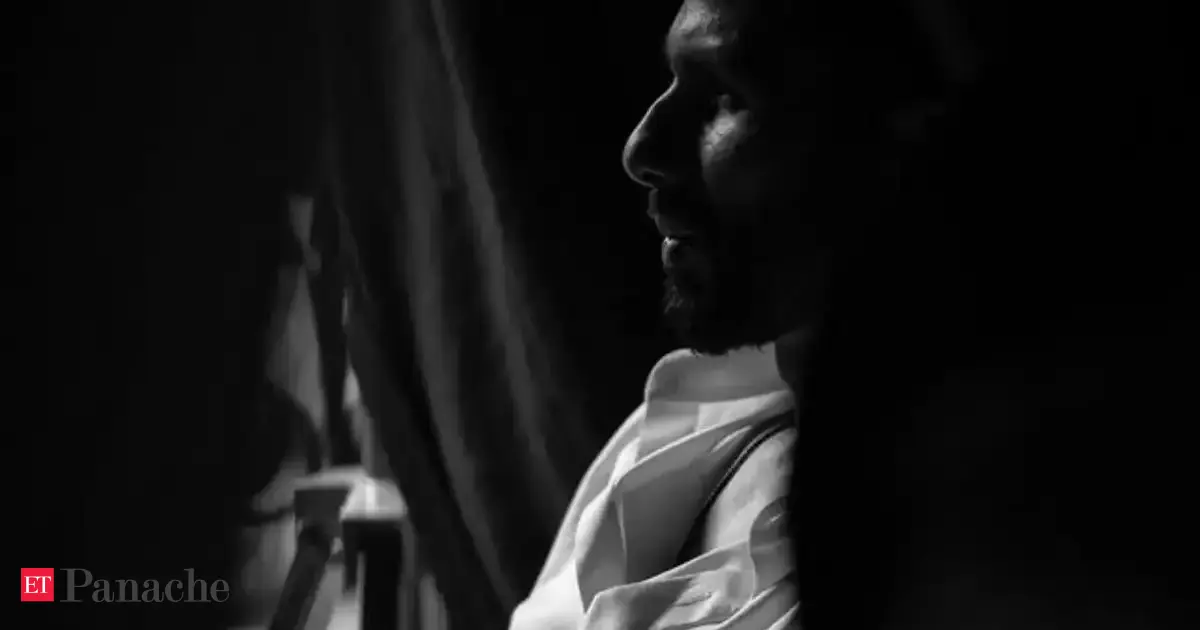
FX’s Love Story: John F. Kennedy Jr. & Carolyn Bessette recreates the 1990s relationship between John F. Kennedy Jr. and Carolyn Bessette through a visual world defined by muted colors, minimalism, and romance. Production designer Alex DiGerlando, who grew up in New Jersey and attended NYU, said he knew the era well but still had to balance historical accuracy with artistic choices that supported the show’s overall tone.
One of the key locations was Jacqueline Kennedy Onassis’ Fifth Avenue apartment. DiGerlando relied on rare source material, including photos from Cooking for Madam: Recipes and Reminiscences from the Home of Jacqueline Kennedy Onassis and a Sotheby’s auction catalog, to study the original interior. He kept many pieces close to their real-life counterparts, but made selective changes to better fit the series’ visual language. A blue striped sofa in the dining room was changed to pink and white stripes, while busy red wallpaper was replaced with a softer blush tone. DiGerlando said he often asked how closely the production should match reality and where it could gently “twist the dials” to create the intended mood.

Kennedy Jr.’s loft was designed with a different philosophy. DiGerlando studied loft spaces from the period and chose plain white walls and no artwork, a decision he called risky but effective. By stripping away visual clutter, the set keeps attention on the actors and lets their performances dominate the frame. He compared the approach to classic Hollywood romance, where stars were meant to be the focal point and sets were intentionally restrained.
The Calvin Klein offices reflected the designer’s strong minimalist aesthetic. DiGerlando used archival images and drew inspiration from interior designer Joe D’Urso, whose industrial style helped shape the look of the headquarters. He also referenced architect John Pawson, whose work influenced Calvin Klein’s 1990s retail spaces. The office set used gray sheet-metal shelving, industrial fixtures, wall-mounted floodlights, and a limited palette of grays and neutrals to mirror the brand’s clean, modern image.
For nightlife scenes, the production reimagined New York’s lost Roxy nightclub by filming at Elsewhere in Bushwick, a much smaller venue with high ceilings and a cavernous feel. The team added swings, banquettes, disco balls, and chandeliers to turn the modern space into a 1990s club atmosphere.
Another standout location was Panna II Garden Restaurant. The script only called for an Indian restaurant, but DiGerlando said the real Panna II was the perfect fit because it still existed and already matched the period feel. Its dense, colorful décor helped break from the show’s usual minimalism and visually marked a key emotional moment in the story. He described the setting as ideal for a scene in which the characters’ connection becomes unmistakably real, with the restaurant’s explosion of lights and ornamentation reinforcing the spark between them.