From “Human Cockfighting” to the White House Lawn: Dana White’s Meteoric Rise with the UFC

A mixed martial arts event planned for the White House South Lawn has become a symbol of how American politics, entertainment, and branding now overlap. The temporary octagonal cage, towering stage structure, sponsor signage, and grandstands have turned one of the nation’s most recognizable public spaces into a highly commercialized fight venue tied to Donald Trump’s 80th birthday and the UFC brand. The spectacle has drawn comparisons to dystopian satire and criticism as a kind of political and corporate carnival. Commercial products linked to the event, including commemorative “Freedom 250” coins featuring Trump’s likeness, have added to the sense that the gathering is as much a marketing exercise as a sporting one.
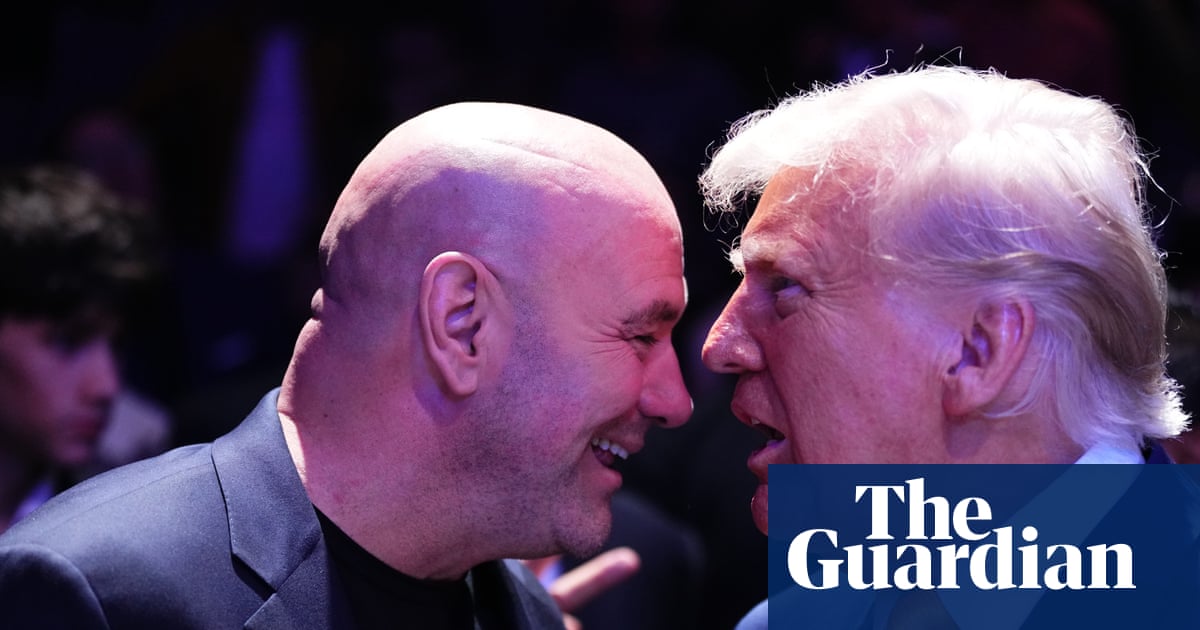
At the center of the story is Dana White, the UFC chief executive, who has emerged over the past decade as a major figure in American culture and politics. White has become far more than a fight promoter. He is now a political surrogate, a trusted Trump ally, a Meta board member, and a powerful connector in the alternative media ecosystem. His recent string of high-profile interviews shows how much his influence has expanded beyond combat sports. The article portrays White as a rare operator who moves comfortably between entertainment, internet culture, and political power.
/extras/conteudos/paulwesley.webp "Paul Wesley Discusses Star Trek Spin-Off Centered on Captain Kirk")
The relationship between Trump and White dates back to the early 2000s, when both were in weaker positions professionally. The UFC was struggling for legitimacy and accepted venues, while Trump’s Atlantic City casino business was under pressure. Trump’s Taj Mahal hosted several UFC events at a time when mixed martial arts was still widely dismissed by the mainstream sporting world. Over time, that business arrangement was transformed into a founding myth for both men, especially after Trump and White became openly aligned in politics beginning in 2016.
The UFC’s growth has been fueled not only by the rise of the sport, but by the audience it cultivated. Its fan base skewed younger, heavily online, and less tied to traditional news and television. White invested early in podcasts, streamers, YouTube personalities, and internet creators, helping build the kind of media environment that later became central to Trump’s political reach. Figures such as Joe Rogan, Theo Von, the Nelk Boys, Barstool Sports, and Adin Ross became part of this broader ecosystem. The article argues that White understood the value of this audience long before political strategists began focusing on it.
Trump’s repeated appearances at UFC events, including while serving as president, reflected more than celebrity fandom. They showed how closely his political style aligned with the UFC’s culture of distrust toward mainstream institutions, aggressive branding, and media confrontation. White and Trump both built reputations as combative, media-savvy outsiders who thrived on conflict and treated criticism as proof of bias. Both also attracted complaints about how they handled business relationships, with critics accusing them of extracting too much value while building powerful empires.
During Trump’s 2016, 2020, and 2024 campaigns, White became one of his most visible public supporters. The UFC’s audience overlaps with a politically important demographic that campaigns struggle to reach through traditional media. Trump’s successful outreach to podcast hosts and alternative media figures in 2024 benefited from a media world that White had helped legitimize for years.
The White House event is now presented as the culmination of all these trends: the merger of combat sports and politics, the rise of alternative media, and the deepening alliance between Trump and White. What once would have seemed unimaginable is now framed as a defining spectacle of the era.