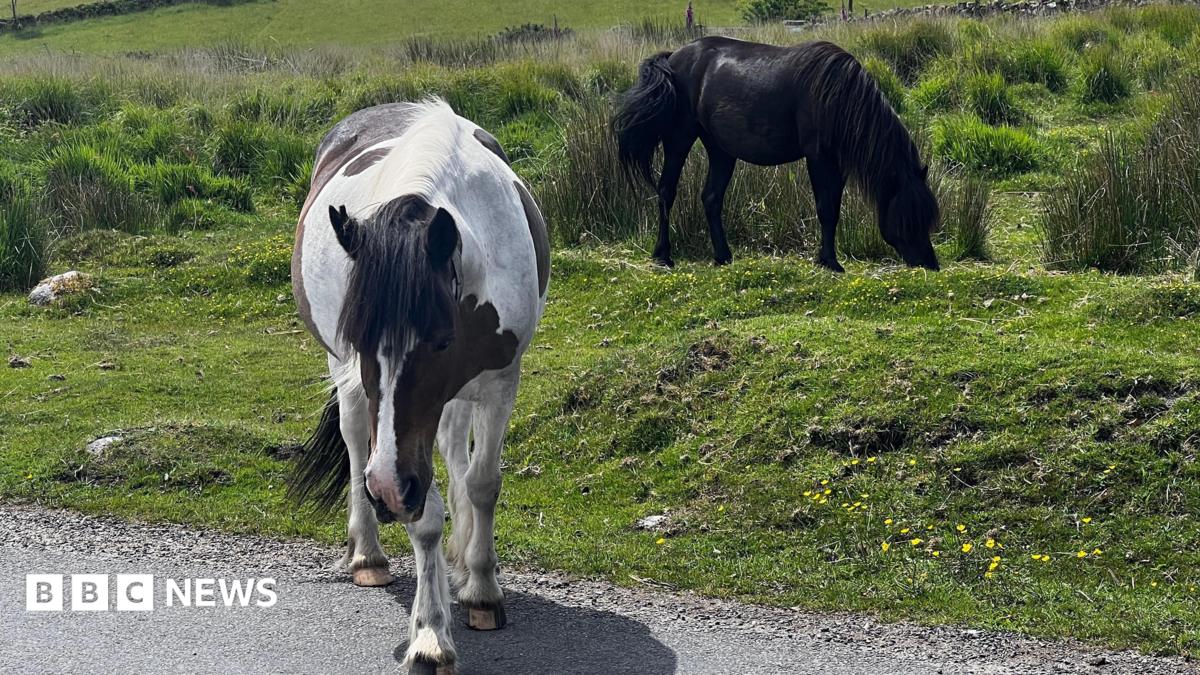
Dartmoor Hill Pony Association has warned that a proposed change in grazing policy on Dartmoor could have serious consequences for both the landscape and the local farming community. The association says the move would force commoners, who have legal rights to graze livestock on the moor, to choose between keeping commercial sheep and cattle or continuing to maintain the hill ponies that have long been part of Dartmoor’s heritage.
According to the association, the ponies play an important environmental role because they are especially effective at grazing Molinia grass, a tough species that has increasingly spread across the moor and created what campaigners describe as a monoculture. Joss Hibbs, secretary of the Dartmoor Hill Pony Association, said the reduction or loss of hill ponies would damage biodiversity across the landscape because the animals help control vegetation that other livestock do not manage as effectively.


Hibbs argued that the proposed approach could create an impossible economic choice for commoners. If they prioritise sheep and cattle to secure a living, the pony herds could disappear. If they choose to keep the ponies, farms may become financially unsustainable, which could lead to holdings being lost altogether. She said that would also threaten the ponies, since many are safeguarded through the farming families and commoning systems that have traditionally cared for them. Hibbs said Natural England’s approach would devastate the Dartmoor hill pony population, undermine farm viability and may not produce any meaningful environmental gain.
The concerns have also been echoed by Friends of the Dartmoor Hill Pony, a Devon-based charity that has called for stronger and longer-term legal protection for the remaining hill pony herds. The charity says the animals are rare and deserve recognition for their cultural and ecological importance. It has also argued that there should be a separate moor-wide herd size agreed for the ponies, similar to arrangements that existed under earlier contracts.
Campaigners say any final decision should be delayed until after the Land Use Management Group completes its work. That group was created to carry out recommendations from a government-commissioned review published in 2023 and is expected to produce a land use plan for Dartmoor by 2027. Advocates believe it would be premature for Natural England to move ahead before that broader planning process is complete.
The debate highlights the difficult balance between conservation, traditional land management and farm economics on Dartmoor. Supporters of the ponies say the herds are not only part of the area’s identity but also a practical tool for maintaining the moor’s ecological health. They warn that without a more carefully designed policy, the loss of hill ponies could be irreversible, with knock-on effects for biodiversity, farming livelihoods and the future of Dartmoor itself.