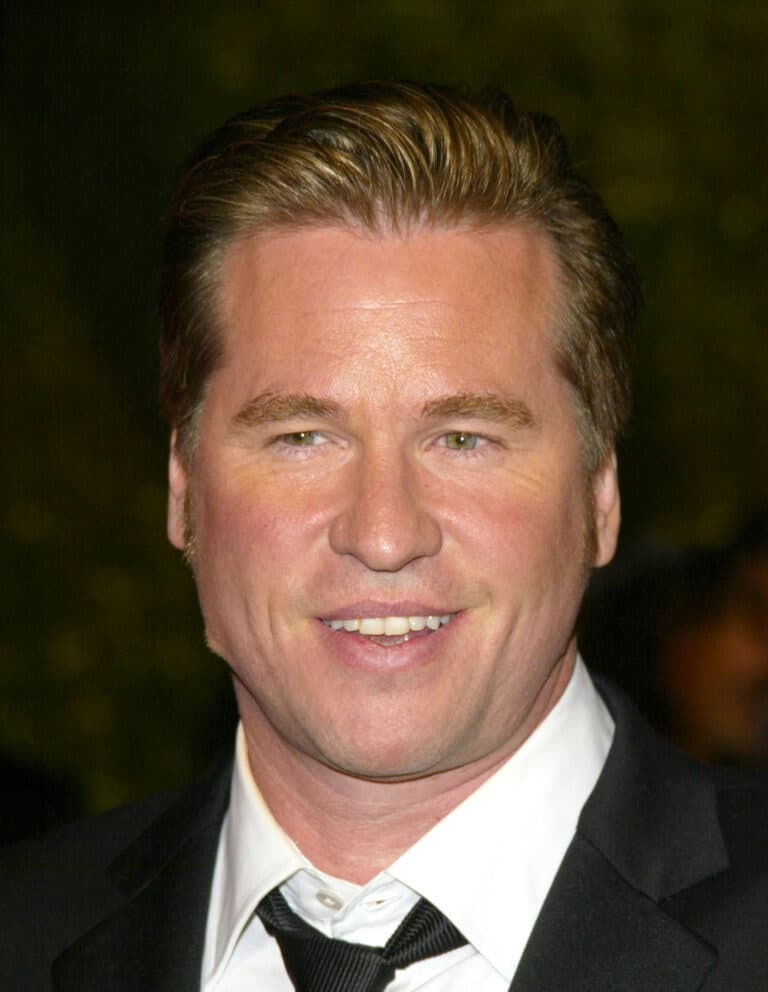
Val Kilmer’s legacy has resurfaced in controversy after director Adam Marcus publicly attacked the late actor, calling him “the worst human being” he had ever known. Marcus made the remarks in a Threads post while recalling directing Kilmer in the 2008 action thriller Conspiracy. He shared a photo from the set and referenced Kilmer’s best-known roles in Top Gun and Tombstone, then rejected the idea that people should avoid criticizing the dead.
Marcus claimed Kilmer’s behavior on set would not be tolerated in today’s entertainment industry and suggested he would have been “cancelled” quickly if the same conduct happened now. His comments stirred renewed discussion about Kilmer’s long-standing reputation in Hollywood, where several directors had previously described him as difficult to work with, even as his films remained commercially successful.


Among the most prominent critics was Joel Schumacher, who directed Kilmer in Batman Forever and later called him “childish and impossible” in a 1996 interview. John Frankenheimer, who worked with him on The Island of Dr. Moreau, also said he would never work with Kilmer again after their troubled production. Despite those disputes, Kilmer continued to build a major career and became widely admired for performances such as Jim Morrison in The Doors and Doc Holliday in Tombstone.
Kilmer addressed the criticism in a 2003 Rolling Stone interview, acknowledging that he had not always handled situations well, but pushing back against the way some filmmakers portrayed him. He defended his professionalism and said he had helped generate more than a billion dollars for his employers. He also criticized Schumacher and Frankenheimer directly, arguing that their complaints reflected personal hostility rather than objective assessments of his work.
In the 2021 documentary Val, Kilmer again confronted the mixed perception of his personality and career. The film showed his reflections on both professional success and personal struggle, including the health problems that later affected his voice. Kilmer admitted, “I have behaved poorly,” but also said he had no regrets, describing his life as one in which he had lost and found parts of himself. He framed his journey as complicated but ultimately meaningful.
Kilmer died of pneumonia on April 1, 2025, after years of declining health following treatment for throat cancer. Reports said he had become increasingly frail and bed-bound in his final years, and that family members were with him during his last days. As criticism and praise continue to circulate after his death, Kilmer’s legacy remains defined by both his acclaimed screen work and the long-running debate over his off-screen conduct.