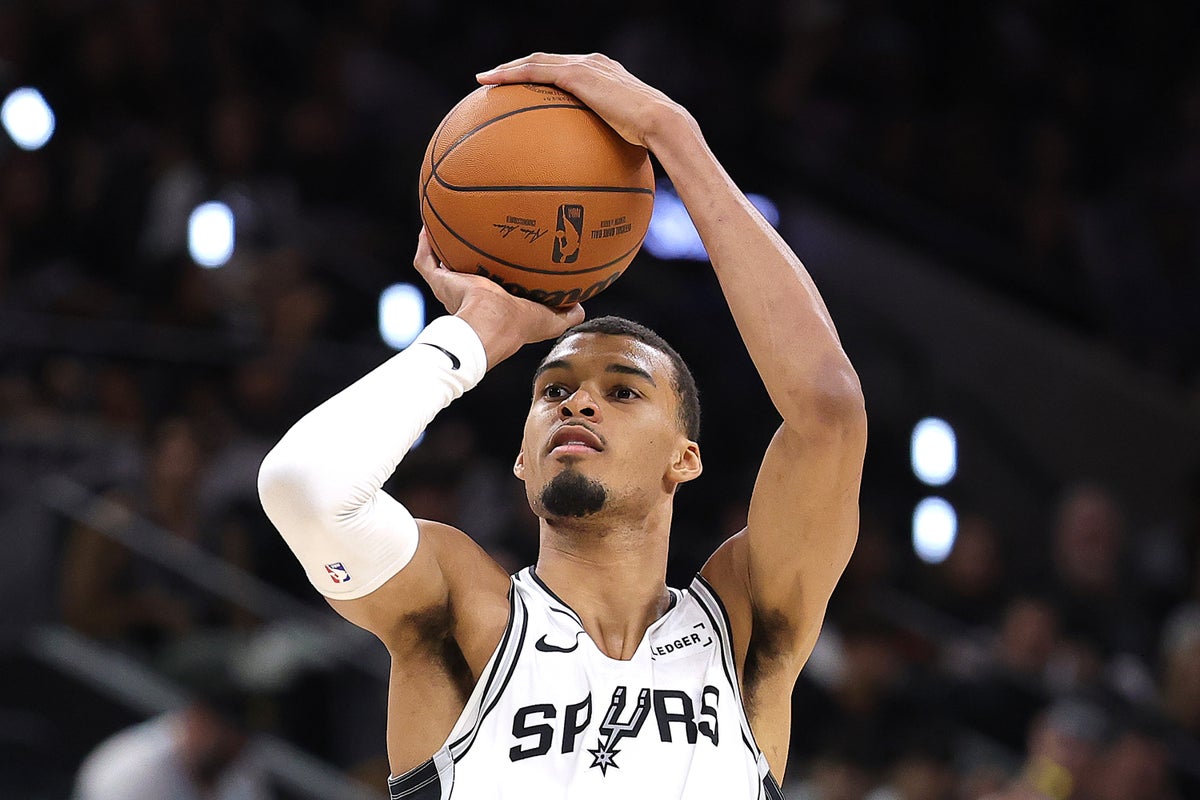
Victor Wembanyama’s three-point shooting has become one of the defining storylines of the NBA playoffs, and experts say his unusual blend of size, mechanics and flexibility helps explain why. At seven feet, four inches, the San Antonio Spurs forward-center is already one of the league’s most intimidating defenders and a dangerous offensive player. But what has set him apart in the Western Conference Finals is his willingness to launch deep threes with confidence, even in high-pressure moments.
In the first game of the series against the Oklahoma City Thunder earlier this month, Wembanyama hit a long-range shot to tie the game in overtime before the Spurs went on to win in double overtime. Ahead of Game 6 on Thursday, which San Antonio also won, physicists and biomechanics researchers explained the science behind his shooting form.

/https://i.s3.glbimg.com/v1/AUTH_da025474c0c44edd99332dddb09cabe8/internal_photos/bs/2026/e/i/jiRtzwQNmKUXYb7eNv9w/114181968-bayern-munichs-french-midfielder-17-michael-olise-celebrates-scoring-his-teams-second-g.jpg "Brazilian Fans Flood Olise’s Social Media After Interview Comments: “He Picked the Wrong Country”")
According to experts, a three-point shot depends on many variables, including a player’s height, hand size, arm length, release angle, backspin and shot speed. Height is usually an advantage because taller players release the ball closer to the basket and are harder to block. In theory, that should make very tall players better shooters. A player like Stephen Curry, if he were 7-foot-4, would likely have an even greater shooting edge from deep.
But the reality is more complicated. Tall players are not always encouraged to develop perimeter shooting early in their careers, and their long limbs can make repeatable shooting mechanics harder to maintain. That is why many of the NBA’s biggest players never become reliable three-point threats.
Wembanyama appears to be an exception. Researchers say his shooting form is unusually efficient because his torso stays almost perfectly vertical and he does not need much upward jump to create range. His release point is already so high that he can generate the necessary shot without the large leg-driven lift that many shorter players need. That straight body position gives him a cleaner, more controlled motion.
Experts also point to his flexibility and lower-body movement. Effective shooting begins from the ground up, with the hips, knees and ankles bending enough to create force while keeping the torso balanced and the elbow aligned under the ball. If a player lacks mobility in the knees or hips, the shooting motion can become less efficient and less consistent. Wembanyama’s range of motion helps him maintain proper form while still producing enough power from long distance.
Beyond biomechanics, there is also an element of creativity and confidence. Wembanyama understands his height gives him a natural advantage near the basket, but he has chosen to extend that advantage even farther by practicing shots that most players his size would never attempt. That combination of physical gifts, coordination and imagination has made him one of the most intriguing young stars in basketball and a rare seven-foot-four shooter capable of changing a game from deep.


/https://i.s3.glbimg.com/v1/AUTH_da025474c0c44edd99332dddb09cabe8/internal_photos/bs/2026/1/9/0ApgfpRduaZ54NGwIeyw/115036649-brazils-joao-fonseca-reacts-after-a-point-as-he-plays-against-frances-luka-pavlovic-duri.jpg "João Fonseca Faces Next Gen Clash at Roland Garros Against Croatian Clay-Court Specialist: Match Time and Where to Watch")