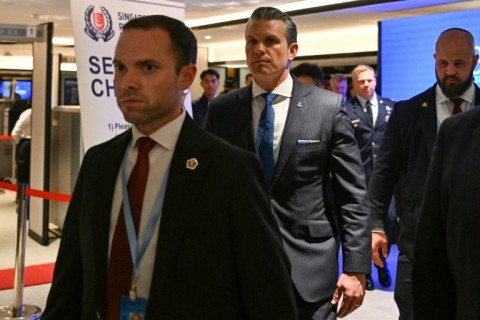
At this year’s Shangri-La Dialogue in Singapore, China is sending a lower-level delegation rather than its defence minister, even as regional tensions and competition with the United States remain in focus. The absence of Defence Minister Dong Jun marks a shift from 2024, when he held substantive talks with then-U.S. Defence Secretary Lloyd Austin after an 18-month gap in direct face-to-face military dialogue. This year, Beijing said it will instead send experts and scholars from military academic institutions, with Major General Meng Xiangqing of the National Defense University leading the team. Other delegates include representatives from the Academy of Military Sciences and the Navy.
Analysts say the decision reflects both China’s confidence and its caution. Some view the move as evidence that Beijing no longer feels compelled to send a top minister to endure direct questioning on sensitive issues. China’s rising regional power has changed the political value of the forum, and participation at the highest level may no longer be seen as necessary. At the same time, speaking publicly at the conference can be risky for Chinese defence leaders. Two former defence ministers, Wei Fenghe and Li Shangfu, previously appeared at Shangri-La and later received suspended death sentences on corruption charges, reinforcing the perception that the role has become politically hazardous.


The absence of a senior Chinese minister also has consequences. The dialogue is one of the few major regional security forums where difficult subjects can be raised directly, including Taiwan and developments in the Middle East such as the opening of the Strait of Hormuz. Without a high-ranking official present, Beijing may lose the opportunity to present its position and respond to concerns in a forum that draws defence leaders from across the world.
The United States is expected to take a strong line in its remarks, particularly on China. One regional analyst said Defence Secretary Hegseth’s speech is likely to be sharply critical of Beijing, though aimed largely at domestic audiences in the United States. His comments are expected to underline Washington’s concerns about China’s military expansion and regional influence.
Another major focus at the forum is AUKUS, the security partnership linking the United States, Britain and Australia. The three defence ministers are due to meet, and the alliance is widely regarded as a counterweight to China’s military rise, despite its stated aim of preserving a free and open Indo-Pacific. Australia has said it wants to uphold the global rules-based order, while also warning that China’s rapid military buildup has not been matched by sufficient strategic reassurance. Reports in Australian media suggest the AUKUS countries may announce a significant new project, possibly involving uncrewed underwater vehicles.
Overall, this year’s dialogue highlights the growing strategic competition in Asia, the cautious posture of China’s leadership, and the continuing centrality of the U.S.-China rivalry to regional security discussions.


:strip_icc()/i.s3.glbimg.com/v1/AUTH_63b422c2caee4269b8b34177e8876b93/internal_photos/bs/2026/3/g/AoyamoTPO3eUIeO8tmgw/foto27leg-101-reforma-e1.jpg "Tax Credit Payments in Tax Reform Raise Concerns Among Taxpayers | Legislation")