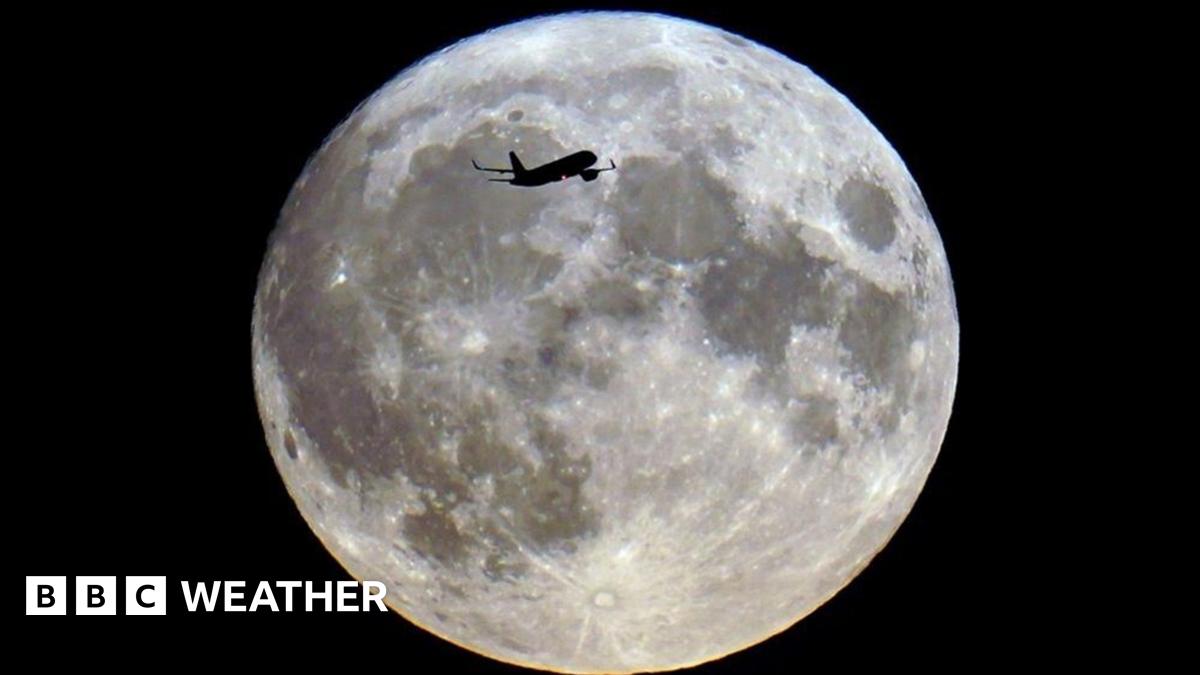
A Blue Moon is commonly understood as the second full Moon in a single calendar month, but that definition is relatively recent and not the most astronomically accurate one. The lunar cycle lasts about 29.5 days, while most calendar months are 30 or 31 days long. Because of this mismatch, two full Moons can occasionally occur within the same month, usually with one happening near the beginning of the month and the other near the end.
However, astronomers note that this popular “monthly Blue Moon” definition is a modern convention rather than a traditional astronomical one. According to the Royal Observatory Greenwich, it was first printed in a 1946 edition of Sky & Telescope magazine. The term later became widely known through the board game Trivial Pursuit in the 1980s, which helped spread the definition to a broader audience. Despite its popularity, experts say this usage is technically incorrect from an astronomical standpoint.
/https://i.s3.glbimg.com/v1/AUTH_da025474c0c44edd99332dddb09cabe8/internal_photos/bs/2026/b/A/Fy5vahTVOM8OcAmxAE1w/115090661-winner-brazils-joao-fonseca-r-greets-serbias-novak-djokovic-at-the-end-of-their-men.jpg "João Fonseca Beats Djokovic, and Roland Garros Will Have a First-Time Grand Slam Champion")
The more precise definition of a Blue Moon is a “seasonal Blue Moon.” This refers to the third full Moon in a season that contains four full Moons instead of the usual three. In astronomy, seasons are defined by the positions of the Sun and Earth rather than by calendar months. Since a season normally includes three full Moons, the appearance of a fourth full Moon makes the third one the Blue Moon.
This seasonal definition is considered the original and scientifically accurate meaning of the term. It reflects how the Moon’s cycle interacts with the length of astronomical seasons, which do not align neatly with the calendar. As a result, Blue Moons are relatively rare events, whether defined by month or by season, and they attract public interest because of their unusual timing.
The distinction between the two definitions is important because the term “Blue Moon” can be misunderstood. In everyday use, people usually refer to the monthly version, but astronomers prefer the seasonal definition for accuracy. The monthly version remains common in popular culture, media coverage, and casual conversation, even though it was introduced only in the mid-20th century.
In simple terms, a Blue Moon is not actually blue in color. The name refers to the rarity of the event rather than its appearance. It is an example of how astronomical terms can evolve in public usage over time, sometimes diverging from their original scientific meaning.
So while most people think of a Blue Moon as a second full Moon in one month, the more correct astronomical definition is the third full Moon in a season that has four full Moons.