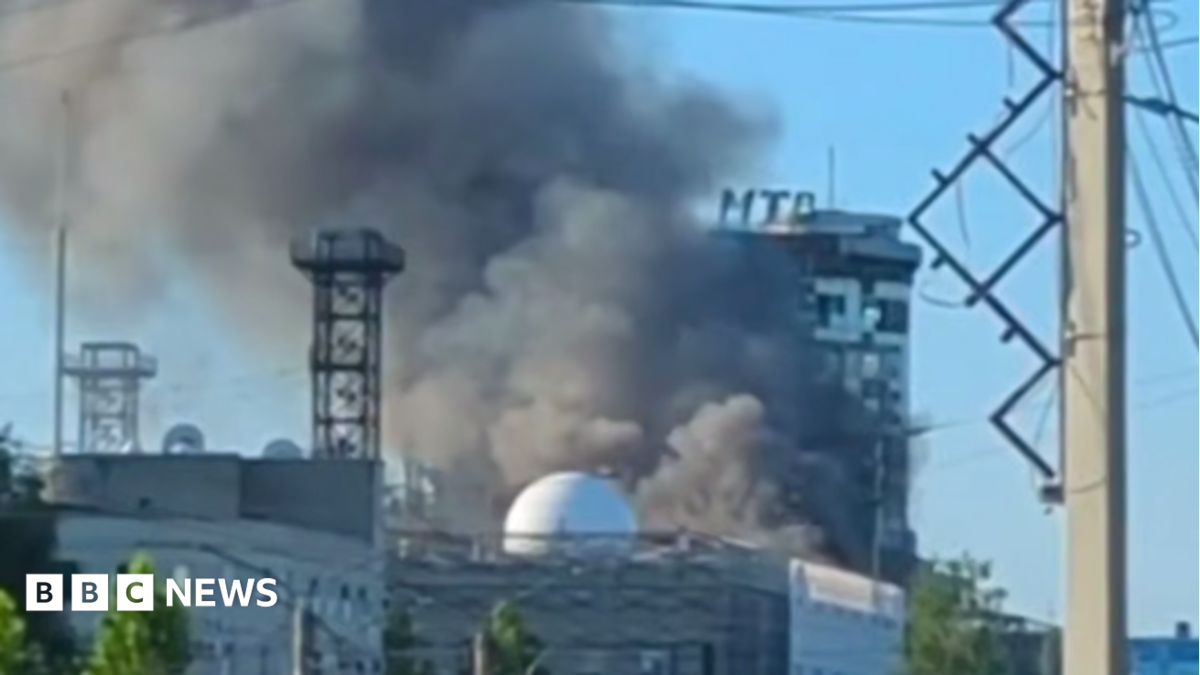
President Volodymyr Zelensky said Ukrainian FP-5 Flamingo missiles struck a military plant in the Russian city of Cheboksary overnight, targeting a facility he said supplied Russia’s army with components for drones and missiles. In a Telegram post on Wednesday, Zelensky said the attack hit a military plant in Cheboksary and shared footage that he said showed a missile approaching its target and smoke rising from the site. Ukraine’s military later identified the plant as VNIIR-Progress and said a fire broke out there after the strike.
Local authorities in Russia confirmed that Cheboksary had been hit. Chuvash Republic head Oleg Nikolaev said three people were injured, but he did not specify whether the military plant itself suffered damage. The strike appears to underscore Ukraine’s continuing effort to disrupt Russia’s defense-industrial base and raise the cost of Moscow’s war effort.

The Flamingo missile is reported to carry a 1,150kg warhead and have a range of about 3,000km, placing Moscow and other major Russian cities within reach. Ukraine has been developing new long-range missile systems with support from Western allies as part of a broader strategy to increase pressure on Russia and create leverage for negotiations.
The latest strike comes amid continued diplomatic deadlock. Russian President Vladimir Putin has rejected repeated attempts to open negotiations, including a request from Zelensky for direct face-to-face talks aimed at ending the war. Last week, Putin said he saw no reason to meet Zelensky. He also claimed Russian forces were advancing along the front line, although battlefield reporting indicates that the front has been largely unchanged for several months.
The reported strike on Cheboksary highlights how the conflict is increasingly extending beyond the battlefield, with Ukraine targeting infrastructure deep inside Russian territory. Such attacks are designed not only to damage production capacity but also to demonstrate Ukraine’s ability to reach strategic sites far from the front. As the war enters another phase of attrition, both sides continue to emphasize military pressure while prospects for immediate negotiations remain limited.