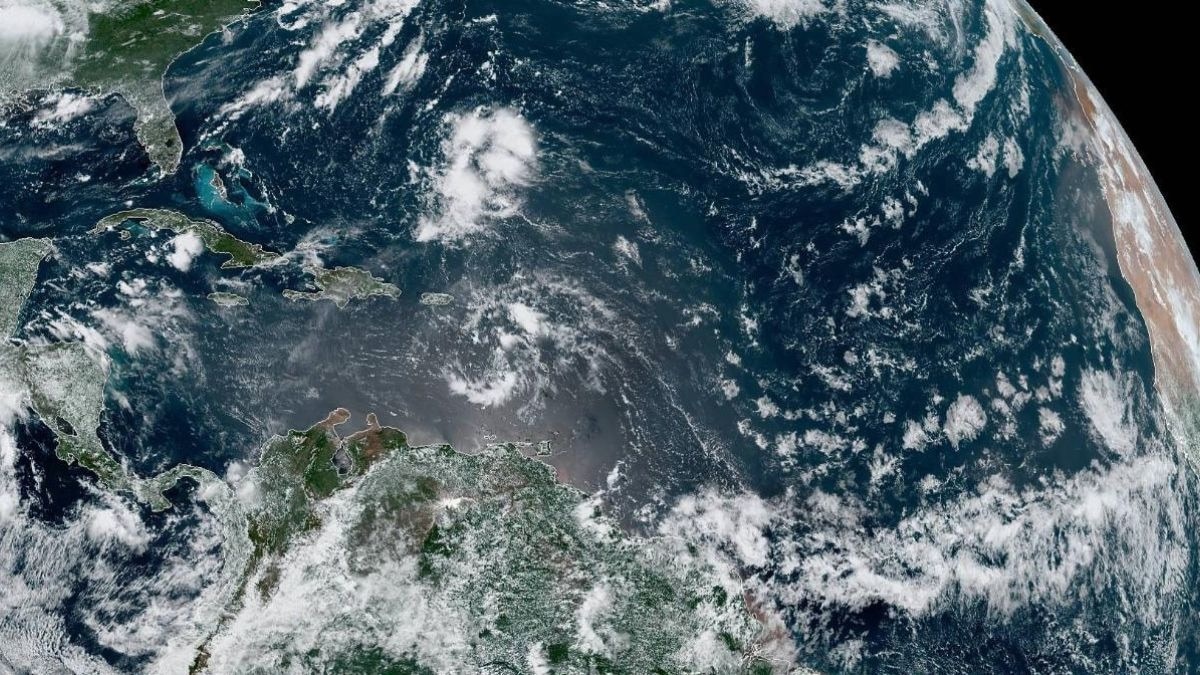
India is entering the monsoon season with growing concern over a developing El Nino in the Pacific Ocean that forecasters say could become the strongest ever recorded. The monsoon has already reached the Kerala coast on June 4, three days later than usual, and is now advancing northward. At the same time, the ocean conditions that define El Nino have strengthened enough to cross the initial threshold, though no global agency has yet declared a fully established event. Scientists expect the pattern to become official by September if the warming persists.
El Nino is one phase of the El Nino Southern Oscillation, a recurring climate cycle in the tropical Pacific that also includes the cooler La Nina phase. Under normal conditions, trade winds push warm surface water westward toward Asia. During El Nino, those winds weaken and warm water shifts back toward the eastern Pacific, changing global weather patterns. The key monitoring zone in the central Pacific, known as the Nino 3.4 region, has already warmed to about 0.9 degrees Celsius above normal, above the 0.5-degree level used to signal El Nino conditions.


Forecasts suggest the warming could intensify significantly in the months ahead. The World Meteorological Organization says there is an 80 percent chance of a sustained El Nino event in the coming period, while the European Centre for Medium-Range Weather Forecasts expects temperatures in the Nino 3.4 region to rise as high as 3 degrees Celsius above normal by December, with some models reaching 4 degrees. That would place it among the most severe El Nino events on record and could rival the powerful episodes of 1997-98 and 2015-16.
India is watching closely because El Nino often weakens the southwest monsoon. When the Pacific warms, the zone of rising air and rainfall shifts eastward, reducing the strength of the moisture flow toward the Indian subcontinent. The India Meteorological Department has already forecast below-normal rainfall for the season, estimating monsoon precipitation at around 90 percent of the long-period average, with a 60 percent chance of a deficient season.
The Indian Ocean Dipole, another major climate pattern that can sometimes offset El Nino’s impact, is expected to remain neutral this year, offering little relief. That makes the outlook more uncertain for a country where the monsoon supplies about 70 percent of annual rainfall and supports a large share of agriculture that depends on rain rather than irrigation.
The stakes are high. In a weak monsoon year, crop yields can fall, rural incomes can suffer, and food prices can rise. India’s experience during the 2015-16 El Nino, when rainfall dropped to 86 percent of average and drought conditions emerged in parts of the country, remains a warning. For millions of farmers and consumers, the developing Pacific warming is not just a climate story but a direct economic threat.