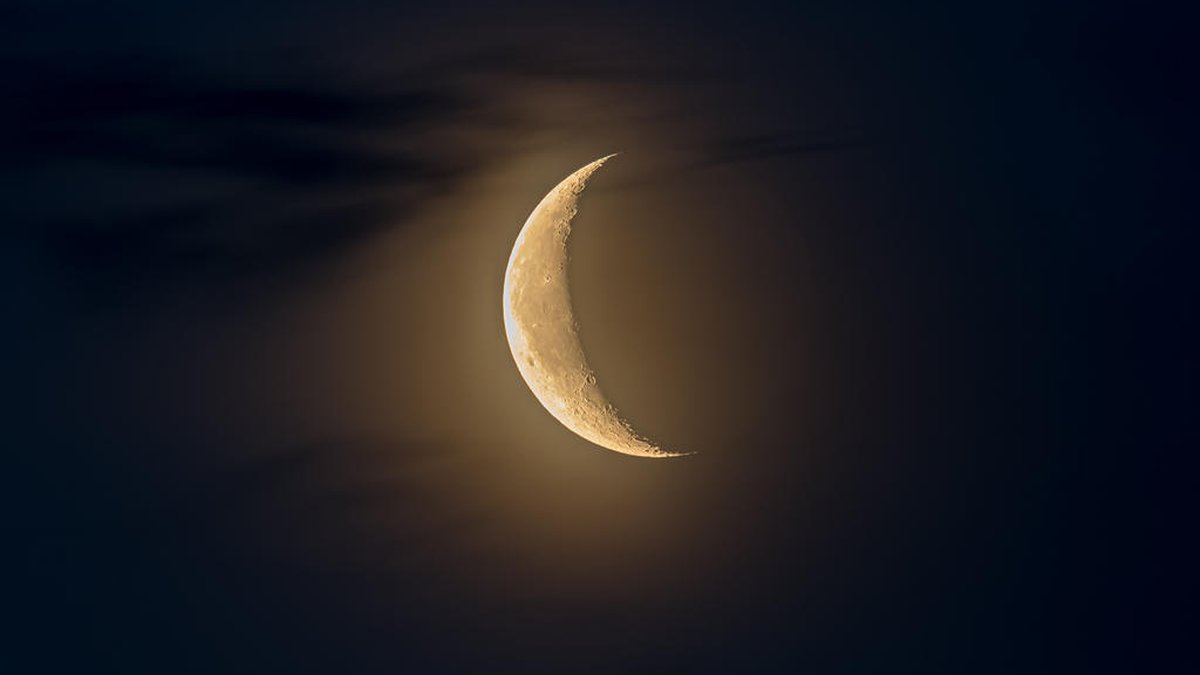
A lunation, also known as the lunar cycle, is the period of time between one new moon and the next. This natural cycle is only slightly variable and has an average duration of about 29.5 days. During this interval, the Moon moves through its four main phases: new moon, waxing moon, full moon, and waning moon.
The lunar cycle is one of the most familiar rhythms in astronomy and in daily life. It reflects the changing appearance of the Moon as seen from Earth, caused by the Moon’s orbit around the planet and the changing angle of sunlight illuminating its surface. Although the Moon is always present in the sky, the portion that is visible from Earth changes continuously as the cycle progresses.


The first phase is the new moon, when the Moon is positioned in such a way that its illuminated side is not visible from Earth. In this stage, the Moon appears dark or nearly invisible to observers. After the new moon, the illuminated portion begins to grow, marking the waxing phase. This is when the Moon gradually becomes more visible each night.
The waxing phase leads toward the full moon, the point in the cycle when the Moon appears fully illuminated from Earth. The full moon is one of the most recognizable moments in the lunar month and often draws attention for its brightness and visibility. After this peak, the visible illuminated portion begins to decrease, entering the waning phase.
During the waning phase, the Moon slowly appears smaller in brightness each night until it returns to the new moon stage, completing the cycle and beginning again. Each of these four major phases lasts approximately seven days, though the transitions are gradual rather than abrupt. The exact timing can vary slightly, but the overall structure of the lunar month remains consistent.
The concept of lunation is important in astronomy because it provides a standard way to describe the Moon’s monthly cycle. It is also relevant in calendars, cultural traditions, and agricultural practices in many societies around the world. The Moon’s phases have long influenced human observation of time, and the regularity of the lunar cycle has made it a reference point for organizing months and tracking celestial events.
In practical terms, the lunar cycle helps explain why the Moon looks different from one night to the next. It also highlights the predictable relationship between the Earth, the Moon, and the Sun. This repeating pattern is a simple but striking example of how motion in the solar system creates observable changes in the night sky.
Because the lunation lasts about 29.5 days, it is slightly longer than a typical calendar month. This difference is why lunar calendars and solar calendars do not always align perfectly. Even so, the cycle remains one of the most consistent natural periods available for studying the Moon and its behavior.
Overall, the lunar cycle is the repeating interval between new moons, averaging 29.5 days, and unfolding through four phases that each last about a week.