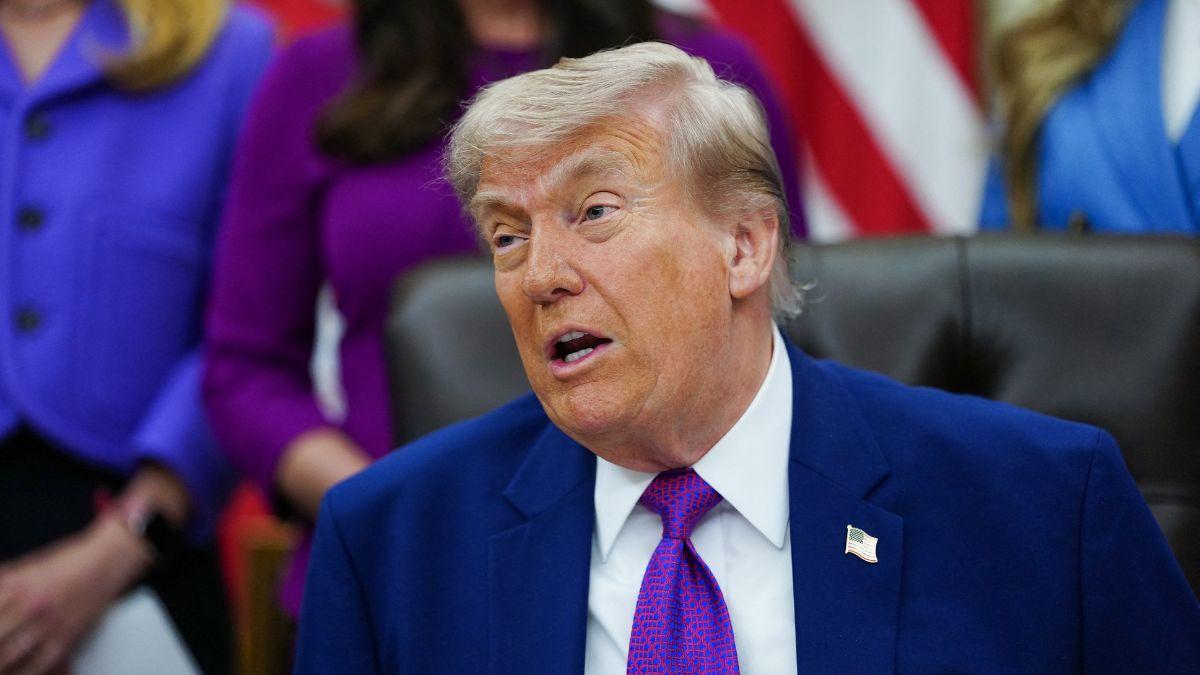
President Donald Trump’s absence from his son Don Jr.’s wedding has prompted renewed discussion about the Trump family’s public image and whether the no-show reflects tension behind the scenes. A public relations expert speaking to RadarOnline.com said the reaction was driven less by the wedding itself than by a broader pattern of notable family absences that can shape public perception.
According to PR specialist Michael Johnson, repeated misses by key family members can quickly create the impression of “inner family turmoil,” even if no real conflict is present. He said that in politics, public perception often becomes its own reality, especially when people begin to notice a pattern. Once that happens, each new absence can be viewed as part of a larger story about distance, tension, or carefully managed appearances.

Johnson argued that the Trump family’s public image has long been built on a mix of mystery, unpredictability, and selective access. He said that approach keeps supporters engaged while encouraging critics and observers to speculate. In his view, a single missed family event might have gone largely unnoticed, but repeated absences make it easier for the public to construct a narrative around the family’s internal dynamics. He suggested that this kind of storyline can be difficult to reverse once it takes hold.
The expert also said that responding directly to the speculation would likely only draw more attention to it. In his view, the Trump brand has historically benefited from controlling attention rather than explaining every controversy. That strategy, he said, can be effective because it leaves room for ambiguity and prevents public conversations from becoming even larger.
Johnson further suggested that Trump’s decision to skip the wedding may have reinforced one of the most familiar aspects of his public persona: a hard-edged, business-first image. He said the move could be interpreted as a sign that Trump was prioritizing national duties and the Iran conflict over a personal family event. While that choice might have hurt a more traditionally viewed politician, Johnson said Trump has never been marketed as warm or sentimental.
Instead, he described Trump’s public brand as that of a “cold, ruthless businessman,” a reputation that the wedding absence may have strengthened rather than weakened. The incident, he said, fits into the broader way Trump has long presented himself to the public — as someone driven by priorities, image control, and a willingness to put political or business concerns ahead of personal appearances.
Even without an official explanation, the wedding no-show has become another moment fueling discussion about the Trump family’s relationship dynamics, as well as the power of public image in shaping political narratives.



:upscale()/2024/07/10/840/n/1922283/tmp_8cHqNA_015a0ea81a2c18af_CollageDancersInNYC_Main.jpg "History of Latin Dance Nights in NYC During Summer 2024")
