President Donald Trump issued a sharp warning to Iran on June 16, saying that “all h*** will rain down” on the Islamic Republic if it tries to obtain a nuclear weapon. He made the comments in Evian-les-Bains, France, while meeting with Qatar’s Emir, Sheikh Tamim bin Hamad Al Thani, on the sidelines of the G7 summit. Trump said preventing Iran from getting nuclear arms remains his administration’s top priority and insisted that Iran “will never” be allowed to develop, buy, or acquire a nuclear weapon.
Trump said the emerging agreement with Iran is meant to close every possible route to a bomb. He argued the deal must go beyond banning development and must also prevent Iran from purchasing a weapon. According to Trump, he personally intervened to strengthen the language of the original draft, which he said only barred Iran from developing nuclear arms. He said adding the broader wording delayed negotiations for several days before the final text was settled.

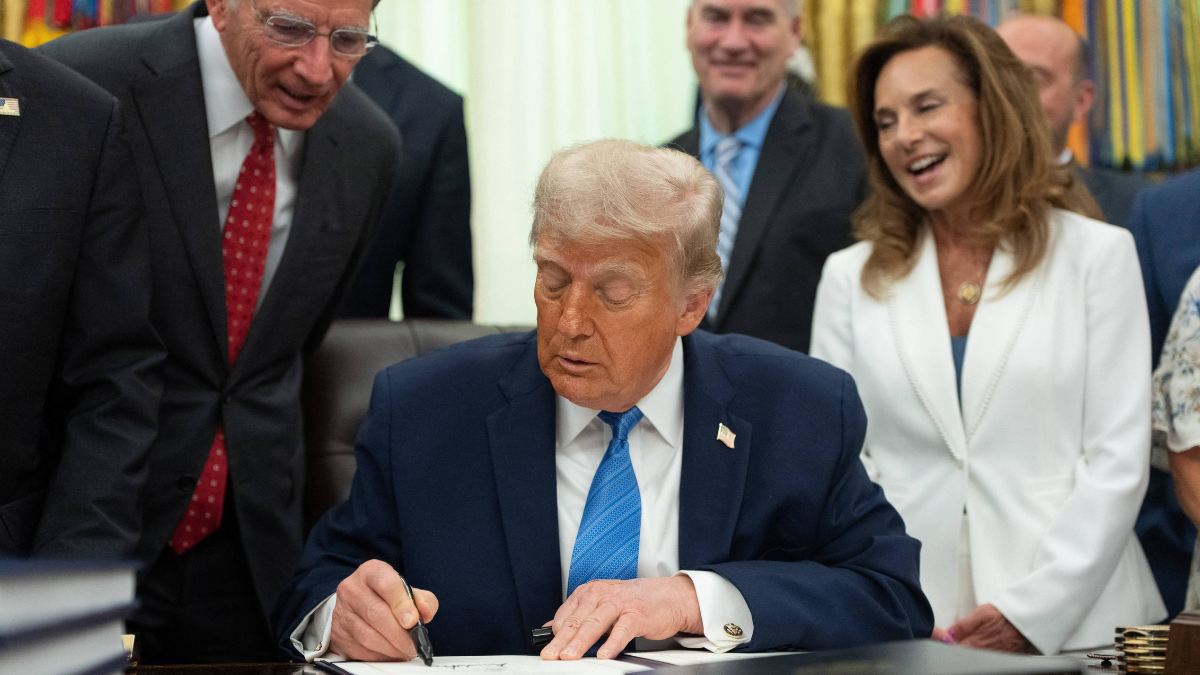
Officials familiar with the talks said the memorandum of understanding includes a 60-day negotiating period that begins once the agreement is signed. Trump and Vice President J.D. Vance reportedly signed the document digitally, while Iranian Parliament Speaker Mohammad-Bagher Ghalibaf signed on Iran’s behalf through the same remote process. A senior administration official said the agreement would pause fighting on all fronts for 60 days and reopen the Strait of Hormuz to maritime traffic.
Iranian officials said the text had been finalized, with a formal signing expected in Switzerland. The Iranian foreign minister said delegations from both countries would meet in Geneva for the ceremony. The deal is intended to restore shipping through the Strait of Hormuz while leaving unresolved issues, including Iran’s nuclear enrichment program and stockpile of highly enriched uranium, to be addressed during the 60-day period.
Trump said the full text of the agreement would remain private until after signing, describing it as a powerful document that should not be released before finalization. He also said any future deal would be submitted to Congress for review and stressed that the United States would not be required to invest money in Iran under the arrangement. The reopening of the Strait of Hormuz is expected to happen gradually because sea mines must still be cleared before commercial shipping can fully resume.
The agreement has drawn concern in Israel. Defense Minister Israel Katz said the Israeli military would not withdraw from southern Lebanon. Prime Minister Benjamin Netanyahu said Israel would continue efforts to block Iran from obtaining nuclear weapons regardless of any agreement, while maintaining that Tehran’s nuclear program is for civilian use. Israeli opposition figures, including former Prime Minister Yair Lapid, accused Netanyahu of mishandling diplomacy with Washington and securing a deal that does not serve Israel’s interests.
Trump also criticized Israel’s campaign against Hezbollah in Lebanon, saying it had gone on too long and should have ended sooner. He said he was unhappy with an Israeli strike on Beirut shortly before the U.S.-Iran agreement was finalized and had raised those concerns directly with Israeli officials. Despite the tensions, Trump described the Lebanon conflict as minor compared with the Iran deal and said he believed the memorandum would hold.