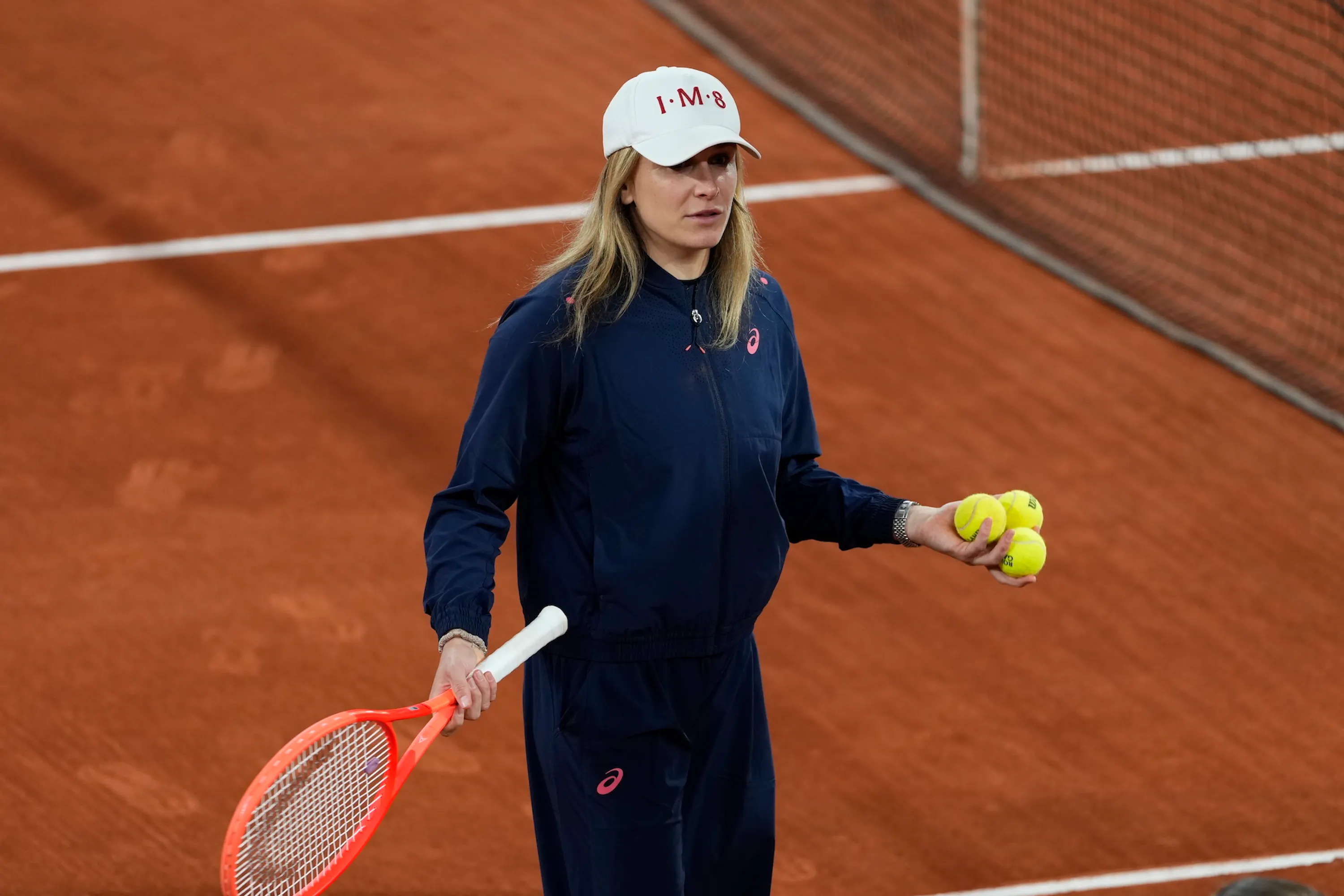
Marta Kostyuk’s recent surge on clay has been driven by a mix of technical refinement, tactical clarity, and mental training, according to her coach, Sandra Zaniewska. Zaniewska said the first stage of Kostyuk’s progress was clearing away small technical issues that had been limiting her natural game. With those obstacles reduced, Kostyuk has been able to swing more freely from both wings and on serve, making better use of the variety in her game while also cutting down on unforced errors.
Zaniewska explained that the early work focused on mechanics: improving how Kostyuk moves, how she strikes the ball, and how she uses her serve. The changes have helped her play with more confidence and efficiency, allowing her to access tools that were already there but not fully available before. Rather than forcing a new style, the goal was to remove the things that were interrupting her rhythm and making her play below her best level.

The second phase of the process shifted toward tactics. Kostyuk and her team worked on understanding how to make the best decisions in different match situations and how to avoid getting overwhelmed by the many options in her arsenal. Zaniewska noted that having a wide range of weapons can be a double-edged sword: it gives a player flexibility, but it can also create confusion if there is no clear plan. The emphasis, therefore, was on knowing when to attack, when to simplify, and how to build points in a way that fits the moment.
Mental preparation has also been a key part of Kostyuk’s development. She has been working with Dr. Riccardo Ceccarelli on mental economy training, a science-based approach designed to strengthen focus, decision-making, and emotional control. That work appears to have complemented the technical and tactical changes, helping Kostyuk stay composed and effective through the demands of the clay season.
The results have been visible in her performances during the clay swing, where the pieces of her preparation have come together in a strong run of form. Zaniewska joked that she may have “manifested” the winning streak by publicly expressing her hopes for Kostyuk earlier in the season. During Billie Jean King Cup week in early April, she said in an interview that she wanted Kostyuk to win a title this year because it could create momentum.
That wish came true almost immediately. The very next week, Kostyuk captured a title, seemingly validating the coach’s belief that success could trigger a positive cycle of confidence and results. Zaniewska laughed about the timing, saying she may now need to be more careful about what she says in interviews because her comments might keep turning into reality.
Kostyuk’s rise reflects a broader pattern in elite tennis, where progress often comes from small but important adjustments rather than dramatic reinvention. In her case, the combination of cleaner mechanics, smarter tactics, and stronger mental preparation has helped unlock a higher level of consistency. The clay swing has shown that when those elements align, Kostyuk has the tools not just to compete, but to win.


