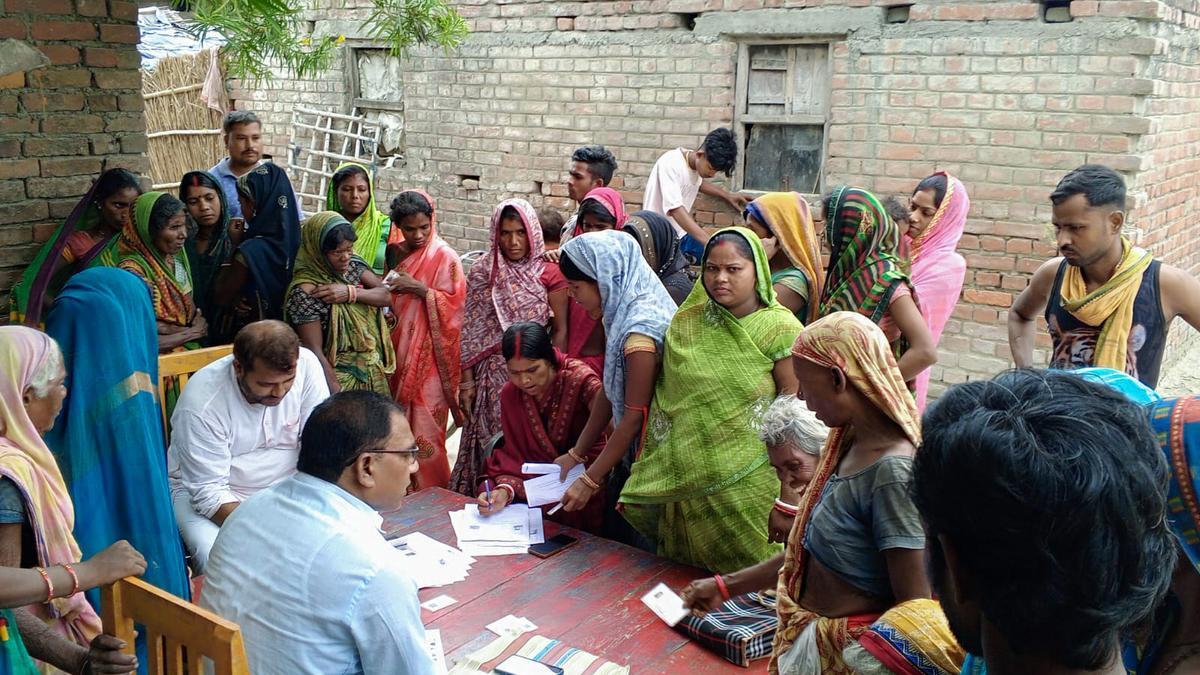
The Supreme Court is set to deliver its judgment on Wednesday, May 27, on a group of petitions challenging the constitutional validity of the Special Intensive Revision (SIR) exercise that began in Bihar. The case, heard by a bench led by Chief Justice of India Surya Kant and Justice Joymalya Bagchi, had been reserved for verdict in January after arguments from petitioners including the Association for Democratic Reforms and others. The petitions argue that the Election Commission of India (ECI) exceeded its authority by effectively assuming the power to determine citizenship, despite limits set out in parliamentary laws, rules and its own manual, and that it did so without giving adequate reasons.
The ruling is expected to have wider consequences beyond Bihar, as it could affect future rounds of SIR in other states. A second phase of the exercise has already taken place in several states and Union Territories, including West Bengal, Tamil Nadu and Assam, even while the legality of the Bihar process remained under judicial review.


During the Bihar hearings, the Supreme Court took several steps that made the exercise more transparent and inclusive. One important intervention was its direction to allow Aadhaar as the 12th document in a list of 11 indicative papers that voters could submit to prove identity or residence. This expanded the options available to people seeking inclusion in the electoral rolls.
The court also emphasized the importance of openness in a democracy, reminding the Election Commission that transparency and access to information are central to an open electoral system. In this context, the bench asked the poll body to publish the names and details of voters who were added to the final electoral roll in Bihar. The final list showed the total number of eligible voters in the state at 7.42 crore.
In addition, the Supreme Court directed the ECI to release a district-wise, booth-level searchable list of the nearly 65 lakh voters who were removed from the draft roll, along with the specific reasons for each deletion. This was meant to ensure that affected voters could understand why their names had been excluded and could seek redress if needed.
The ongoing dispute comes against the backdrop of a large-scale electoral revision effort. The second phase of SIR covered about 51 crore voters across 12 states and Union Territories, underscoring the scale of the process and the significance of the court’s upcoming decision.
The judgment is being closely watched because it could determine the legal framework for voter roll revisions in the future and set boundaries on the Election Commission’s powers in such exercises. It may also shape how transparency, documentation and voter inclusion are handled in one of the country’s most important democratic processes.