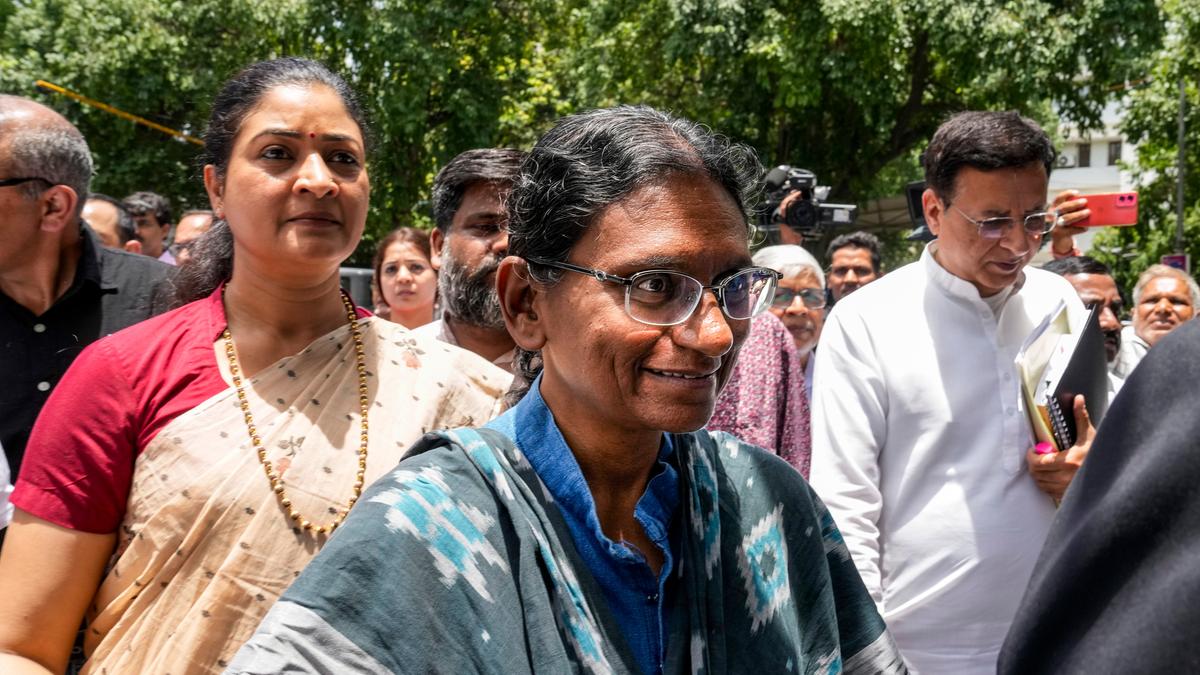
The Supreme Court of India has refused to intervene in a petition filed by Congress leader Meenakshi Natarajan challenging the rejection of her nomination papers for the Rajya Sabha election. The court said it cannot interfere while the election process is still underway and reiterated that disputes related to nomination rejection should be raised only after the poll through an election petition.
A bench of the Supreme Court held that ongoing election proceedings are protected from judicial interference under the principles laid down in the Ponnuswami judgment. The court said it would not create exceptions for individual complaints and made clear that the Election Commission is the proper authority to address grievances during the election process. It also asked Natarajan’s lawyer to point to any case in which the Supreme Court had previously intervened in a similar nomination-rejection matter.

Natarajan’s nomination was rejected by the returning officer on the ground that she allegedly withheld information about a pending criminal case in her affidavit. Senior advocate Abhishek Singhvi, appearing for her, argued that she was not required to disclose the matter under the Representation of the People Act because no charges had been framed in the case. He told the court that the petition was not intended to disrupt the election but to ensure transparency and fairness in the process.
The Congress leader had also approached the Election Commission on June 10 to press her objections, but the commission did not issue any order in her favour, according to the court. The bench observed that she would still have the option of filing an election petition before the appropriate High Court after the election is completed.
Natarajan had been seeking to contest a Rajya Sabha seat from Madhya Pradesh. Following the rejection of her nomination, all three Rajya Sabha seats from the state were won by the Bharatiya Janata Party. The case has drawn attention because it involved the balance between election transparency, nomination disclosure rules, and the limited scope of judicial review during active elections.
The Supreme Court’s decision reinforces a long-standing legal principle that courts should avoid intervening in live electoral processes and that post-election remedies are the correct route for candidates who dispute nomination rejection or other poll-related decisions.





/https://i.s3.glbimg.com/v1/AUTH_da025474c0c44edd99332dddb09cabe8/internal_photos/bs/2026/m/o/INqGPrQUqPsaWMBbiWtA/arte-2026-06-05t081947.067.png "Former Real Madrid President Reveals Desire to Bring Messi and Cristiano Ronaldo Together at the Club: “It Would Have Been Fantastic”")

