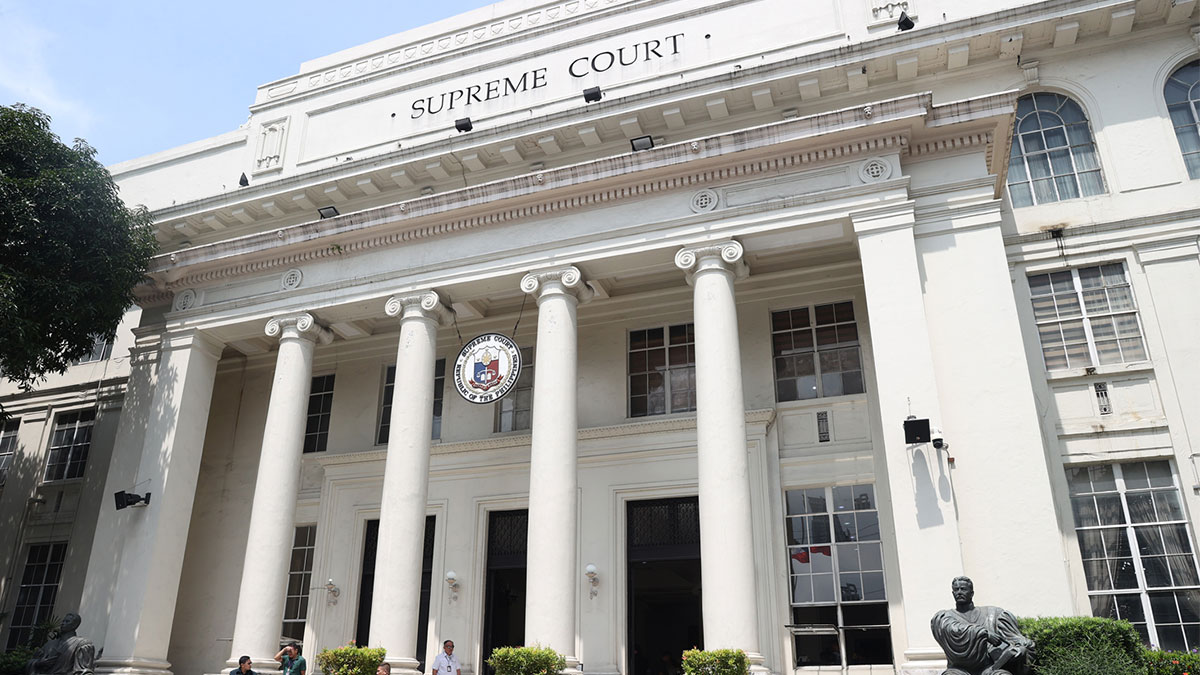
The Supreme Court of the Philippines has dismissed a petition seeking to uphold the June 3 Senate session in which new leadership was installed and a quorum was declared with only 12 senators present. The Court, through its Office of the Spokesperson, said on Wednesday that the petition filed by high school teacher John Barry Tayan was dismissed for lack of legal standing.
In his 20-page petition, Tayan argued that the attendance of 12 senators should have been considered a valid majority for purposes of quorum. He relied on the Supreme Court’s 1949 ruling in Avelino v. Cuenco, saying that senators who were outside the geographic or legal reach of the Senate and could not be compelled to attend should be excluded from the total number used in computing a quorum.

Tayan said he filed the case out of patriotism and to help prevent confusion over Senate leadership. But the Supreme Court ruled that he failed to show any direct injury from the actions he was challenging or that he faced an imminent risk of harm. Because of this, the Court found that he had no legal standing to bring the case before it.
The petition was part of a broader dispute over the legitimacy of the June 3 Senate session, which had resulted in the installation of new leadership amid questions about whether the chamber had enough members present to validly transact business. The Court’s dismissal does not endorse Tayan’s arguments on quorum; rather, it means the case could not proceed because the petitioner was not recognized as having the legal right to question the Senate’s actions.
The ruling highlights the Court’s continuing emphasis on standing as a threshold requirement in constitutional and institutional disputes. Under this principle, a petitioner must show a personal and direct interest in the matter, not merely a general concern about public issues or government operations.
With the petition thrown out, the Senate session and the leadership changes it produced remain unvalidated by this particular legal challenge. The decision leaves unresolved the underlying arguments over quorum interpretation, but it closes the door on Tayan’s effort to have the Supreme Court affirm the June 3 proceedings.