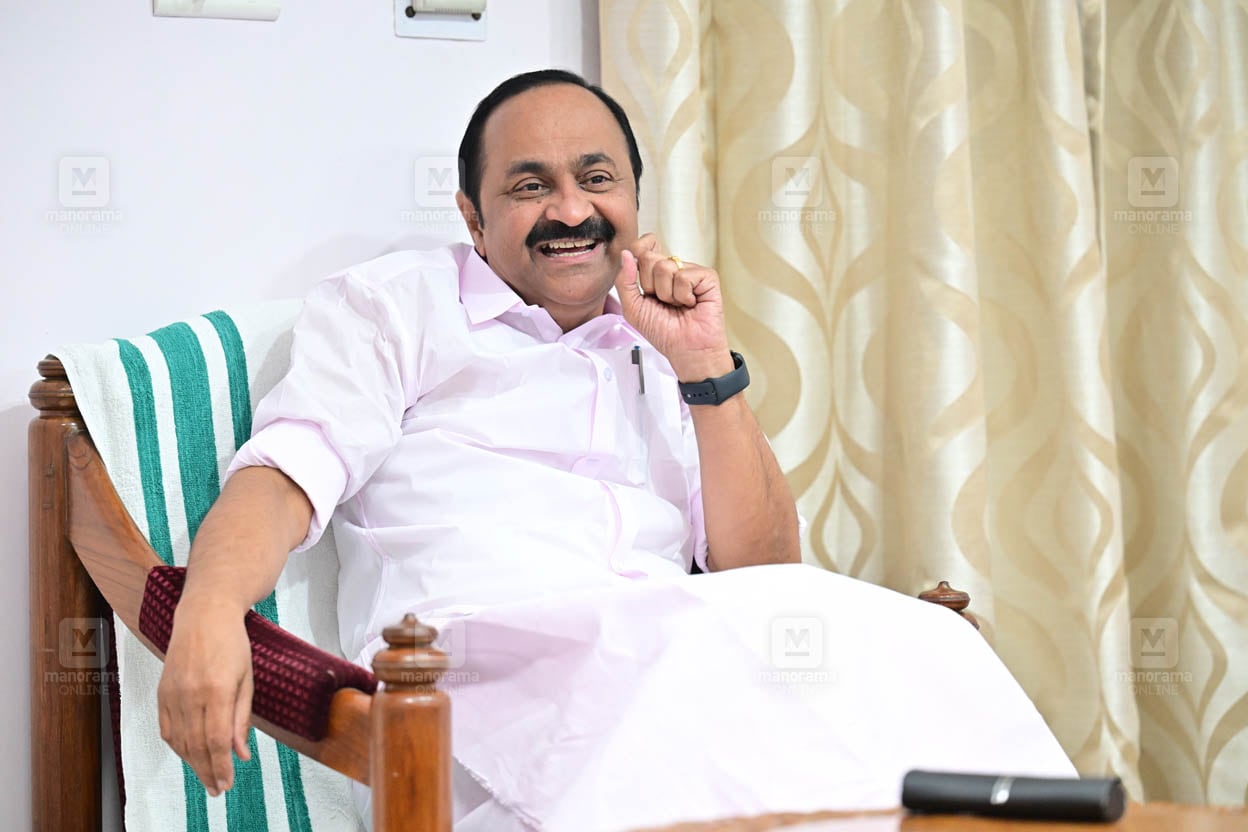
Kerala Chief Minister and Finance Minister V.D. Satheesan is preparing his first budget with a tightly controlled schedule and limited public interactions as the June 19 presentation approaches. Unlike earlier finance ministers who often worked from quieter locations such as Vizhinjam Guest House, the current discussions are being held across the Chief Minister’s Conference Hall, Mascot Hotel, and Kovalam Guest House. The office has restricted direct visits to the Chief Minister until June 19, reflecting the intensity of the budget process and the need to focus on finalising the financial plan.
This will make Satheesan the third Congress Chief Minister to present a budget in Kerala’s history. Before him, R. Shankar presented budgets in 1963-64 and 1964-65, while Oommen Chandy handled the finance portfolio and presented a budget in 2016-17 after the resignation of then Finance Minister K.M. Mani. The article notes that the current budget exercise has been shaped by long working hours, late-night meetings and continuous consultations with officials and stakeholders.
Since taking charge of the finance department, Satheesan has been conducting repeated rounds of discussions with subject experts and representatives from a wide range of sectors. He has met leaders from industry, labour groups, farmers, student organisations, women’s groups including ASHA workers, prominent business figures and senior bureaucrats from various departments. These consultations are intended to gather practical suggestions and build a budget framework that responds to multiple social and economic demands.
The expected budget is said to be rooted in a model of “compassionate governance” with an emphasis on development and welfare. It is also expected to reflect an international development outlook, suggesting a broader economic vision for the state. A key feature is likely to be funding for the “Indira Guarantee,” one of the government’s popular welfare commitments. At the same time, the budget is expected to prioritise measures that increase the state’s own revenue, as Kerala faces a serious fiscal challenge.
One of the major goals mentioned is a restructuring or “reimagining” of KFB, along with efforts to find additional funds for plan expenditure after central grants and expected support did not materialise as planned. This has created a difficult situation for the new government and the finance minister, who must balance welfare commitments with limited fiscal room. The central challenge is to identify extra resources needed to implement the plan and to ensure that flagship schemes, including the Indira Guarantee, can be funded without disrupting the state’s financial stability.