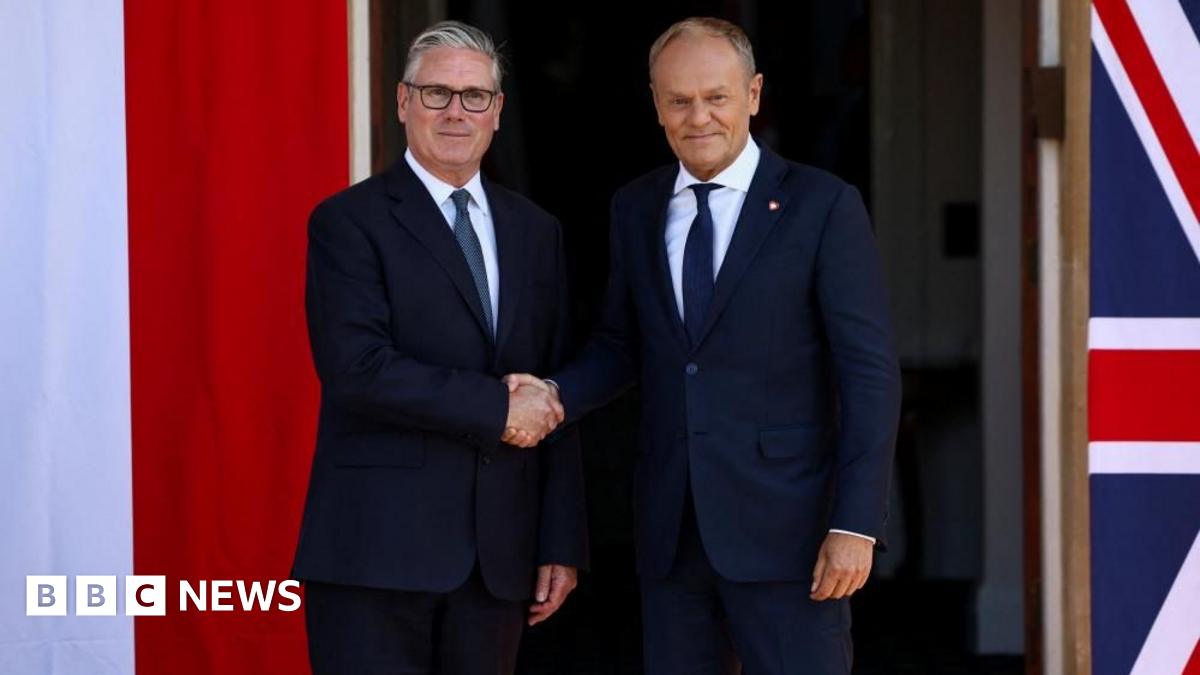
British Prime Minister Sir Keir Starmer and Polish Prime Minister Donald Tusk met at RAF Northolt in west London on Wednesday to formalise a new UK-Poland treaty aimed at deepening cooperation on security, defence and migration. The leaders also visited the nearby Battle of Britain Bunker, where they laid a commemorative wreath, underscoring the historical and military significance of the relationship between the two countries.
Starmer described Russian aggression as the greatest challenge facing both nations, saying the threat is felt not only in Ukraine but also more broadly across Europe and within their own countries. He said the agreement represents a major, generational strengthening of the UK-Poland relationship on defence and security. Tusk said the treaty rests on shared values, including the rule of law and human rights, which he described as the foundation of the partnership. He added that while some may view those values as outdated, they remain essential for both nations.

The treaty states that it is intended to strengthen close cooperation in security and defence and help both countries prepare for challenges facing the UK, Poland and Europe as a whole. It identifies Russia as the most significant long-term threat to Euro-Atlantic security and stresses the need to counter what it calls malign actions. It also reaffirms both countries’ strong commitment to Nato.
Beyond defence, the agreement addresses irregular migration and migrant smuggling, which it describes as a shared challenge requiring joint solutions. The UK government said the two sides will develop a new joint action plan on irregular migration. Measures under discussion include targeting the use of social media by smuggling gangs, increasing intelligence sharing and using new technologies to monitor borders more effectively.
However, the treaty has also drawn scepticism. Academic analyst Arnold said the agreement may not amount to a major shift in practice, pointing out that the UK and Poland already signed agreements in 2018 and 2023. He questioned why an additional treaty was needed, arguing that the new document appears to place greater emphasis on migration and related security issues than on defence and security innovations.
Arnold warned that combining multiple policy areas into one broad treaty could create risks if disagreements arise over one issue, such as migration, potentially affecting cooperation in other areas like defence and security. He also questioned whether the UK has the capacity to deliver on the commitments it makes through treaty-based agreements with other countries.
The treaty reflects a broader effort by London and Warsaw to tighten strategic ties amid war in Ukraine, rising concerns over Russia, and shared pressure on Europe’s borders.





:strip_icc()/i.s3.glbimg.com/v1/AUTH_63b422c2caee4269b8b34177e8876b93/internal_photos/bs/2026/w/i/xFqlbYQz6AYwxYX5dgBA/foto25leg-201-sds-e1.jpg "Brazil court orders Construtora Triunfo bankruptcy over unpaid ISS tax debt")
